THE ADVENTURE COLLECTIVE® · Independent discovery and booking for outdoor travel

Spend a full day in Pilanesberg National Park from Johannesburg, tracking the Big Five across an ancient volcanic ring on shared open 4x4 game drives with a registered guide.
Spend a full day in Pilanesberg National Park from Johannesburg, tracking the Big Five across an ancient volcanic ring on shared open 4x4 game drives with a registered guide.
Dawn breaks over rolled savanna and the pilaneberg rim catches the first light—your open 4x4 hums to life and the ranger checks the vehicle while binocular straps creak. The road from Johannesburg takes you northwest for roughly 2–2.5 hours, depositing you at the rim of an extinct volcanic ring where game drifts along old lava ridges and pans.
Verified experiences and guided adventures in the surrounding area.
Operated by Beyond Africa Safaris (Pty)Ltd · Rustenburg, North West
Dawn breaks over rolled savanna and the pilaneberg rim catches the first light—your open 4x4 hums to life and the ranger checks the vehicle while binocular straps creak. The road from Johannesburg takes you northwest for roughly 2–2.5 hours, depositing you at the rim of an extinct volcanic ring where game drifts along old lava ridges and pans.
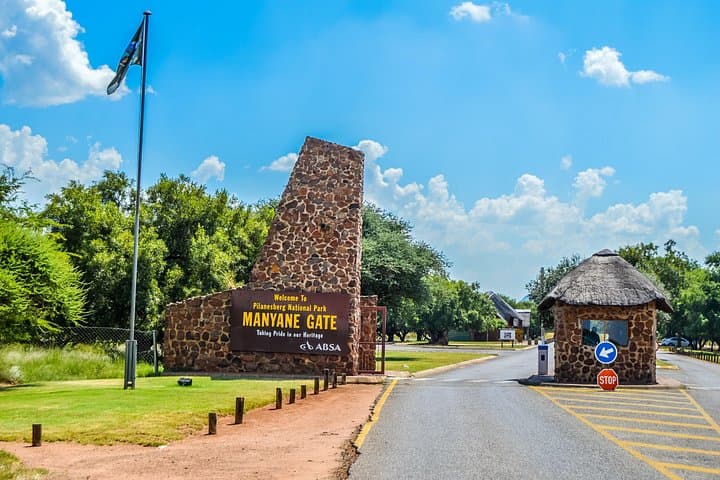
Pilanesberg sits inside a Proterozoic alkaline volcanic complex formed more than a billion years ago; its raised rings and shallow valleys now hold acacias, fever trees and the watering holes that animals use like clockwork. The park’s modern history is shaped by conservation and community initiatives since the 1970s when large-scale rehabilitation and species reintroductions created a Big Five reserve adjacent to tourist hubs like Sun City.
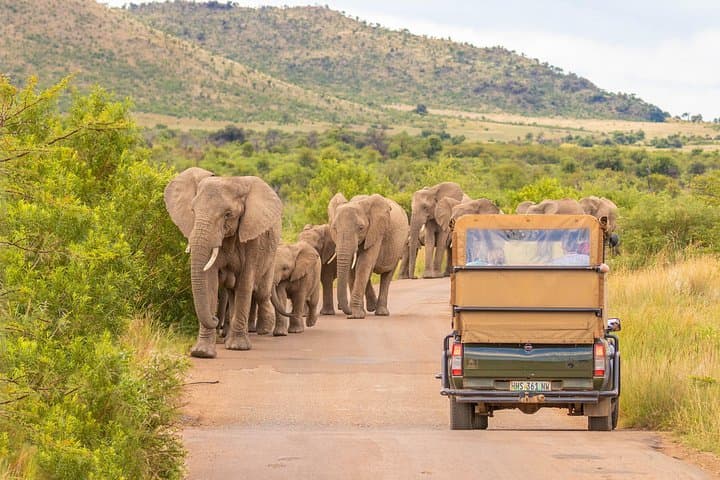
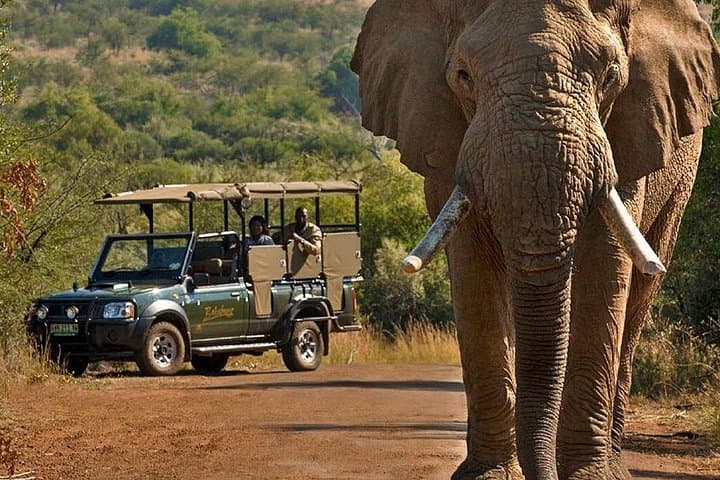
Expect two game drives — a longer morning run of about three hours, a comfort stop with a light lunch, then a two-hour afternoon sweep — all led by a registered guide with local knowledge. Tracks across gravel roads and grassland bring opportunities to spot lions, elephant, rhino, buffalo and leopard, plus giraffe, zebra and hippo near permanent water.
Practical edge: drives are on open 4x4s with basic comfort stops and bottled water provided; dress in muted layers for temperature swings, bring a hat and steady footwear for short stretches on uneven ground. Photography benefits from a 200–400mm telephoto and steady hands; use shaded lenses to reduce glare.
Timing matters — early morning and late afternoon concentrate wildlife and light. Be patient, follow ranger instructions, and treat sightings and the habitat with quiet respect so the park remains wild for the next visit.
Typical transfer time is about 2 to 2.5 hours each way depending on traffic and pickup points in Johannesburg, Sandton or Randburg.
Pilanesberg supports the Big Five but sightings can’t be guaranteed; morning and late-afternoon drives offer the best chance and experienced guides maximize opportunities.
Yes — the itinerary includes a comfort stop with restroom facilities and a light lunch (food only) during the day; bottled water is provided on board.
The tour is advertised as accessible and suitable for most fitness levels; check with the operator about specific wheelchair requirements and vehicle access during booking.
Beyond Africa Safaris (Pty)Ltd operates guided outdoor trips and adventures with an emphasis on safety, stewardship, and memorable experiences.

Dawn breaks over rolled savanna and the pilaneberg rim catches the first light—your open 4x4 hums to life and the ranger checks the vehicle while binocular straps creak. The road from Johannesburg takes you northwest for roughly 2–2.5 hours, depositing you at the rim of an extinct volcanic ring where game drifts along old lava ridges and pans.
Dawn breaks over rolled savanna and the pilaneberg rim catches the first light—your open 4x4 hums to life and the ranger checks the vehicle while binocular straps creak. The road from Johannesburg takes you northwest for roughly 2–2.5 hours, depositing you at the rim of an extinct volcanic ring where game drifts along old lava ridges and pans.
Pilanesberg sits inside a Proterozoic alkaline volcanic complex formed more than a billion years ago; its raised rings and shallow valleys now hold acacias, fever trees and the watering holes that animals use like clockwork. The park’s modern history is shaped by conservation and community initiatives since the 1970s when large-scale rehabilitation and species reintroductions created a Big Five reserve adjacent to tourist hubs like Sun City.
Expect two game drives — a longer morning run of about three hours, a comfort stop with a light lunch, then a two-hour afternoon sweep — all led by a registered guide with local knowledge. Tracks across gravel roads and grassland bring opportunities to spot lions, elephant, rhino, buffalo and leopard, plus giraffe, zebra and hippo near permanent water.
Practical edge: drives are on open 4x4s with basic comfort stops and bottled water provided; dress in muted layers for temperature swings, bring a hat and steady footwear for short stretches on uneven ground. Photography benefits from a 200–400mm telephoto and steady hands; use shaded lenses to reduce glare.
Timing matters — early morning and late afternoon concentrate wildlife and light. Be patient, follow ranger instructions, and treat sightings and the habitat with quiet respect so the park remains wild for the next visit.