THE ADVENTURE COLLECTIVE® · Independent discovery and booking for outdoor travel

A full-day guided run from Zagreb to Plitvice and Rastoke that pairs centuries-old watermills with the cascading travertine lakes of Plitvice National Park. Includes park ticket, boat and train rides, and knowledgeable local guide—ideal for travelers who want a compact but complete day in Croatia’s top natural attraction.
A full-day guided run from Zagreb to Plitvice and Rastoke that pairs centuries-old watermills with the cascading travertine lakes of Plitvice National Park. Includes park ticket, boat and train rides, and knowledgeable local guide—ideal for travelers who want a compact but complete day in Croatia’s top natural attraction.
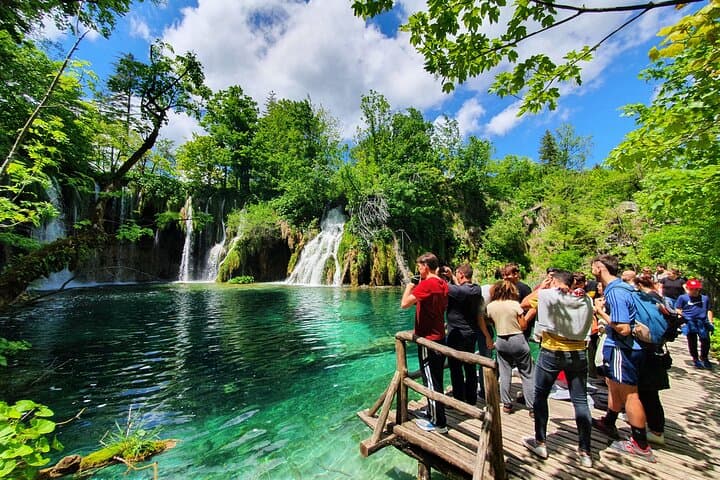
You step off the van and the air changes—cool, mineral-rich, and carrying the rumble of water. Boardwalks fan out over mirroring pools while a river forces its way through a cascade of travertine steps, daring you to follow. On a full-day tour from Zagreb, the route threads two different Croatian moods: the handcrafted mills and tumbling rivers of Rastoke, and the geological choreography of Plitvice Lakes National Park.
Verified experiences and guided adventures in the surrounding area.
Operated by pathfinder TOURS · Plitvička Jezera, Lika-Senj County
You step off the van and the air changes—cool, mineral-rich, and carrying the rumble of water. Boardwalks fan out over mirroring pools while a river forces its way through a cascade of travertine steps, daring you to follow. On a full-day tour from Zagreb, the route threads two different Croatian moods: the handcrafted mills and tumbling rivers of Rastoke, and the geological choreography of Plitvice Lakes National Park.
Rastoke is a compact village where the Korana river divides and recomposes around wooden watermills dating back to the 17th century. The mills still turn; they are modest machines of past livelihoods that set the pace before the park swallows you in wider scales. Plitvice, a UNESCO site since 1979, is a karst landscape where limestone and vegetation build tufa barriers—those fragile, living dams that shape 16 lakes and countless waterfalls.
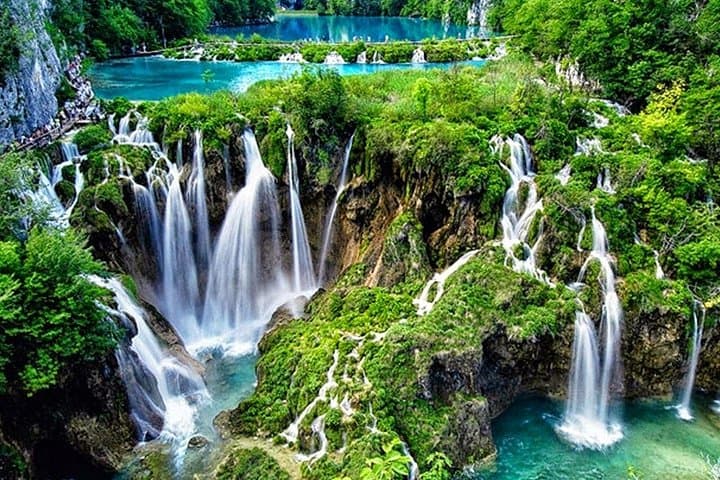
Geology here reads like a long, patient experiment: calcium carbonate precipitates onto moss and roots, slowly knitting new stone. The result is milky turquoise pools edged by bright green algae and dark, dripping cliffs. Culturally, the area sits between Lika’s rural history and Croatia’s tourist present—guides translate both the natural science and local stories, and small cafés serve simple stews that warm you after the wind off the lakes.
Practically, the day is long but straightforward. Expect roughly 10 hours total including transfer from Zagreb (about 2–2.5 hours each way), and approximately 8.5 km of walking along mostly flat boardwalks and well-marked trails. The tour includes park entrance, an English-speaking guide, and shorter boat and train segments inside the park—both are great for saving energy and seeing different perspectives. In winter (Nov–Mar) only the Lower Lakes are open and boat/train services can be suspended, so plan accordingly.
Timing and gear make the difference between a rushed slideshow and an unrushed hike. Arrive with closed hiking shoes, a rain shell, and a filled water bottle; the boardwalks can be slick and crowds can bottleneck popular viewpoints. If you want photos, early morning light and late afternoon give the water its richest colors and fewer people.
This is a trip to watch land in motion: waterfalls carving new edges, a river spinning old wheels, and paths that force you to slow down and read the landscape. With a reliable guide, an entry ticket in pocket, and sensible footwear, the day turns into a clear, memorable study of water and stone—one that’s accessible to most people yet undeniably wild.
This is a full-day tour (~10 hours) from Zagreb. It includes transportation, an English-speaking guide, Plitvice National Park entrance ticket, and internal boat and train rides when operating.
The main meeting point is the bus stop across from the Ethnographic Museum in Zagreb; limited hotel pickup is offered for small-group bookings—details are provided the day before departure.
Expect about 8.5 km of walking on mostly flat boardwalks and gentle trails—suitable for most fitness levels, though it’s not wheelchair-accessible.
No—between Nov 1 and Mar 31 only the Lower Lakes are open and boats/trains may not operate depending on weather and safety.
Yes; children can join, but under-5s are limited to the small-group option. The route involves boardwalks near water, so supervise young children closely.
There are a few cafés and kiosks, but options are limited and often busy—bringing snacks is recommended.
pathfinder TOURS operates guided outdoor trips and adventures with an emphasis on safety, stewardship, and memorable experiences.
You step off the van and the air changes—cool, mineral-rich, and carrying the rumble of water. Boardwalks fan out over mirroring pools while a river forces its way through a cascade of travertine steps, daring you to follow. On a full-day tour from Zagreb, the route threads two different Croatian moods: the handcrafted mills and tumbling rivers of Rastoke, and the geological choreography of Plitvice Lakes National Park.
You step off the van and the air changes—cool, mineral-rich, and carrying the rumble of water. Boardwalks fan out over mirroring pools while a river forces its way through a cascade of travertine steps, daring you to follow. On a full-day tour from Zagreb, the route threads two different Croatian moods: the handcrafted mills and tumbling rivers of Rastoke, and the geological choreography of Plitvice Lakes National Park.
Rastoke is a compact village where the Korana river divides and recomposes around wooden watermills dating back to the 17th century. The mills still turn; they are modest machines of past livelihoods that set the pace before the park swallows you in wider scales. Plitvice, a UNESCO site since 1979, is a karst landscape where limestone and vegetation build tufa barriers—those fragile, living dams that shape 16 lakes and countless waterfalls.
Geology here reads like a long, patient experiment: calcium carbonate precipitates onto moss and roots, slowly knitting new stone. The result is milky turquoise pools edged by bright green algae and dark, dripping cliffs. Culturally, the area sits between Lika’s rural history and Croatia’s tourist present—guides translate both the natural science and local stories, and small cafés serve simple stews that warm you after the wind off the lakes.
Practically, the day is long but straightforward. Expect roughly 10 hours total including transfer from Zagreb (about 2–2.5 hours each way), and approximately 8.5 km of walking along mostly flat boardwalks and well-marked trails. The tour includes park entrance, an English-speaking guide, and shorter boat and train segments inside the park—both are great for saving energy and seeing different perspectives. In winter (Nov–Mar) only the Lower Lakes are open and boat/train services can be suspended, so plan accordingly.
Timing and gear make the difference between a rushed slideshow and an unrushed hike. Arrive with closed hiking shoes, a rain shell, and a filled water bottle; the boardwalks can be slick and crowds can bottleneck popular viewpoints. If you want photos, early morning light and late afternoon give the water its richest colors and fewer people.
This is a trip to watch land in motion: waterfalls carving new edges, a river spinning old wheels, and paths that force you to slow down and read the landscape. With a reliable guide, an entry ticket in pocket, and sensible footwear, the day turns into a clear, memorable study of water and stone—one that’s accessible to most people yet undeniably wild.