THE ADVENTURE COLLECTIVE® · Independent discovery and booking for outdoor travel

See Pokhara’s highlights in one day by shared local bus: Phewa Lake reflections, the dramatic sink at Devi's Fall, cave chambers, and panoramic views from the World Peace Stupa. This practical route pairs cultural insight with easy walks and photo stops.
See Pokhara’s highlights in one day by shared local bus: Phewa Lake reflections, the dramatic sink at Devi's Fall, cave chambers, and panoramic views from the World Peace Stupa. This practical route pairs cultural insight with easy walks and photo stops.
Morning light breaks over Phewa Lake as the bus eases through Pokhara’s busy streets—fishermen push off wooden skiffs, and the Annapurna flank the horizon like a slow-moving wall of ice and rock. The day on a shared local bus moves at a human pace: quick stops at dramatic viewpoints, short walks through temple courtyards, and the deeper hush of caves that swallow sound.
Verified experiences and guided adventures in the surrounding area.
Operated by CAN Travels · Pokhara, Gandaki Province
Morning light breaks over Phewa Lake as the bus eases through Pokhara’s busy streets—fishermen push off wooden skiffs, and the Annapurna flank the horizon like a slow-moving wall of ice and rock. The day on a shared local bus moves at a human pace: quick stops at dramatic viewpoints, short walks through temple courtyards, and the deeper hush of caves that swallow sound.
Pokhara sits in a young mountain range carved by tectonic thrust and glaciation; rock strata and steep river gorges tell the geological story that produced peaks like Machhapuchhre. Historically the city grew as a trade and military hub for the Gorkha kingdom, and its temples and statues reflect centuries of Hindu and Buddhist practice that continue to shape daily life.
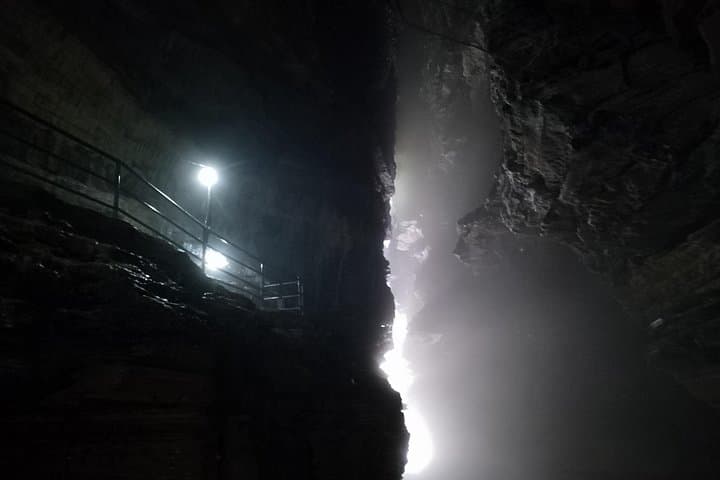
On this route travelers see Devi’s Fall where the Pardi Khola vanishes underground, the vaulted chambers of Gupteshwor and Mahendra Caves, the bird’s-eye sweep from World Peace Stupa, and the riverside Seti gorge. Guides add cultural context—temple rituals, local markets, and the practicalities of pilgrimage.
Practical notes: expect an 8‑hour shared tour with hotel pick-up and drop-off; carry cash for small entry fees and snacks. Comfortable shoes are advisable for short, uneven trails around caves and viewpoints. Hydration matters at altitude—keep a refillable bottle and pace yourself between photo stops. The tour is accessible to most travelers but not recommended for those with serious back, heart, or pregnancy concerns. Aim for morning light on Phewa Lake for the best reflections and quieter streets.
The tour runs about 8 hours with a typical hotel pick-up around 9:30 a.m. and returns in the late afternoon.
Entry fees for some caves or monuments may not be included—bring local currency for minor admissions and donations.
The tour is generally easy but includes stairs and uneven surfaces in caves and at viewpoints; travelers with serious mobility issues should contact the operator before booking.
Stops include short walks and photo opportunities; extended free time is limited because this is a full-day shared itinerary.
CAN Travels operates guided outdoor trips and adventures with an emphasis on safety, stewardship, and memorable experiences.


Morning light breaks over Phewa Lake as the bus eases through Pokhara’s busy streets—fishermen push off wooden skiffs, and the Annapurna flank the horizon like a slow-moving wall of ice and rock. The day on a shared local bus moves at a human pace: quick stops at dramatic viewpoints, short walks through temple courtyards, and the deeper hush of caves that swallow sound.
Morning light breaks over Phewa Lake as the bus eases through Pokhara’s busy streets—fishermen push off wooden skiffs, and the Annapurna flank the horizon like a slow-moving wall of ice and rock. The day on a shared local bus moves at a human pace: quick stops at dramatic viewpoints, short walks through temple courtyards, and the deeper hush of caves that swallow sound.
Pokhara sits in a young mountain range carved by tectonic thrust and glaciation; rock strata and steep river gorges tell the geological story that produced peaks like Machhapuchhre. Historically the city grew as a trade and military hub for the Gorkha kingdom, and its temples and statues reflect centuries of Hindu and Buddhist practice that continue to shape daily life.
On this route travelers see Devi’s Fall where the Pardi Khola vanishes underground, the vaulted chambers of Gupteshwor and Mahendra Caves, the bird’s-eye sweep from World Peace Stupa, and the riverside Seti gorge. Guides add cultural context—temple rituals, local markets, and the practicalities of pilgrimage.
Practical notes: expect an 8‑hour shared tour with hotel pick-up and drop-off; carry cash for small entry fees and snacks. Comfortable shoes are advisable for short, uneven trails around caves and viewpoints. Hydration matters at altitude—keep a refillable bottle and pace yourself between photo stops. The tour is accessible to most travelers but not recommended for those with serious back, heart, or pregnancy concerns. Aim for morning light on Phewa Lake for the best reflections and quieter streets.