THE ADVENTURE COLLECTIVE® · Independent discovery and booking for outdoor travel

Spend a focused day with a private guide through Cairo’s defining sites: the Giza Pyramids and Sphinx, the Egyptian Museum’s pharaonic treasures, and the winding alleys of Khan al-Khalili. This tour balances close-up encounters with ancient monuments and practical tips to keep your day smooth.
Spend a focused day with a private guide through Cairo’s defining sites: the Giza Pyramids and Sphinx, the Egyptian Museum’s pharaonic treasures, and the winding alleys of Khan al-Khalili. This tour balances close-up encounters with ancient monuments and practical tips to keep your day smooth.
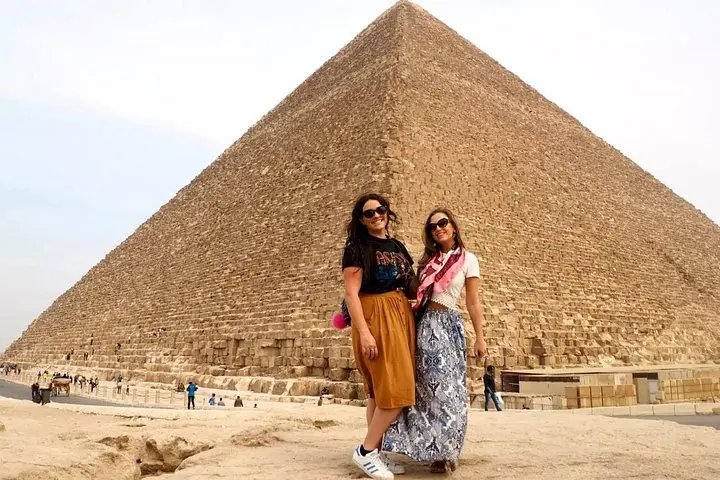
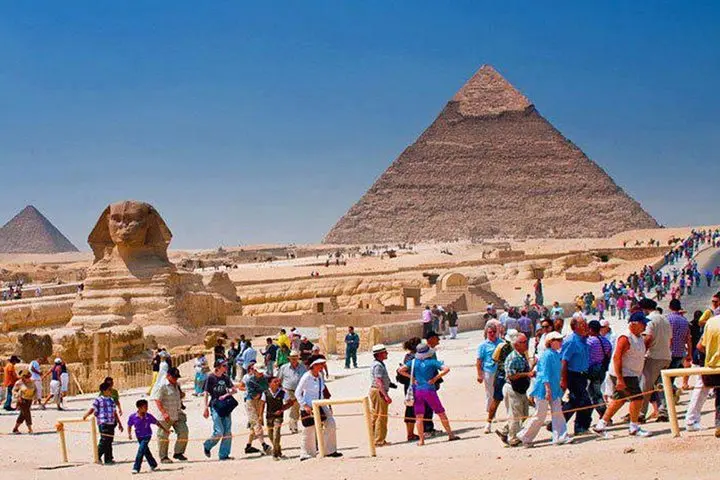
You step out of the minibus and the desert wind seems to push the city aside — the Great Pyramid rises ahead like a deliberate idea carved in stone, the Sphinx keeping watch a few hundred meters away. Early light strips the plateau down to shapes and shadows; vendors are an audible presence at the perimeter, while your guide paces a quieter route that lets the monuments speak.
Verified experiences and guided adventures in the surrounding area.
Operated by Get Egypt Vacation · Cairo, Cairo Governorate
You step out of the minibus and the desert wind seems to push the city aside — the Great Pyramid rises ahead like a deliberate idea carved in stone, the Sphinx keeping watch a few hundred meters away. Early light strips the plateau down to shapes and shadows; vendors are an audible presence at the perimeter, while your guide paces a quieter route that lets the monuments speak.
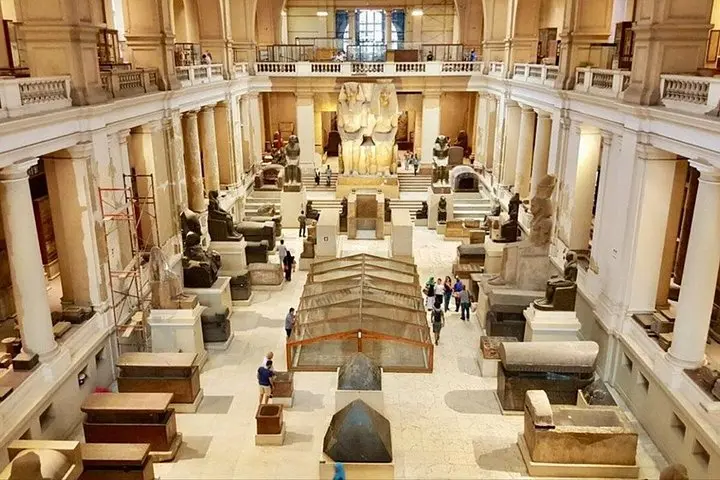
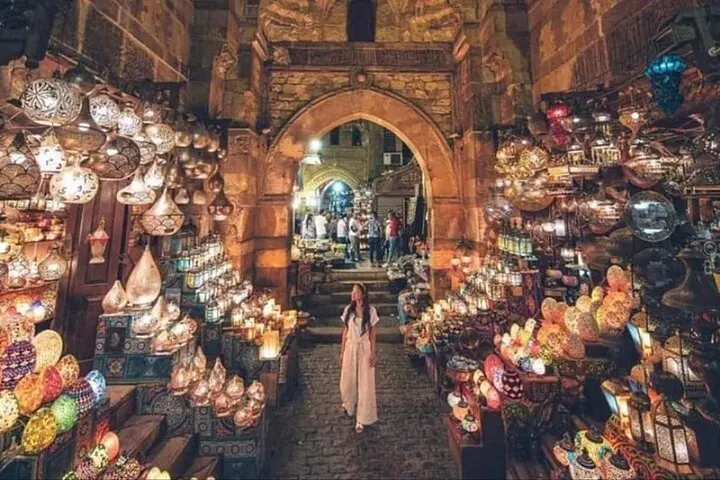
The Giza Plateau is both geology and human will: the pyramids are massive limestone and granite constructions from the Fourth Dynasty (around 2560 BCE), their scale explaining why they’ve dominated the skyline for millennia. The Sphinx, linked to Pharaoh Khafre, gazes across the sand with a lion’s body and a pharaonic face. Back in central Cairo, the Egyptian Museum houses over 100,000 artifacts — including Tutankhamun’s funerary mask — charting shifts in craft, ritual and state power across millennia. Khan al-Khalili, dating to the Mamluk period, is where craft and daily life intersect; alleys are narrow and bargaining is part of the rhythm.
Practically: this private, eight-hour tour combines short walks across sandy, uneven ground with time indoors at air-conditioned museums and crowded bazaars. Expect about 2–3 km of on-foot exploration on the plateau and a 30-minute camel ride near the pyramids. Wear sun-protective clothing, sturdy closed shoes for sand and uneven limestone, and carry water — Cairo sun is direct and unrelenting in summer. Photography rules vary inside the museum and at some sites; follow your guide. The private format reduces queuing and keeps pace flexible, making this a good option for first-time visitors wanting historical context without the crush.
A short camel ride (about 30 minutes) near the pyramids is typically included as part of this private tour; routes stay on the plateau perimeter rather than through core excavation areas.
Access to enter the Great Pyramid requires separate tickets and can be limited; check in advance with your operator if you want interior access as it adds time and may have age or health restrictions.
The standard itinerary indicates admission is included, but confirm at booking; special exhibitions or private rooms in the Egyptian Museum may have additional charges.
Yes — the tour is labeled physically easy, with hotel pickup and minimal strenuous walking, but consider shade and hydration needs for young children and older adults.
Get Egypt Vacation operates guided outdoor trips and adventures with an emphasis on safety, stewardship, and memorable experiences.
You step out of the minibus and the desert wind seems to push the city aside — the Great Pyramid rises ahead like a deliberate idea carved in stone, the Sphinx keeping watch a few hundred meters away. Early light strips the plateau down to shapes and shadows; vendors are an audible presence at the perimeter, while your guide paces a quieter route that lets the monuments speak.
You step out of the minibus and the desert wind seems to push the city aside — the Great Pyramid rises ahead like a deliberate idea carved in stone, the Sphinx keeping watch a few hundred meters away. Early light strips the plateau down to shapes and shadows; vendors are an audible presence at the perimeter, while your guide paces a quieter route that lets the monuments speak.
The Giza Plateau is both geology and human will: the pyramids are massive limestone and granite constructions from the Fourth Dynasty (around 2560 BCE), their scale explaining why they’ve dominated the skyline for millennia. The Sphinx, linked to Pharaoh Khafre, gazes across the sand with a lion’s body and a pharaonic face. Back in central Cairo, the Egyptian Museum houses over 100,000 artifacts — including Tutankhamun’s funerary mask — charting shifts in craft, ritual and state power across millennia. Khan al-Khalili, dating to the Mamluk period, is where craft and daily life intersect; alleys are narrow and bargaining is part of the rhythm.
Practically: this private, eight-hour tour combines short walks across sandy, uneven ground with time indoors at air-conditioned museums and crowded bazaars. Expect about 2–3 km of on-foot exploration on the plateau and a 30-minute camel ride near the pyramids. Wear sun-protective clothing, sturdy closed shoes for sand and uneven limestone, and carry water — Cairo sun is direct and unrelenting in summer. Photography rules vary inside the museum and at some sites; follow your guide. The private format reduces queuing and keeps pace flexible, making this a good option for first-time visitors wanting historical context without the crush.