THE ADVENTURE COLLECTIVE® · Independent discovery and booking for outdoor travel

Explore Cappadocia’s carved landscape in a private full‑day tour: Byzantine cave churches in Göreme, panoramic views from Uçhisar Castle, the mushroom chimneys of Paşabağı and pottery in Avanos. Ideal for travelers who want cultural context and easy walking in a dramatic, walkable landscape.
Explore Cappadocia’s carved landscape in a private full‑day tour: Byzantine cave churches in Göreme, panoramic views from Uçhisar Castle, the mushroom chimneys of Paşabağı and pottery in Avanos. Ideal for travelers who want cultural context and easy walking in a dramatic, walkable landscape.
You step out before breakfast and the valley is already busy—balloons feathering the pale light above a landscape that looks more carved than born. The driver arrives at your hotel and the day begins: a six- to eight-hour circuit across Cappadocia’s high plateau, where wind and volcanic ash have been working for millennia to sculpt soft tuff into towers, chimneys and caverns.
Verified experiences and guided adventures in the surrounding area.
Operated by Bergin Tours · Göreme, Nevşehir Province
You step out before breakfast and the valley is already busy—balloons feathering the pale light above a landscape that looks more carved than born. The driver arrives at your hotel and the day begins: a six- to eight-hour circuit across Cappadocia’s high plateau, where wind and volcanic ash have been working for millennia to sculpt soft tuff into towers, chimneys and caverns.
The first stop, Göreme Open‑Air Museum, feels like a small Byzantine city frozen inside rock. Frescoes peer from cave churches, saints still fixed in ochre and lapis where monks once fasted and painted. The guide explains how early Christian communities used these hollowed-out spaces for worship and refuge; the region’s unique geology—ash layers deposited by ancient eruptions and then compacted into soft tuff—made carving practical and enduring.
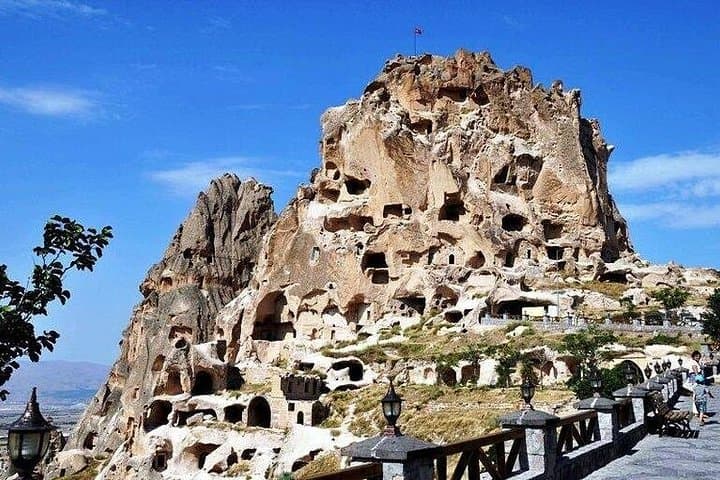
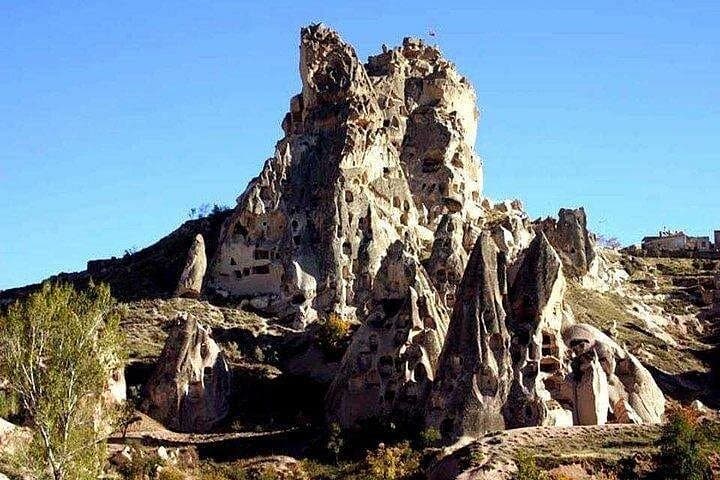
From there the road climbs to Uçhisar Castle. From the highest point in the area, at roughly 1,200 meters, you can see the rippling sweep of valleys and fairy chimneys; stairways and tunnels within the castle reveal how people lived vertically in this austere land. At Paşabağı (Monks Valley) the rock forms are even more theatrical—mushroom caps and twin-stem pillars that look like geological totems and invite close inspection, though the tuff is surprisingly fragile.
Lunch in Avanos brings a cultural shift: the Red River (Kızılırmak) supplies clay that’s been shaped into pottery by local hands for centuries. A short demonstration at a workshop shows a potter’s wheel still turning in the old way; nearby, small family-run carpet and leather shops offer a chance to see craftspeople at work.
Devrent Valley and Pigeon Valley close the loop. Devrent feels like a natural imagination machine—rock silhouettes that resemble animals and faces—while Pigeon Valley’s niches recall a past agricultural economy that used bird guano to fertilize vineyards.
Practicalities: this private tour is low-impact physically (short walks, some uneven steps) but requires a full day. Wear sturdy shoes for loose tuff and steps, carry sun protection and at least 1.5 liters of water. Photography is rich at sunrise and late afternoon; if you want the best light, request an earlier hotel pickup. Entrance to Göreme Open‑Air Museum is typically paid separately (about €20) and can be handled through your guide.
The region is fragile—stay on marked paths, don’t touch frescoes, and limit flash photography where instructed. With a local guide, the geology, Byzantine history and living craft traditions of Cappadocia unfold in a way that’s intimate and immediate: a day that reads like a landscape classroom, and leaves room for wonder.
Yes—hotel pickup and drop-off across Cappadocia hotels is included in the private tour.
Not all: Göreme Open‑Air Museum entrance (about €20) is typically paid separately, though the guide can arrange skip‑the‑line tickets for an extra fee.
Yes; the tour is physically easy, but infants are required to sit on an adult’s lap during transport.
As a private tour, the guide can often adjust stops or timing—confirm any changes when booking or at pickup.
Expect short walks at each stop (10–30 minutes), plus stairs and uneven ground in cave churches and viewpoints.
Layered clothing for temperature swings, sun protection, and shoes with good traction are recommended.
Bergin Tours operates guided outdoor trips and adventures with an emphasis on safety, stewardship, and memorable experiences.
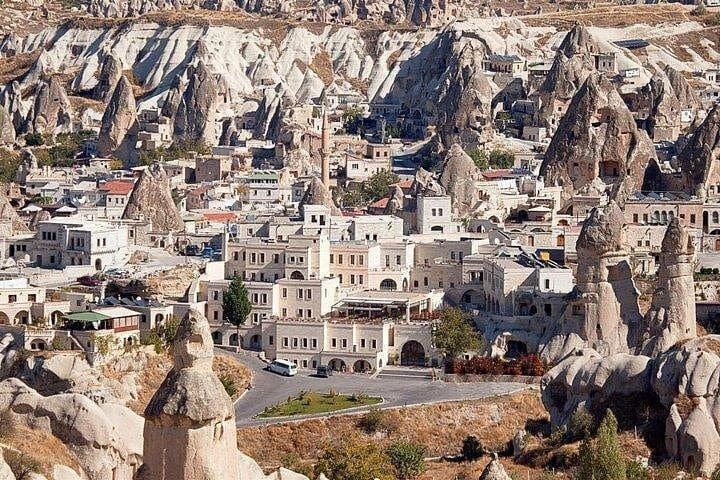
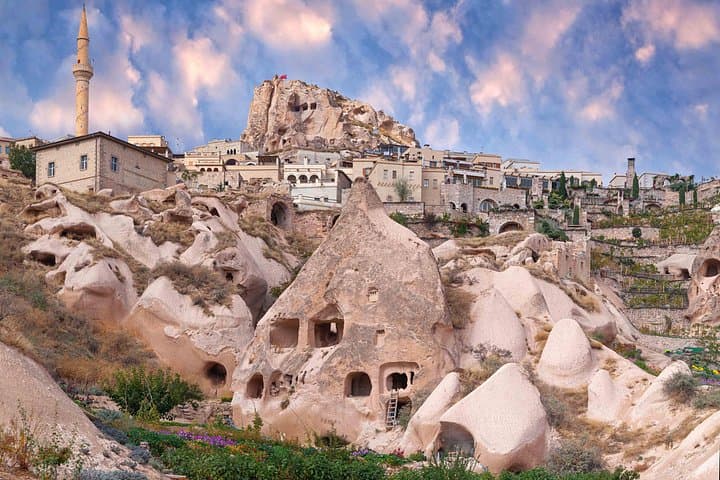
You step out before breakfast and the valley is already busy—balloons feathering the pale light above a landscape that looks more carved than born. The driver arrives at your hotel and the day begins: a six- to eight-hour circuit across Cappadocia’s high plateau, where wind and volcanic ash have been working for millennia to sculpt soft tuff into towers, chimneys and caverns.
You step out before breakfast and the valley is already busy—balloons feathering the pale light above a landscape that looks more carved than born. The driver arrives at your hotel and the day begins: a six- to eight-hour circuit across Cappadocia’s high plateau, where wind and volcanic ash have been working for millennia to sculpt soft tuff into towers, chimneys and caverns.
The first stop, Göreme Open‑Air Museum, feels like a small Byzantine city frozen inside rock. Frescoes peer from cave churches, saints still fixed in ochre and lapis where monks once fasted and painted. The guide explains how early Christian communities used these hollowed-out spaces for worship and refuge; the region’s unique geology—ash layers deposited by ancient eruptions and then compacted into soft tuff—made carving practical and enduring.
From there the road climbs to Uçhisar Castle. From the highest point in the area, at roughly 1,200 meters, you can see the rippling sweep of valleys and fairy chimneys; stairways and tunnels within the castle reveal how people lived vertically in this austere land. At Paşabağı (Monks Valley) the rock forms are even more theatrical—mushroom caps and twin-stem pillars that look like geological totems and invite close inspection, though the tuff is surprisingly fragile.
Lunch in Avanos brings a cultural shift: the Red River (Kızılırmak) supplies clay that’s been shaped into pottery by local hands for centuries. A short demonstration at a workshop shows a potter’s wheel still turning in the old way; nearby, small family-run carpet and leather shops offer a chance to see craftspeople at work.
Devrent Valley and Pigeon Valley close the loop. Devrent feels like a natural imagination machine—rock silhouettes that resemble animals and faces—while Pigeon Valley’s niches recall a past agricultural economy that used bird guano to fertilize vineyards.
Practicalities: this private tour is low-impact physically (short walks, some uneven steps) but requires a full day. Wear sturdy shoes for loose tuff and steps, carry sun protection and at least 1.5 liters of water. Photography is rich at sunrise and late afternoon; if you want the best light, request an earlier hotel pickup. Entrance to Göreme Open‑Air Museum is typically paid separately (about €20) and can be handled through your guide.
The region is fragile—stay on marked paths, don’t touch frescoes, and limit flash photography where instructed. With a local guide, the geology, Byzantine history and living craft traditions of Cappadocia unfold in a way that’s intimate and immediate: a day that reads like a landscape classroom, and leaves room for wonder.