THE ADVENTURE COLLECTIVE® · Independent discovery and booking for outdoor travel

Spend a full day exploring Salar de Uyuni’s surreal salt flats: visit the Train Cemetery, hike Incahuasi’s cactus-studded summit and watch sunset on the mirror-like salt with wine. This private tour combines tailored photo ops with cultural stops and a salt-hotel lunch.
Spend a full day exploring Salar de Uyuni’s surreal salt flats: visit the Train Cemetery, hike Incahuasi’s cactus-studded summit and watch sunset on the mirror-like salt with wine. This private tour combines tailored photo ops with cultural stops and a salt-hotel lunch.
The whiteness stretches to the horizon and the sky hangs impossibly close — you step onto a surface that feels less like earth and more like a polished plane. Morning begins in Uyuni and quickly moves past rusting locomotives of the Train Cemetery, then out onto the salt crust where perspective tricks and photo setups take center stage.
Verified experiences and guided adventures in the surrounding area.
Operated by Blue line service · Uyuni, Potosí Department
The whiteness stretches to the horizon and the sky hangs impossibly close — you step onto a surface that feels less like earth and more like a polished plane. Morning begins in Uyuni and quickly moves past rusting locomotives of the Train Cemetery, then out onto the salt crust where perspective tricks and photo setups take center stage.
Geologically, the Salar de Uyuni sits at about 3,656 meters (11,995 ft), the remnant of prehistoric lakes whose evaporated sediments formed a 10,000+ km2 salt pan. Culture here is shaped by highland Aymara and Quechua communities who harvest salt and run small markets; salt hotels and the Dakar monument are local markers of tourism’s long presence.
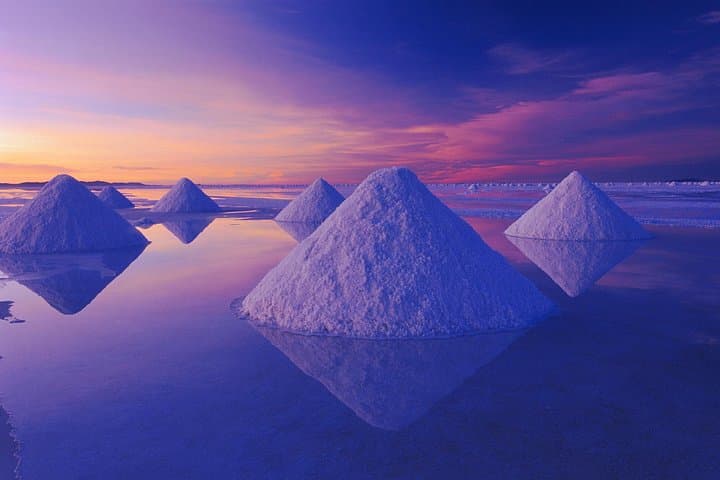
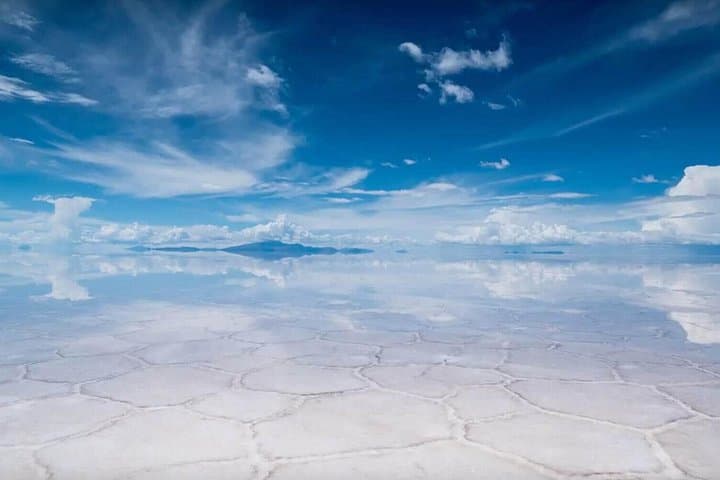
The tour visits the Train Cemetery, an artisan salt-processing stop, Incahuasi (Fish Island) with giant cacti rising as navigation beacons, and a lunch inside a salt-hotel dining room. In the wet season the flats become a giant mirror; guides often provide rubber boots for short, protected walks across shallow water. Late afternoon brings an expansive sunset on the flats — many operators include a glass of wine and appetizers to toast the light.
Practical notes: expect an 8–9 hour day in an air-conditioned vehicle with multiple short walks on flat but uneven salt crust and rocky island trails. Altitude, cold winds and strong sun are the primary physical challenges; pack warm layers, sun protection and closed-toe shoes that can handle salt. Bring cash for souvenirs and tips, and plan for limited bathroom options outside the salar perimeter.
The mirror effect occurs in the rainy season, typically January–March, when a thin layer of water covers the salt and creates reflections.
Yes — the salar and surrounding sites sit above 3,600 m; take time to acclimatize, hydrate, rest and consider medication if you are prone to altitude issues.
Basic facilities are available at some stops like the salt hotel; away from built areas expect limited options, so plan accordingly.
This private tour can be adapted, but rough vehicle transfers and short uneven walks may be challenging; inform the operator of special needs in advance.
Blue line service operates guided outdoor trips and adventures with an emphasis on safety, stewardship, and memorable experiences.
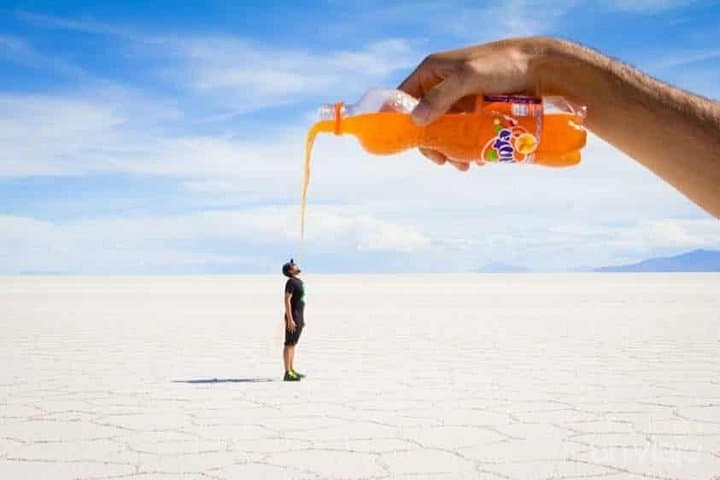
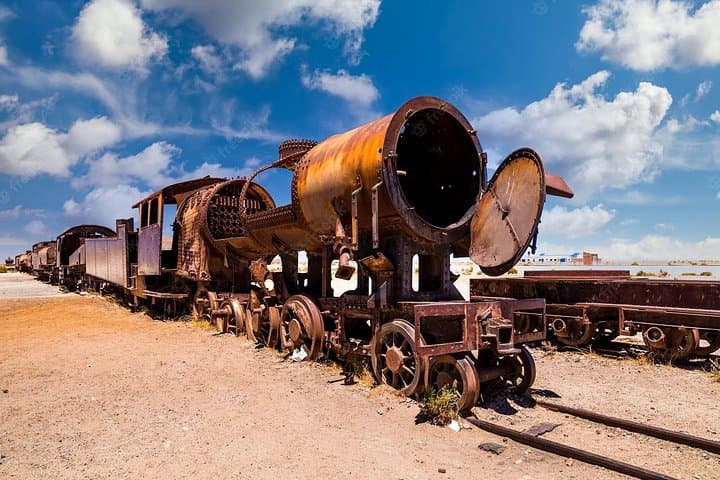
The whiteness stretches to the horizon and the sky hangs impossibly close — you step onto a surface that feels less like earth and more like a polished plane. Morning begins in Uyuni and quickly moves past rusting locomotives of the Train Cemetery, then out onto the salt crust where perspective tricks and photo setups take center stage.
The whiteness stretches to the horizon and the sky hangs impossibly close — you step onto a surface that feels less like earth and more like a polished plane. Morning begins in Uyuni and quickly moves past rusting locomotives of the Train Cemetery, then out onto the salt crust where perspective tricks and photo setups take center stage.
Geologically, the Salar de Uyuni sits at about 3,656 meters (11,995 ft), the remnant of prehistoric lakes whose evaporated sediments formed a 10,000+ km2 salt pan. Culture here is shaped by highland Aymara and Quechua communities who harvest salt and run small markets; salt hotels and the Dakar monument are local markers of tourism’s long presence.
The tour visits the Train Cemetery, an artisan salt-processing stop, Incahuasi (Fish Island) with giant cacti rising as navigation beacons, and a lunch inside a salt-hotel dining room. In the wet season the flats become a giant mirror; guides often provide rubber boots for short, protected walks across shallow water. Late afternoon brings an expansive sunset on the flats — many operators include a glass of wine and appetizers to toast the light.
Practical notes: expect an 8–9 hour day in an air-conditioned vehicle with multiple short walks on flat but uneven salt crust and rocky island trails. Altitude, cold winds and strong sun are the primary physical challenges; pack warm layers, sun protection and closed-toe shoes that can handle salt. Bring cash for souvenirs and tips, and plan for limited bathroom options outside the salar perimeter.