THE ADVENTURE COLLECTIVE® · Independent discovery and booking for outdoor travel

A single day out of Beirut links subterranean caverns, a hilltop Marian shrine and a dramatic karst waterfall. Expect cave boats, a mountain cable car and a short hike to a three-bridge gorge—ideal for travelers who want geology, views and local culture in eight hours.
A single day out of Beirut links subterranean caverns, a hilltop Marian shrine and a dramatic karst waterfall. Expect cave boats, a mountain cable car and a short hike to a three-bridge gorge—ideal for travelers who want geology, views and local culture in eight hours.
You step out of Beirut’s traffic into limestone light: a narrow coastal road unfurls toward cedar-scented hills, and the driver eases the day into motion. First, Jeita Grotto opens like a hidden cathedral—an upper gallery of sculpted stalactites and draperies where concrete walkways guide you past ancient mineral curtains, and a lower river caverns into a glassy subterranean lake occasionally crossed by a small boat. The caves feel alive, the rock itself pressing stories of sea and time.
Verified experiences and guided adventures in the surrounding area.
Operated by Lebanon Tours Online · Jeita, Keserwan-Jbeil
You step out of Beirut’s traffic into limestone light: a narrow coastal road unfurls toward cedar-scented hills, and the driver eases the day into motion. First, Jeita Grotto opens like a hidden cathedral—an upper gallery of sculpted stalactites and draperies where concrete walkways guide you past ancient mineral curtains, and a lower river caverns into a glassy subterranean lake occasionally crossed by a small boat. The caves feel alive, the rock itself pressing stories of sea and time.
From there the road climbs to Harissa. The teleferique lifts you over pine forest to the Our Lady of Lebanon statue, where wind and sea-air press the bay below into a wide, living map. It’s both pilgrimage site and panoramic lookout—culture and coast intersecting in bronze and concrete.
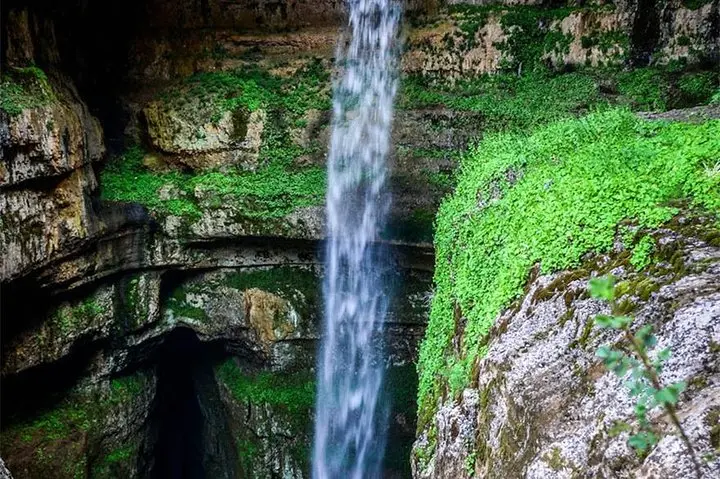
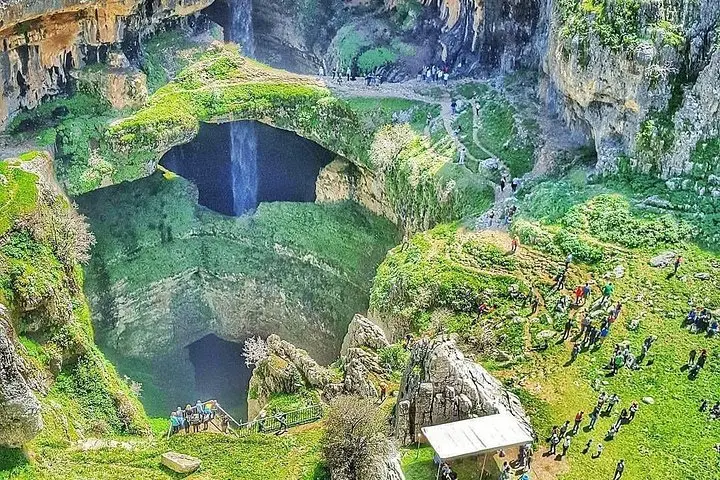
The day ends north in Tannourine at Baatara Gorge Waterfall: in spring the waterfall plunges through three natural limestone bridges in a dramatic 255-meter drop, a raw display of karst geology and seasonal melt.
Practical guidance: the full-day loop is about eight hours with multiple short walks and stairs—comfortable walking shoes, a light rain layer, and a charged camera are mandatory. Visit Baatara in spring for peak flow; Jeita’s lower gallery boat can be cool and humid—carry a light fleece. Expect tunnels, steps and uneven trails at each site; mobile reception is patchy outside Beirut, so plan logistics and cash for local entrance or parking fees. This tour blends geology, culture, and coast—each stop pushes you a little further into Lebanon’s layered landscape.
Not always—many private tours provide transport but charge separate entrance fees at Jeita Grotto and Baatara Gorge; check your booking details and carry cash or card.
Jeita’s upper galleries have walkways but include stairs; the lower gallery involves a boat and steps. Harissa’s shrine is reached by cable car but still has steps—access varies and may be limited for some visitors.
Late winter through spring is best, when snowmelt and rain feed the 255m drop; in summer the flow can be much reduced.
The cable car (telepherique) usually operates year-round but can close for maintenance or bad weather; confirm operation on the day of your visit and whether your tour includes the ride.
Lebanon Tours Online operates guided outdoor trips and adventures with an emphasis on safety, stewardship, and memorable experiences.
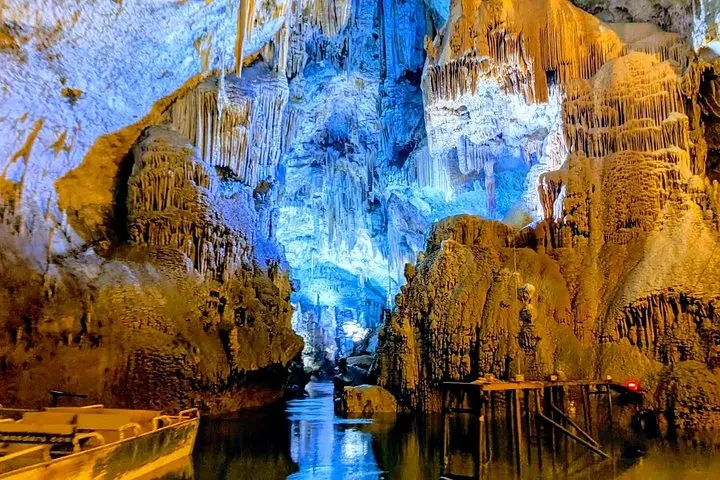
You step out of Beirut’s traffic into limestone light: a narrow coastal road unfurls toward cedar-scented hills, and the driver eases the day into motion. First, Jeita Grotto opens like a hidden cathedral—an upper gallery of sculpted stalactites and draperies where concrete walkways guide you past ancient mineral curtains, and a lower river caverns into a glassy subterranean lake occasionally crossed by a small boat. The caves feel alive, the rock itself pressing stories of sea and time.
You step out of Beirut’s traffic into limestone light: a narrow coastal road unfurls toward cedar-scented hills, and the driver eases the day into motion. First, Jeita Grotto opens like a hidden cathedral—an upper gallery of sculpted stalactites and draperies where concrete walkways guide you past ancient mineral curtains, and a lower river caverns into a glassy subterranean lake occasionally crossed by a small boat. The caves feel alive, the rock itself pressing stories of sea and time.
From there the road climbs to Harissa. The teleferique lifts you over pine forest to the Our Lady of Lebanon statue, where wind and sea-air press the bay below into a wide, living map. It’s both pilgrimage site and panoramic lookout—culture and coast intersecting in bronze and concrete.
The day ends north in Tannourine at Baatara Gorge Waterfall: in spring the waterfall plunges through three natural limestone bridges in a dramatic 255-meter drop, a raw display of karst geology and seasonal melt.
Practical guidance: the full-day loop is about eight hours with multiple short walks and stairs—comfortable walking shoes, a light rain layer, and a charged camera are mandatory. Visit Baatara in spring for peak flow; Jeita’s lower gallery boat can be cool and humid—carry a light fleece. Expect tunnels, steps and uneven trails at each site; mobile reception is patchy outside Beirut, so plan logistics and cash for local entrance or parking fees. This tour blends geology, culture, and coast—each stop pushes you a little further into Lebanon’s layered landscape.