THE ADVENTURE COLLECTIVE® · Independent discovery and booking for outdoor travel

Spend a day with an Egyptologist exploring the Step Pyramid at Saqqara, the ancient capital of Memphis, and Dahshur’s Red Pyramid. This private 7–8 hour tour combines sweeping early-pharaonic monuments, a local lunch, and convenient transfers from Cairo.
Spend a day with an Egyptologist exploring the Step Pyramid at Saqqara, the ancient capital of Memphis, and Dahshur’s Red Pyramid. This private 7–8 hour tour combines sweeping early-pharaonic monuments, a local lunch, and convenient transfers from Cairo.
You step out of Cairo’s traffic into a strip of ochre desert where stone and sand reassert an older order. The Step Pyramid rises like a deliberate idea hewn into the sky, its limestone faces catching light while a guide’s voice fills the open air with names and dates that map millennia.
Verified experiences and guided adventures in the surrounding area.
Operated by Horus Egypt Tours · Saqqara, Giza
You step out of Cairo’s traffic into a strip of ochre desert where stone and sand reassert an older order. The Step Pyramid rises like a deliberate idea hewn into the sky, its limestone faces catching light while a guide’s voice fills the open air with names and dates that map millennia.
This single-day route threads three chapters of Egypt’s early history. Saqqara holds Djoser’s Step Pyramid, designed by Imhotep in the 27th century BCE and widely considered the first large-scale stone structure. Memphis, once the pharaonic capital, offers heavy, silent statuary — Ramses II’s torso and an alabaster sphinx — reminders of political and artistic ambition. Dahshur’s Red Pyramid marks a technical turning point: Sneferu’s experiments here led to the true smooth-sided shape replicated at Giza.
Geology here is simple but revealing — Nile silt plains give way to Eocene limestone beds that supplied builders for thousands of years. Local culture arrives in small moments: a vendor’s mint tea, the low-key hospitality of a bedouin-style lunch, the patient professionalism of licensed Egyptologists who translate hieroglyphs into practical context.
Practicalities: this private tour is a 7–8 hour day with moderate walking over uneven excavated ground and some stairs. Wear closed, grippy shoes, sun protection, and carry water; your guide typically handles entrance fees and transfers in an air-conditioned vehicle. Expect short drives between sites and pauses for photos and brief talks rather than long museum-style stops. If you want quieter light, request an early departure to beat heat and buses.
The experience balances history and landscape: it’s a walking conversation with early civilization framed against an uncompromising desert horizon.
The private tour lasts about 7–8 hours and typically includes pickup/drop-off, an Egyptologist guide, entrance fees, bottled water, and a local lunch.
Many families and older visitors take this tour, but it involves walking on uneven ground; those with mobility issues should notify when booking to arrange extra assistance.
Access to pyramid interiors varies by site and season; the Red Pyramid sometimes allows interior access but closures can occur — check with your operator in advance.
Comfortable closed shoes, sun protection, a refillable water bottle, and a light jacket in cooler months; modest dress is recommended at archaeological sites.
Horus Egypt Tours operates guided outdoor trips and adventures with an emphasis on safety, stewardship, and memorable experiences.
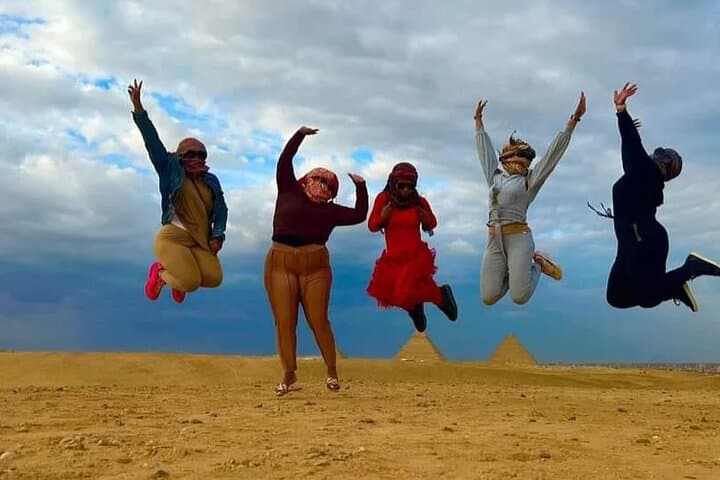
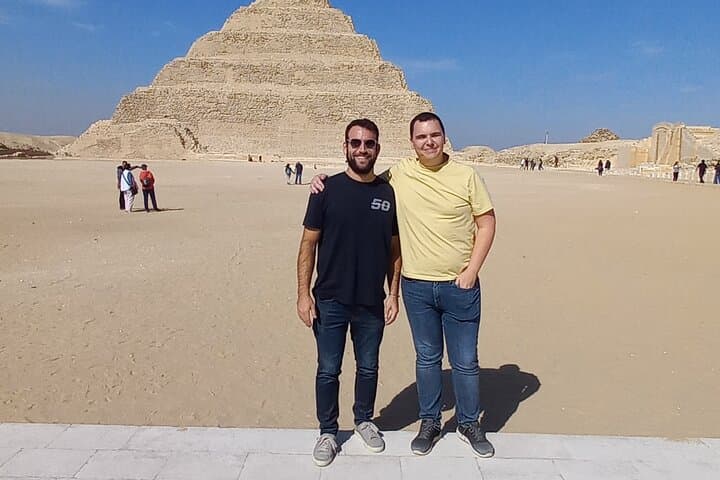


You step out of Cairo’s traffic into a strip of ochre desert where stone and sand reassert an older order. The Step Pyramid rises like a deliberate idea hewn into the sky, its limestone faces catching light while a guide’s voice fills the open air with names and dates that map millennia.
You step out of Cairo’s traffic into a strip of ochre desert where stone and sand reassert an older order. The Step Pyramid rises like a deliberate idea hewn into the sky, its limestone faces catching light while a guide’s voice fills the open air with names and dates that map millennia.
This single-day route threads three chapters of Egypt’s early history. Saqqara holds Djoser’s Step Pyramid, designed by Imhotep in the 27th century BCE and widely considered the first large-scale stone structure. Memphis, once the pharaonic capital, offers heavy, silent statuary — Ramses II’s torso and an alabaster sphinx — reminders of political and artistic ambition. Dahshur’s Red Pyramid marks a technical turning point: Sneferu’s experiments here led to the true smooth-sided shape replicated at Giza.
Geology here is simple but revealing — Nile silt plains give way to Eocene limestone beds that supplied builders for thousands of years. Local culture arrives in small moments: a vendor’s mint tea, the low-key hospitality of a bedouin-style lunch, the patient professionalism of licensed Egyptologists who translate hieroglyphs into practical context.
Practicalities: this private tour is a 7–8 hour day with moderate walking over uneven excavated ground and some stairs. Wear closed, grippy shoes, sun protection, and carry water; your guide typically handles entrance fees and transfers in an air-conditioned vehicle. Expect short drives between sites and pauses for photos and brief talks rather than long museum-style stops. If you want quieter light, request an early departure to beat heat and buses.
The experience balances history and landscape: it’s a walking conversation with early civilization framed against an uncompromising desert horizon.