THE ADVENTURE COLLECTIVE® · Independent discovery and booking for outdoor travel

Spend a full day with a private guide exploring Cappadocia’s fairy chimneys, cave churches and Avanos pottery tradition. This customizable tour mixes geology, Byzantine history and hands-on craft with convenient hotel pickup.
Spend a full day with a private guide exploring Cappadocia’s fairy chimneys, cave churches and Avanos pottery tradition. This customizable tour mixes geology, Byzantine history and hands-on craft with convenient hotel pickup.
You step into a landscape where stone has been coaxed into improbable shapes: tight spires, squat hoodoos and honeycombed caves that look engineered for a different era. Morning light slices across the valleys as a private van threads narrow lanes; your guide points out the first chimney clusters and the faint scars of ancient dwellings carved into soft volcanic rock.
Verified experiences and guided adventures in the surrounding area.
Operated by Peron Tour Kusadasi/Turkey · Göreme, Nevşehir Province
You step into a landscape where stone has been coaxed into improbable shapes: tight spires, squat hoodoos and honeycombed caves that look engineered for a different era. Morning light slices across the valleys as a private van threads narrow lanes; your guide points out the first chimney clusters and the faint scars of ancient dwellings carved into soft volcanic rock.
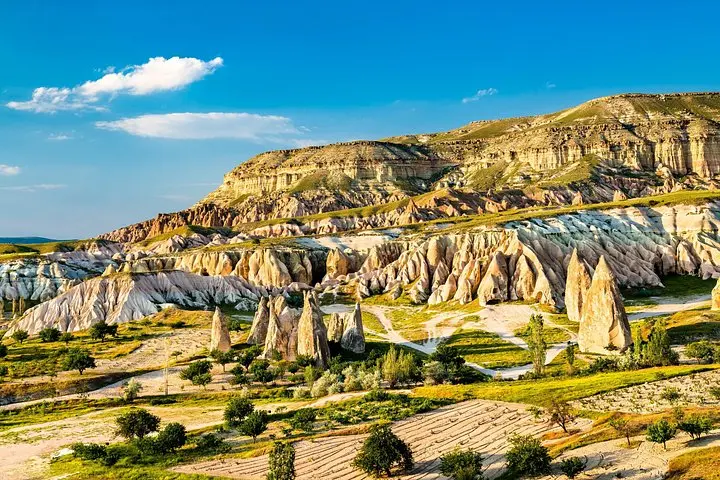
Cappadocia is less a single place than a set of human responses to geology. Between 3 and 9 million years ago, eruptions from Mount Erciyes and Hasan deposited thick layers of tuff — a soft, erodible volcanic rock. Centuries of wind and rain sculpted the fairy chimneys travelers now photograph; centuries of people carved them into churches, monasteries and entire underground cities. The Göreme Open-Air Museum preserves Byzantine frescoes and compact cave churches that tell a quieter story: small communities adapting to a harsh plateau and to the political pressures of late antiquity.
The tour threads that history with living craft. Avanos sits on the Kızılırmak (Red River), Turkey’s longest river, and its kilns and wheel-throwing studios have spun pottery the same way for generations; visiting a workshop here ties geology to craft — clay from the river, glazes fired with local heat.
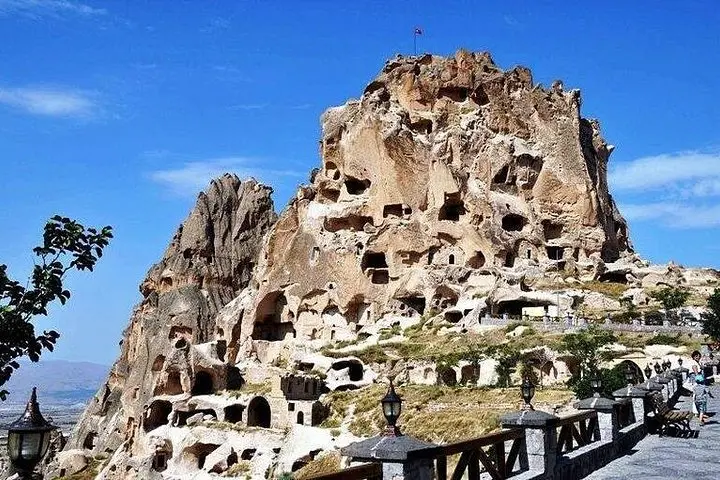
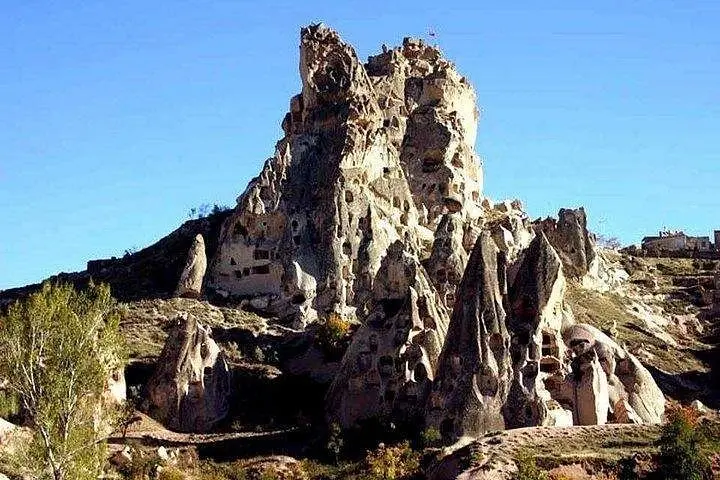
On the itinerary: Göreme Open-Air Museum (entry fee typically €20), Uchisar’s rock castle (view from outside and its stair-carved rooms), Devrent Valley’s animal-like formations, Pasabag’s three-hatted chimneys (Pasabag fee ~€12), Pigeon Valley panoramas and a hands-on stop in Avanos to watch potters. The private format means pacing can be slow at a frescoed chapel and brisk between overlooks.
Practical edge: this is a full-day experience (6–8 hours) with mostly short walks and uneven surfaces — expect steps, low doorways and loose scree. Wear sturdy shoes, bring sun protection and a refillable water bottle; entrances for the museums are usually paid in cash or card, but keep small bills for local shops and tips. Pickup and drop-off are offered from hotels across Cappadocia; tell your operator if mobility limits mean you’ll need fewer stairs or longer stops.
Timing matters. Early morning captures balloons inflating above valleys and cooler walking; late afternoon softens rock tones and thins crowds. Respect fragile frescoes — no flash photography where signs prohibit it — and follow marked paths: the region’s soft tuff erodes quickly under heavy foot traffic. A private guide not only narrates the geology and Byzantine history but also helps you navigate optional skip-the-line tickets, local artisans’ shops and the quieter viewpoints where the light turns the chimneys into a landscape that both dares and rewards exploration.
Most historic site fees are not included; Göreme Open-Air Museum and Pasabag require separate tickets (guide can often arrange skip‑the‑line tickets for an extra fee).
Yes — the tour offers hotel pickup and drop-off across Cappadocia; confirm your pickup location and time when you book.
Balloons are not part of the ground tour but many viewpoints allow you to watch morning launches; for a balloon flight you must book a separate, weather‑dependent experience.
Children are welcome, but many stops involve stairs and uneven terrain; contact the operator in advance to discuss mobility needs and possible itinerary adjustments.
Walks at each stop are short — generally 15–60 minutes between viewpoints — but the day covers multiple sites with brief walks and some uphill steps.
Visits to pottery demonstrations and craft showrooms are included for observation; purchases at carpet or leather shops are optional and separate.
Peron Tour Kusadasi/Turkey operates guided outdoor trips and adventures with an emphasis on safety, stewardship, and memorable experiences.
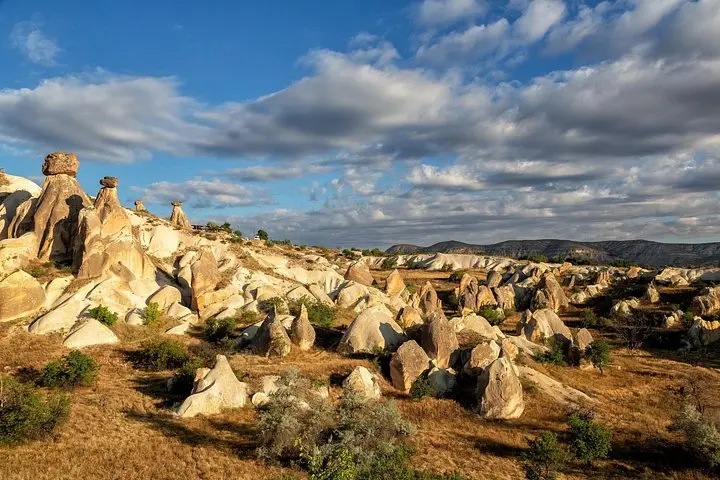
You step into a landscape where stone has been coaxed into improbable shapes: tight spires, squat hoodoos and honeycombed caves that look engineered for a different era. Morning light slices across the valleys as a private van threads narrow lanes; your guide points out the first chimney clusters and the faint scars of ancient dwellings carved into soft volcanic rock.
You step into a landscape where stone has been coaxed into improbable shapes: tight spires, squat hoodoos and honeycombed caves that look engineered for a different era. Morning light slices across the valleys as a private van threads narrow lanes; your guide points out the first chimney clusters and the faint scars of ancient dwellings carved into soft volcanic rock.
Cappadocia is less a single place than a set of human responses to geology. Between 3 and 9 million years ago, eruptions from Mount Erciyes and Hasan deposited thick layers of tuff — a soft, erodible volcanic rock. Centuries of wind and rain sculpted the fairy chimneys travelers now photograph; centuries of people carved them into churches, monasteries and entire underground cities. The Göreme Open-Air Museum preserves Byzantine frescoes and compact cave churches that tell a quieter story: small communities adapting to a harsh plateau and to the political pressures of late antiquity.
The tour threads that history with living craft. Avanos sits on the Kızılırmak (Red River), Turkey’s longest river, and its kilns and wheel-throwing studios have spun pottery the same way for generations; visiting a workshop here ties geology to craft — clay from the river, glazes fired with local heat.
On the itinerary: Göreme Open-Air Museum (entry fee typically €20), Uchisar’s rock castle (view from outside and its stair-carved rooms), Devrent Valley’s animal-like formations, Pasabag’s three-hatted chimneys (Pasabag fee ~€12), Pigeon Valley panoramas and a hands-on stop in Avanos to watch potters. The private format means pacing can be slow at a frescoed chapel and brisk between overlooks.
Practical edge: this is a full-day experience (6–8 hours) with mostly short walks and uneven surfaces — expect steps, low doorways and loose scree. Wear sturdy shoes, bring sun protection and a refillable water bottle; entrances for the museums are usually paid in cash or card, but keep small bills for local shops and tips. Pickup and drop-off are offered from hotels across Cappadocia; tell your operator if mobility limits mean you’ll need fewer stairs or longer stops.
Timing matters. Early morning captures balloons inflating above valleys and cooler walking; late afternoon softens rock tones and thins crowds. Respect fragile frescoes — no flash photography where signs prohibit it — and follow marked paths: the region’s soft tuff erodes quickly under heavy foot traffic. A private guide not only narrates the geology and Byzantine history but also helps you navigate optional skip-the-line tickets, local artisans’ shops and the quieter viewpoints where the light turns the chimneys into a landscape that both dares and rewards exploration.