THE ADVENTURE COLLECTIVE® · Independent discovery and booking for outdoor travel

Spend a day with a private Egyptologist exploring the Giza pyramids and Sphinx, wandering the Egyptian Museum and browsing Khan el-Khalili. This full-day tour blends outdoor exploration with museum history and local market life.
Spend a day with a private Egyptologist exploring the Giza pyramids and Sphinx, wandering the Egyptian Museum and browsing Khan el-Khalili. This full-day tour blends outdoor exploration with museum history and local market life.
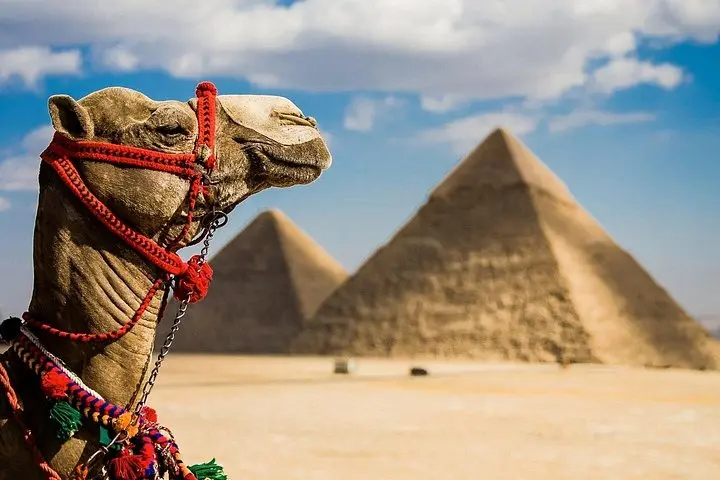
You step out of your air-conditioned car onto a wind-swept plateau and the three pyramids rise before you — geometric and stark against a bright Egyptian sky. Sand crunches beneath your shoes as the guide unfolds centuries: pharaonic processions, monumental funerary architecture and the daily rhythms of modern Cairo pressing at the plateau’s edges.
Verified experiences and guided adventures in the surrounding area.
Operated by Egypt Lifetime Tours · Cairo, Cairo Governorate
You step out of your air-conditioned car onto a wind-swept plateau and the three pyramids rise before you — geometric and stark against a bright Egyptian sky. Sand crunches beneath your shoes as the guide unfolds centuries: pharaonic processions, monumental funerary architecture and the daily rhythms of modern Cairo pressing at the plateau’s edges.
The Giza complex sits on Cenozoic limestone beds that ancient builders quarried close at hand to form the pyramids’ core and casing. The Great Sphinx, carved from a single mass of bedrock, still stares across that same stone at the horizon. Later, downtown’s Egyptian Museum concentrates 3,500 years of material culture — from Tutankhamen’s funerary gold to everyday ceramics — while Khan el-Khalili offers a contrasting living history: a medieval bazaar that shaped commerce in the Islamic city.
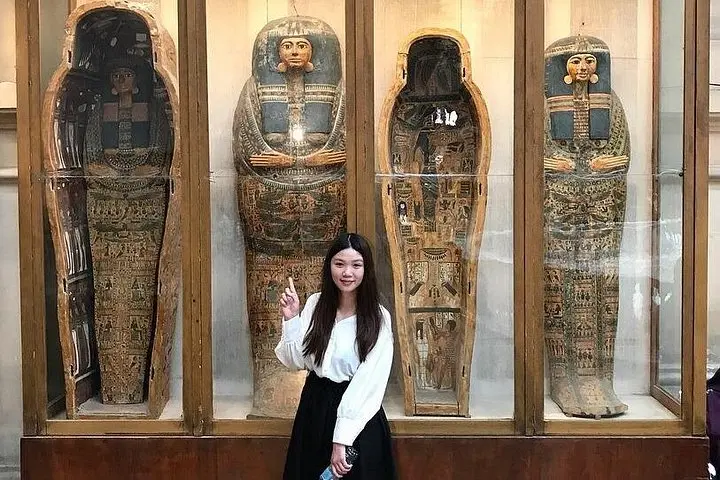
Expect uneven paving, stone steps and open exposure to sun and wind; the day covers roughly eight hours by private car with short walks at each stop. Entrance to interiors like a pyramid or the museum’s mummy room usually requires additional tickets; museum rooms may also restrict photography.
Practical tips: start early to beat heat and crowds, carry sunscreen and a refillable bottle (water is provided but bring extras), and wear shoes with good traction for loose sand and stepped ramps. Bring small local currency for bazaar haggling and tipping your Egyptologist guide — their knowledge transforms monuments into readable history.
Standard tour pricing usually excludes national site entrance fees and optional interior tickets (pyramid entry, mummy room); these are paid separately on-site or as indicated by the operator.
Yes — it's designed for all fitness levels but expect some walking and uneven surfaces; wheelchair access is available for parts of the itinerary but not inside pyramid interiors.
Driving between Giza Plateau, downtown Egyptian Museum and Khan el-Khalili takes about 30–60 minutes each depending on Cairo traffic; the full tour runs roughly eight hours including stops.
Yes, but these require additional tickets and sometimes limited access; check availability in advance and budget for extra fees.
Egypt Lifetime Tours operates guided outdoor trips and adventures with an emphasis on safety, stewardship, and memorable experiences.

You step out of your air-conditioned car onto a wind-swept plateau and the three pyramids rise before you — geometric and stark against a bright Egyptian sky. Sand crunches beneath your shoes as the guide unfolds centuries: pharaonic processions, monumental funerary architecture and the daily rhythms of modern Cairo pressing at the plateau’s edges.
You step out of your air-conditioned car onto a wind-swept plateau and the three pyramids rise before you — geometric and stark against a bright Egyptian sky. Sand crunches beneath your shoes as the guide unfolds centuries: pharaonic processions, monumental funerary architecture and the daily rhythms of modern Cairo pressing at the plateau’s edges.
The Giza complex sits on Cenozoic limestone beds that ancient builders quarried close at hand to form the pyramids’ core and casing. The Great Sphinx, carved from a single mass of bedrock, still stares across that same stone at the horizon. Later, downtown’s Egyptian Museum concentrates 3,500 years of material culture — from Tutankhamen’s funerary gold to everyday ceramics — while Khan el-Khalili offers a contrasting living history: a medieval bazaar that shaped commerce in the Islamic city.
Expect uneven paving, stone steps and open exposure to sun and wind; the day covers roughly eight hours by private car with short walks at each stop. Entrance to interiors like a pyramid or the museum’s mummy room usually requires additional tickets; museum rooms may also restrict photography.
Practical tips: start early to beat heat and crowds, carry sunscreen and a refillable bottle (water is provided but bring extras), and wear shoes with good traction for loose sand and stepped ramps. Bring small local currency for bazaar haggling and tipping your Egyptologist guide — their knowledge transforms monuments into readable history.