THE ADVENTURE COLLECTIVE® · Independent discovery and booking for outdoor travel

Explore Sintra’s palaces, misty forests and Atlantic cliffs in a private electric tuk‑tuk. This seven‑hour guided loop pairs quick access with thoughtful stops—ideal for travelers who want maximum variety without long drives.
Explore Sintra’s palaces, misty forests and Atlantic cliffs in a private electric tuk‑tuk. This seven‑hour guided loop pairs quick access with thoughtful stops—ideal for travelers who want maximum variety without long drives.
You slide into a tiny electric tuk‑tuk as fog lifts off the Sintra hills and the scent of eucalyptus pulls you up a narrow lane. The driver threads the vehicle between ancient stone walls and weathered cobbles while your guide points out a turret, a tile pattern, then signals to stop at a viewpoint: red-roofed palaces spill down the mountainside; the Atlantic chisels a white horizon beyond.
Verified experiences and guided adventures in the surrounding area.
Operated by Discover Sintra Tuk-Tuk Tours · Sintra, Lisbon
You slide into a tiny electric tuk‑tuk as fog lifts off the Sintra hills and the scent of eucalyptus pulls you up a narrow lane. The driver threads the vehicle between ancient stone walls and weathered cobbles while your guide points out a turret, a tile pattern, then signals to stop at a viewpoint: red-roofed palaces spill down the mountainside; the Atlantic chisels a white horizon beyond.
This is a day that travels fast and then slows to a crawl — a guided loop through the crown jewels of the Serra de Sintra where Romanticism met royal whim. You’ll see the flamboyant colors and mix of Gothic, Manueline and Moorish motifs at Pena Palace (sitting around 500 m above sea level), walk segments of the rough ramparts of the Moorish Castle, and descend to Quinta da Regaleira, where winding wells and hidden tunnels feel like deliberate puzzles set by 19th‑century idealists.
Geologically, Sintra is an island of granite and microclimates. The range was folded and pushed up during the same tectonic forces that shaped the Iberian interior, producing steep ridgelines that trap moist Atlantic air. That moisture feeds laurel and cork oak forests interspersed with exotic plantings introduced by Portuguese nobility, which give the area an almost temperate rainforest feel.
Culturally, Sintra became an escape for Lisbon’s aristocracy in the 18th and 19th centuries; King Ferdinand II’s renovations turned private estates into theatrical statements. Today the landscape balances tourist traffic with village life—fishermen still haul nets at nearby coastal spots while winegrowers tend the sandy vineyards of Colares.
Practical guidance: a full‑day private tuk‑tuk runs about seven hours with multiple short stops—expect minimal walking between viewpoints but stairs and uneven stone in palace grounds. Admission to interiors is generally not included, so book tickets for Pena or Quinta da Regaleira ahead if you want inside access. Start early to beat mid‑day crowds, and plan pickups from central Sintra or your hotel; most operators will collect you with about 15 minutes’ notice.
Wear grippy shoes for cobbles and short woodland trails, layer for cool mornings and warmer afternoons, and bring a small daypack with water and a rain shell. Photography is rewarding at sunrise over the palace and again at sunset along the coast; binoculars help for seabirds off the cliffs. If you want a slower pace, ask your guide to linger at a winery in Colares or the rocky shore at Azenhas do Mar—both quiet down when daytrippers leave.
A private tuk‑tuk lets you access narrow roads and slip off the major circuits for local viewpoints, but it also means respecting fragile soils and historic masonry—follow your guide’s route and leave the sites as you found them.
No—admissions to most palaces are typically not included; book tickets in advance if you want to tour interiors.
Walking is limited to short stretches at each stop—expect a few hundred meters per site with some stairs and uneven cobbles.
Yes—tuk‑tuks are designed for narrow, winding roads in Sintra, allowing access that larger coaches can’t reach.
Yes, it’s family‑friendly and suitable for most ages, though those with limited mobility should note the stairs and uneven terrain at historic sites.
Tours can be canceled for severe weather; most operators offer a full refund if canceled at least 24 hours in advance.
Bottled water is included but meals are not—your guide can recommend or stop at local cafés and a winery for tastings at additional cost.
Discover Sintra Tuk-Tuk Tours operates guided outdoor trips and adventures with an emphasis on safety, stewardship, and memorable experiences.

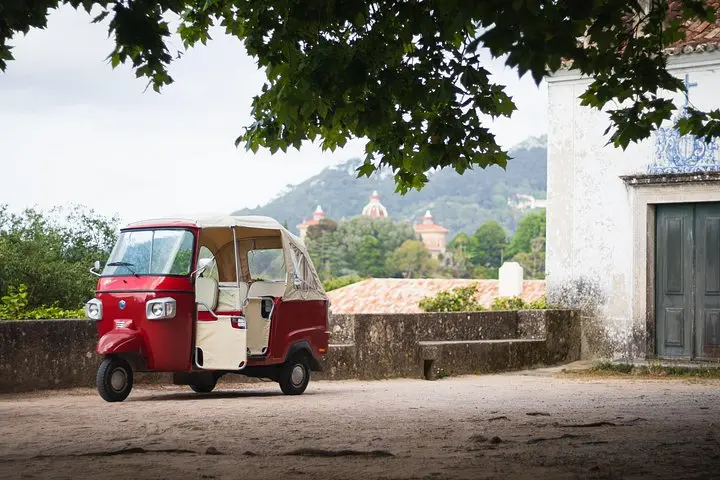
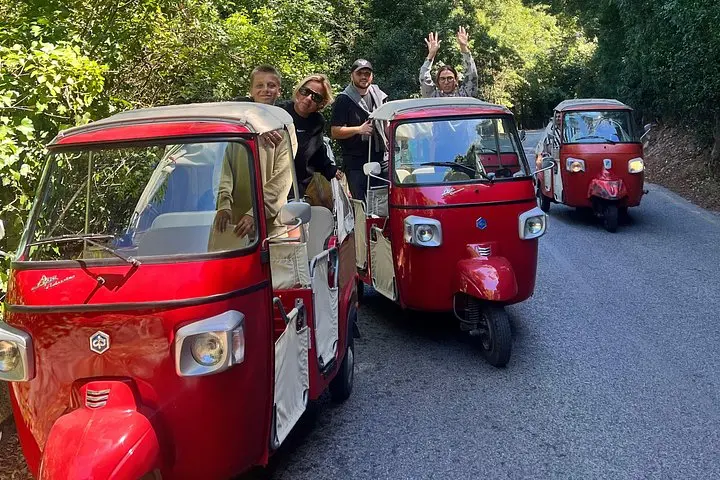
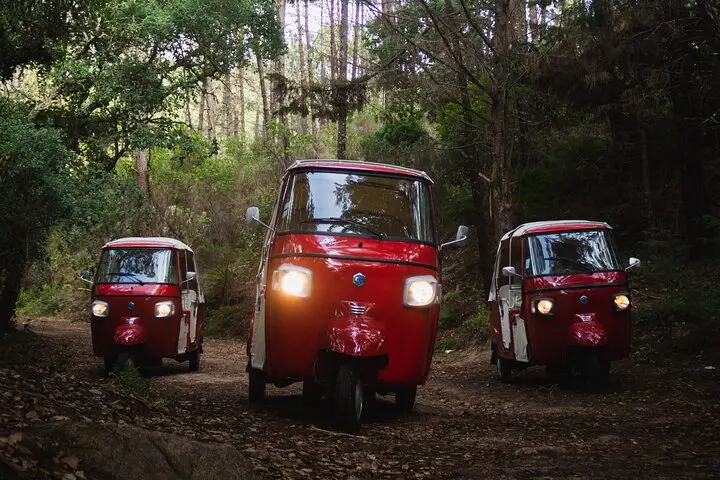
You slide into a tiny electric tuk‑tuk as fog lifts off the Sintra hills and the scent of eucalyptus pulls you up a narrow lane. The driver threads the vehicle between ancient stone walls and weathered cobbles while your guide points out a turret, a tile pattern, then signals to stop at a viewpoint: red-roofed palaces spill down the mountainside; the Atlantic chisels a white horizon beyond.
You slide into a tiny electric tuk‑tuk as fog lifts off the Sintra hills and the scent of eucalyptus pulls you up a narrow lane. The driver threads the vehicle between ancient stone walls and weathered cobbles while your guide points out a turret, a tile pattern, then signals to stop at a viewpoint: red-roofed palaces spill down the mountainside; the Atlantic chisels a white horizon beyond.
This is a day that travels fast and then slows to a crawl — a guided loop through the crown jewels of the Serra de Sintra where Romanticism met royal whim. You’ll see the flamboyant colors and mix of Gothic, Manueline and Moorish motifs at Pena Palace (sitting around 500 m above sea level), walk segments of the rough ramparts of the Moorish Castle, and descend to Quinta da Regaleira, where winding wells and hidden tunnels feel like deliberate puzzles set by 19th‑century idealists.
Geologically, Sintra is an island of granite and microclimates. The range was folded and pushed up during the same tectonic forces that shaped the Iberian interior, producing steep ridgelines that trap moist Atlantic air. That moisture feeds laurel and cork oak forests interspersed with exotic plantings introduced by Portuguese nobility, which give the area an almost temperate rainforest feel.
Culturally, Sintra became an escape for Lisbon’s aristocracy in the 18th and 19th centuries; King Ferdinand II’s renovations turned private estates into theatrical statements. Today the landscape balances tourist traffic with village life—fishermen still haul nets at nearby coastal spots while winegrowers tend the sandy vineyards of Colares.
Practical guidance: a full‑day private tuk‑tuk runs about seven hours with multiple short stops—expect minimal walking between viewpoints but stairs and uneven stone in palace grounds. Admission to interiors is generally not included, so book tickets for Pena or Quinta da Regaleira ahead if you want inside access. Start early to beat mid‑day crowds, and plan pickups from central Sintra or your hotel; most operators will collect you with about 15 minutes’ notice.
Wear grippy shoes for cobbles and short woodland trails, layer for cool mornings and warmer afternoons, and bring a small daypack with water and a rain shell. Photography is rewarding at sunrise over the palace and again at sunset along the coast; binoculars help for seabirds off the cliffs. If you want a slower pace, ask your guide to linger at a winery in Colares or the rocky shore at Azenhas do Mar—both quiet down when daytrippers leave.
A private tuk‑tuk lets you access narrow roads and slip off the major circuits for local viewpoints, but it also means respecting fragile soils and historic masonry—follow your guide’s route and leave the sites as you found them.