THE ADVENTURE COLLECTIVE® · Independent discovery and booking for outdoor travel

Move from Sintra’s misty palaces to Cascais’ wind-swept cliffs in one curated, private tuk-tuk day. This full-day tour balances short hikes, historical highlights and seaside vistas—perfect for travelers who want big views with minimal planning.
Move from Sintra’s misty palaces to Cascais’ wind-swept cliffs in one curated, private tuk-tuk day. This full-day tour balances short hikes, historical highlights and seaside vistas—perfect for travelers who want big views with minimal planning.
You pull away from Sintra Portela as a bell from the train station fades behind you. The tuk-tuk hums up the mountain road, the Atlantic wind already pushing the vehicle forward, and the forest seems to lean in to show you the way. In minutes the roofs of Sintra’s palaces peek through camellias and pines—bright paint and stone carving set against an emerald hillside. This is a day designed around sudden reveals: a Moorish wall that opens to a panorama of the sea, a spiral staircase that descends into an underground grotto, a cliff that throws the ocean sky back at you.
Verified experiences and guided adventures in the surrounding area.
Operated by Talentedstreet · Sintra, Lisbon
You pull away from Sintra Portela as a bell from the train station fades behind you. The tuk-tuk hums up the mountain road, the Atlantic wind already pushing the vehicle forward, and the forest seems to lean in to show you the way. In minutes the roofs of Sintra’s palaces peek through camellias and pines—bright paint and stone carving set against an emerald hillside. This is a day designed around sudden reveals: a Moorish wall that opens to a panorama of the sea, a spiral staircase that descends into an underground grotto, a cliff that throws the ocean sky back at you.
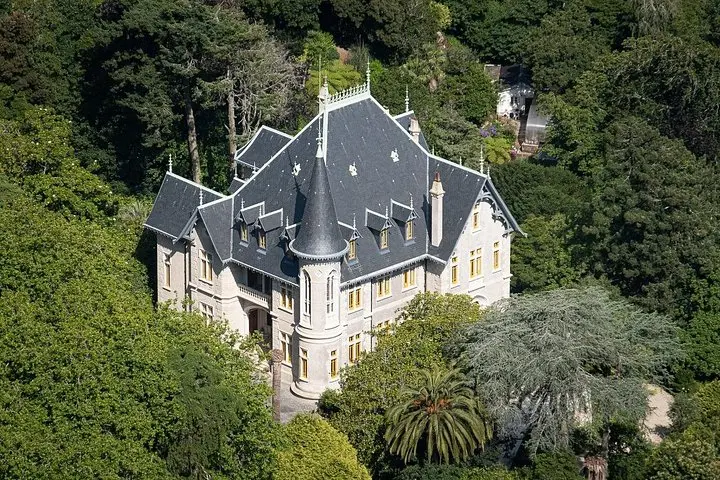
Sintra is UNESCO-listed for reason: it’s where 19th-century Romanticism went public, an era that grafted exotic gardens, revivalist architecture and theatrical viewpoints onto an older Moorish and medieval skeleton. The Moorish Castle keeps a quiet watch from the highest ridges—its stone walls are reminders of the 8th-century defenses that once marked these slopes. Pena Palace, flamboyant and eccentric, perches like a stage set, while Quinta da Regaleira hides wells and grottoes that hint at alchemy and Masonic symbolism. Down the coast, Cascais flips the script: what was a fishing town became an aristocratic summer outpost, then a modern marina town with surfable beaches.
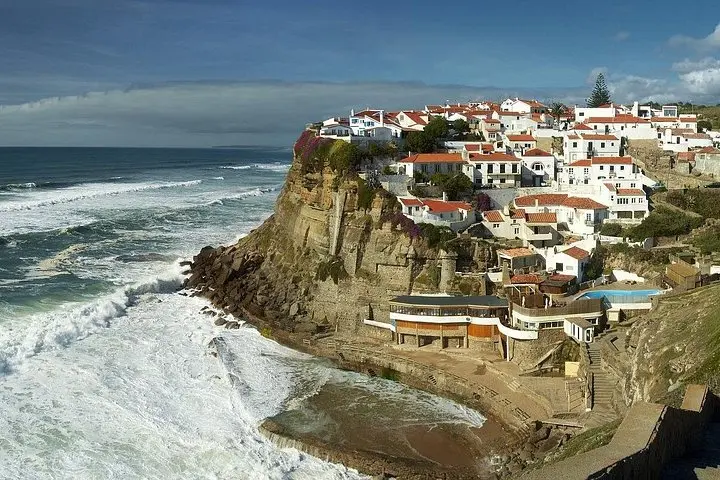
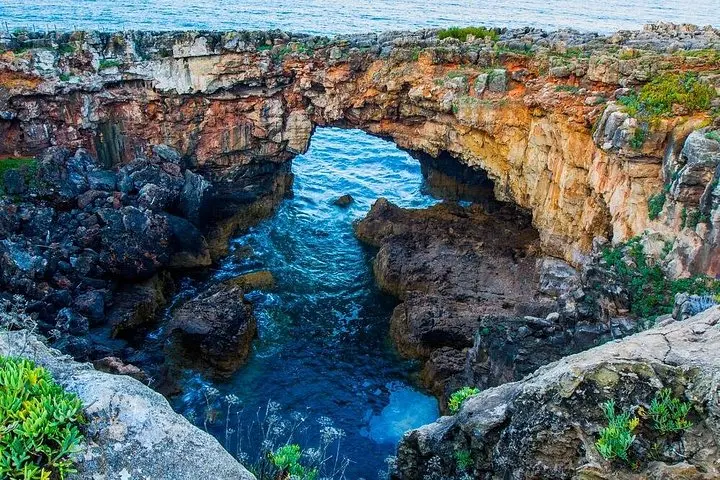
Geology here is blunt and immediate. Granite and schist shape steep escarpments that plunge to the sea, and erosion carves caves and blowholes—places like Boca do Inferno where the Atlantic literally roars. The road between mountain and shore moves fast; each bend rearranges vegetation and views.
Practicalities matter. A private tuk-tuk gives you mobility and close-up views, but expect short walks and steps at most sites: the Moorish Castle involves uneven medieval steps; Pena’s terraces are expansive but paved. Decide in advance which paid entries you want—Pena Palace and Quinta da Regaleira are optional and sell tickets on peak days. Start early (the tour runs 6–8 hours) to avoid the worst crowds and take advantage of cooler morning light for photos.
Pack layers: the mountain can be misty and cool while the coast is sunlit and windy. Bring sturdy shoes for short scrambles, sunscreen, and a small daypack with water and a light rain shell. If you’re prone to motion sensitivity, request a slower pace—your driver can stop at viewpoints for photos and brief walks.
This route is equal parts culture and coastline—an active half-day of strolling, short climbs and scenic stops that rewards curiosity. Let your guide point out local lore—the names carved into the palace gardens, the legends of hidden wells—and keep your camera ready; the day moves like tide and the landscape is always ready to reveal something new.
The private tuk-tuk tour runs about 6–8 hours (360–480 minutes) depending on stop choices and traffic.
Admissions are optional and not included—your guide can advise on ticket options and timing.
The tuk-tuk is accessible for short transfers, but many sites have uneven ground and steps; contact the supplier to discuss specific accessibility needs.
Meeting points are the shop near Sintra Portela train station or the historic center; pickup from nearby hotels may be arranged.
Yes—this private tour allows choices of which attractions to visit and how long to linger at viewpoints.
Tipping is discretionary but appreciated; 5–10% for excellent service is common in Portugal.
Talentedstreet operates guided outdoor trips and adventures with an emphasis on safety, stewardship, and memorable experiences.

You pull away from Sintra Portela as a bell from the train station fades behind you. The tuk-tuk hums up the mountain road, the Atlantic wind already pushing the vehicle forward, and the forest seems to lean in to show you the way. In minutes the roofs of Sintra’s palaces peek through camellias and pines—bright paint and stone carving set against an emerald hillside. This is a day designed around sudden reveals: a Moorish wall that opens to a panorama of the sea, a spiral staircase that descends into an underground grotto, a cliff that throws the ocean sky back at you.
You pull away from Sintra Portela as a bell from the train station fades behind you. The tuk-tuk hums up the mountain road, the Atlantic wind already pushing the vehicle forward, and the forest seems to lean in to show you the way. In minutes the roofs of Sintra’s palaces peek through camellias and pines—bright paint and stone carving set against an emerald hillside. This is a day designed around sudden reveals: a Moorish wall that opens to a panorama of the sea, a spiral staircase that descends into an underground grotto, a cliff that throws the ocean sky back at you.
Sintra is UNESCO-listed for reason: it’s where 19th-century Romanticism went public, an era that grafted exotic gardens, revivalist architecture and theatrical viewpoints onto an older Moorish and medieval skeleton. The Moorish Castle keeps a quiet watch from the highest ridges—its stone walls are reminders of the 8th-century defenses that once marked these slopes. Pena Palace, flamboyant and eccentric, perches like a stage set, while Quinta da Regaleira hides wells and grottoes that hint at alchemy and Masonic symbolism. Down the coast, Cascais flips the script: what was a fishing town became an aristocratic summer outpost, then a modern marina town with surfable beaches.
Geology here is blunt and immediate. Granite and schist shape steep escarpments that plunge to the sea, and erosion carves caves and blowholes—places like Boca do Inferno where the Atlantic literally roars. The road between mountain and shore moves fast; each bend rearranges vegetation and views.
Practicalities matter. A private tuk-tuk gives you mobility and close-up views, but expect short walks and steps at most sites: the Moorish Castle involves uneven medieval steps; Pena’s terraces are expansive but paved. Decide in advance which paid entries you want—Pena Palace and Quinta da Regaleira are optional and sell tickets on peak days. Start early (the tour runs 6–8 hours) to avoid the worst crowds and take advantage of cooler morning light for photos.
Pack layers: the mountain can be misty and cool while the coast is sunlit and windy. Bring sturdy shoes for short scrambles, sunscreen, and a small daypack with water and a light rain shell. If you’re prone to motion sensitivity, request a slower pace—your driver can stop at viewpoints for photos and brief walks.
This route is equal parts culture and coastline—an active half-day of strolling, short climbs and scenic stops that rewards curiosity. Let your guide point out local lore—the names carved into the palace gardens, the legends of hidden wells—and keep your camera ready; the day moves like tide and the landscape is always ready to reveal something new.