THE ADVENTURE COLLECTIVE® · Independent discovery and booking for outdoor travel

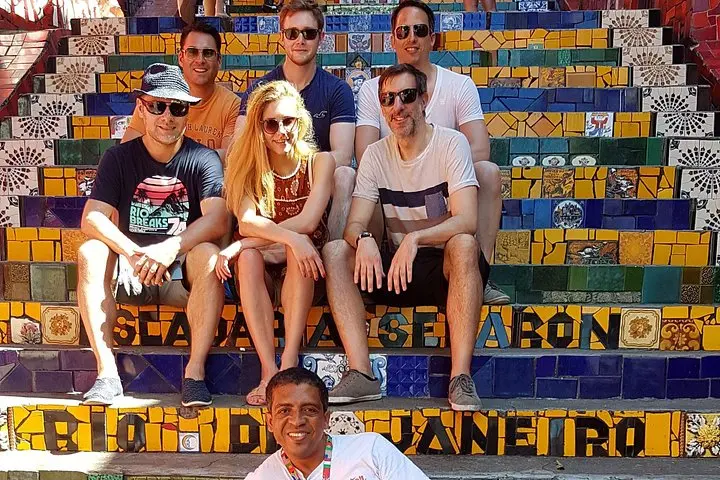
See Rio’s signature sights in one thoughtful, well-paced day: panoramic peaks at Christ the Redeemer and Sugarloaf, colorful Selarón steps and the striking Metropolitan Cathedral. Practical routing and included admissions make this a no-surprises way to cover the essentials.
See Rio’s signature sights in one thoughtful, well-paced day: panoramic peaks at Christ the Redeemer and Sugarloaf, colorful Selarón steps and the striking Metropolitan Cathedral. Practical routing and included admissions make this a no-surprises way to cover the essentials.
You step out of the van as Atlantic wind pushes through Copacabana and the city unfolds — tile roofs, a green mountain spine, and the figure of Christ the Redeemer high above, arms open over the bay.
Verified experiences and guided adventures in the surrounding area.
Operated by Travel Trip Brasil · Rio de Janeiro, Rio de Janeiro
You step out of the van as Atlantic wind pushes through Copacabana and the city unfolds — tile roofs, a green mountain spine, and the figure of Christ the Redeemer high above, arms open over the bay.
This full-day circuit moves from panoramic peaks to the mosaic stairs and the carved angles of a modern cathedral. The cable car up Pão de Açúcar (Sugarloaf) still creaks with early-20th-century charm; Crist the Redeemer, completed in 1931, watches the city that grew up around a busy colonial harbour. Geologically, the granite plugs of Sugarloaf and Corcovado rise from a coastal plain shaped by millions of years of erosion, offering abrupt viewpoints where the ocean meets forest.
Culturally, the route threads samba neighborhoods, the colorful Selarón steps, and the Metropolitan Cathedral’s unusual cone — places where religious, indigenous and Afro-Brazilian histories overlap. Local guides add context: why the cable cars were a technological milestone, how Tijuca Forest was replanted in the 19th century, and where carioca life happens between postcard views.
Practical guidance: expect a seven-hour day with moderate walking, stairs and short transfers by air-conditioned van. Morning visits to Corcovado mean fewer crowds; bring sun protection and a light rain layer — showers are common in summer afternoons. Wear good walking shoes for cobbled streets and staircases. Hydrate frequently and keep valuables secure; urban pickpocketing is the most common hassle. With timed tickets included for major sites and a local guide, the day balances viewpoint-driven photography with cultural stops and one sit-down lunch — a straightforward way to see Rio’s defining landmarks in a single, vivid day.
Yes — tickets for Christ the Redeemer and Sugarloaf cable car are included in the tour price per the booking details.
Pickups are arranged from specified Copacabana pickup points such as the Hilton hotel and Cardeal Arcoverde metro station; the van returns to those same locations.
Many areas on the itinerary and the vehicle are wheelchair accessible, but some viewpoints require short transfers and stairs—contact the operator for specific accessibility arrangements.
Guides typically speak Portuguese and English; check the booking or request language support when you reserve if you need a different language.
Travel Trip Brasil operates guided outdoor trips and adventures with an emphasis on safety, stewardship, and memorable experiences.



You step out of the van as Atlantic wind pushes through Copacabana and the city unfolds — tile roofs, a green mountain spine, and the figure of Christ the Redeemer high above, arms open over the bay.
You step out of the van as Atlantic wind pushes through Copacabana and the city unfolds — tile roofs, a green mountain spine, and the figure of Christ the Redeemer high above, arms open over the bay.
This full-day circuit moves from panoramic peaks to the mosaic stairs and the carved angles of a modern cathedral. The cable car up Pão de Açúcar (Sugarloaf) still creaks with early-20th-century charm; Crist the Redeemer, completed in 1931, watches the city that grew up around a busy colonial harbour. Geologically, the granite plugs of Sugarloaf and Corcovado rise from a coastal plain shaped by millions of years of erosion, offering abrupt viewpoints where the ocean meets forest.
Culturally, the route threads samba neighborhoods, the colorful Selarón steps, and the Metropolitan Cathedral’s unusual cone — places where religious, indigenous and Afro-Brazilian histories overlap. Local guides add context: why the cable cars were a technological milestone, how Tijuca Forest was replanted in the 19th century, and where carioca life happens between postcard views.
Practical guidance: expect a seven-hour day with moderate walking, stairs and short transfers by air-conditioned van. Morning visits to Corcovado mean fewer crowds; bring sun protection and a light rain layer — showers are common in summer afternoons. Wear good walking shoes for cobbled streets and staircases. Hydrate frequently and keep valuables secure; urban pickpocketing is the most common hassle. With timed tickets included for major sites and a local guide, the day balances viewpoint-driven photography with cultural stops and one sit-down lunch — a straightforward way to see Rio’s defining landmarks in a single, vivid day.