THE ADVENTURE COLLECTIVE® · Independent discovery and booking for outdoor travel

Spend six hours walking Rome’s historic core with an official guide — from Piazza del Popolo to the Pantheon, Trevi and the Spanish Steps. This guided route mixes imperial ruins, Baroque plazas and practical local tips for navigating cobbles, crowds and heat.
Spend six hours walking Rome’s historic core with an official guide — from Piazza del Popolo to the Pantheon, Trevi and the Spanish Steps. This guided route mixes imperial ruins, Baroque plazas and practical local tips for navigating cobbles, crowds and heat.
Morning light falls on cobblestones as the group steps off Via dei Condotti and into Piazza del Popolo — an open, sunlit square that once hosted fairs, executions and public gatherings. The guide points out the Flaminio Obelisk while the city's layered history unfolds: Etruscan roads beneath Renaissance facades and imperial ruins rubbing shoulders with Baroque fountains.
Verified experiences and guided adventures in the surrounding area.
Operated by Vatican Rome Tours · Rome, Lazio
Morning light falls on cobblestones as the group steps off Via dei Condotti and into Piazza del Popolo — an open, sunlit square that once hosted fairs, executions and public gatherings. The guide points out the Flaminio Obelisk while the city's layered history unfolds: Etruscan roads beneath Renaissance facades and imperial ruins rubbing shoulders with Baroque fountains.
This six-hour walk threads the spine of central Rome: Via del Corso to Piazza Venezia, the sweep of the Imperial Fora, the place where Caesar fell, and the domed calm of the Pantheon. Geology here is subtle — travertine and tufa quarried from nearby hills and ancient river terraces of the Tiber underlie the streets. Architecturally, the route shifts from imperial masonry to medieval alleys and ornate Baroque plazas like Piazza Navona and the Trevi Fountain, each monument carrying stories of papal patronage and civic life.
Travelers should expect a steady pace on uneven, sometimes slippery stone, with frequent stops for interpretation and photos. The tour balances big-picture history with small cultural notes — where to toss a coin, how Rome reorganized public space after empire, and why the Capitoline Hill mattered politically.
Practical guidance: start early to avoid heat and crowds, bring supportive footwear and a reusable water bottle, and plan for six hours of walking with short pauses. Be mindful of pickpockets in busy squares and give yourself time afterward to sit in a café and digest both the espressos and the stories.
Meeting points vary by operator but are typically in a central piazza near a metro stop; the tour usually loops through the historic center and ends near the Spanish Steps or a central landmark.
Parts of the route have cobbles and stairs; while strollers are possible, some sections may be difficult — check with the operator about accessibility options.
This walking tour focuses on exterior views and history; most admissions (if any) are not included, so expect to pay separately for sites like museums.
Guides schedule short restroom and coffee stops; bring small change for cafés and plan a longer break if you want a full meal mid-tour.
Vatican Rome Tours operates guided outdoor trips and adventures with an emphasis on safety, stewardship, and memorable experiences.

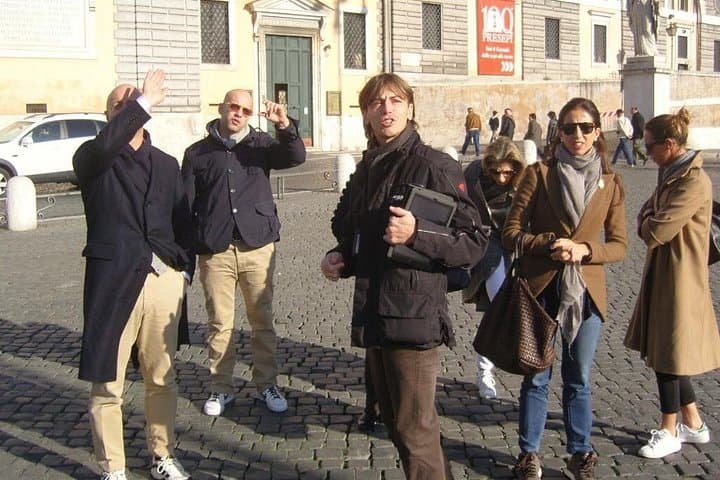


Morning light falls on cobblestones as the group steps off Via dei Condotti and into Piazza del Popolo — an open, sunlit square that once hosted fairs, executions and public gatherings. The guide points out the Flaminio Obelisk while the city's layered history unfolds: Etruscan roads beneath Renaissance facades and imperial ruins rubbing shoulders with Baroque fountains.
Morning light falls on cobblestones as the group steps off Via dei Condotti and into Piazza del Popolo — an open, sunlit square that once hosted fairs, executions and public gatherings. The guide points out the Flaminio Obelisk while the city's layered history unfolds: Etruscan roads beneath Renaissance facades and imperial ruins rubbing shoulders with Baroque fountains.
This six-hour walk threads the spine of central Rome: Via del Corso to Piazza Venezia, the sweep of the Imperial Fora, the place where Caesar fell, and the domed calm of the Pantheon. Geology here is subtle — travertine and tufa quarried from nearby hills and ancient river terraces of the Tiber underlie the streets. Architecturally, the route shifts from imperial masonry to medieval alleys and ornate Baroque plazas like Piazza Navona and the Trevi Fountain, each monument carrying stories of papal patronage and civic life.
Travelers should expect a steady pace on uneven, sometimes slippery stone, with frequent stops for interpretation and photos. The tour balances big-picture history with small cultural notes — where to toss a coin, how Rome reorganized public space after empire, and why the Capitoline Hill mattered politically.
Practical guidance: start early to avoid heat and crowds, bring supportive footwear and a reusable water bottle, and plan for six hours of walking with short pauses. Be mindful of pickpockets in busy squares and give yourself time afterward to sit in a café and digest both the espressos and the stories.