THE ADVENTURE COLLECTIVE® · Independent discovery and booking for outdoor travel

Feel the Rouge River push you through ledges, waves and sandy beaches on this full-day, 16 km rafting expedition from Tremblant. Expect continuous rapids, a riverside picnic and basecamp hot tubs to cap the day.
Feel the Rouge River push you through ledges, waves and sandy beaches on this full-day, 16 km rafting expedition from Tremblant. Expect continuous rapids, a riverside picnic and basecamp hot tubs to cap the day.
You step off the bus at basecamp and the Rouge River is already speaking — gurgling, tumbling, daring you downstream. Inflatable rafts bob against a shoreline of sandbars; guides check gear with steady, practiced hands. The canyon tightens and the current finds its voice.
Verified experiences and guided adventures in the surrounding area.
Operated by The Tremblant Activity Centre · Harrington, Quebec
You step off the bus at basecamp and the Rouge River is already speaking — gurgling, tumbling, daring you downstream. Inflatable rafts bob against a shoreline of sandbars; guides check gear with steady, practiced hands. The canyon tightens and the current finds its voice.
The Rouge has been a playground for paddlers and timber drivers for generations. Carved through ancient Canadian Shield rock, the river alternates broad, sandy pools with ledged drops and continuous rapids known locally as the Seven Sisters. The region sits at the junction of Outaouais and Laurentian landscapes, where glacial action scoured bedrock and left steep banks that funnel late-spring flows into punchy whitewater.
Local culture is river culture: small towns, seasonal outfitters, and a long history of recreational rafting that accelerated with first commercial trips in the late 20th century. Guides blend safety protocol with regional lore — pointing out geological folds, sandbar beaches, and quiet eddies where you can float and watch the forest breathe.
Practical guide: the trip covers roughly 16 km and about 4 hours on water, with full-day logistics including transport from Tremblant, a riverside picnic lunch, and post-raft hot tubs. Expect variable current speeds depending on rainfall; wear a swimsuit, secure footwear, and the provided wetsuit for cool water. All participants must be able to swim and be prepared for intermittent strong rapids and calm pools suitable for bodysurfing.
Timing: go in high spring for the biggest flows or late spring–summer for sustained, technical rapids. Stay hydrated, listen to your guide, and leave room for a steak or salmon dinner back at basecamp — a proper bookend to a full day on a river that won’t go quietly.
The trip descends roughly 16 km of the Rouge River, with about 3–4 hours of active rafting split into two descents.
Participants must be at least 12 years old; youths 16 and under must be accompanied by an adult.
No prior experience is required — guides teach paddling and safety techniques, though a moderate fitness level and swimming ability are required.
Guides choose the best stretches based on current flow; the time on water and rapid intensity may vary with rainfall and spring melt.
The Tremblant Activity Centre operates guided outdoor trips and adventures with an emphasis on safety, stewardship, and memorable experiences.
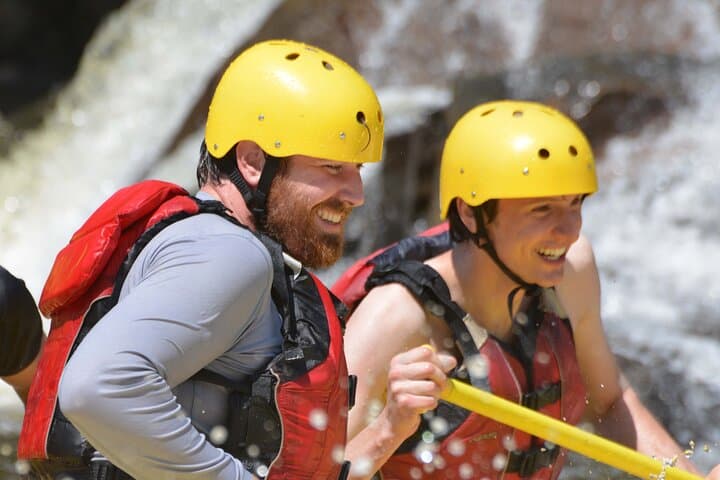
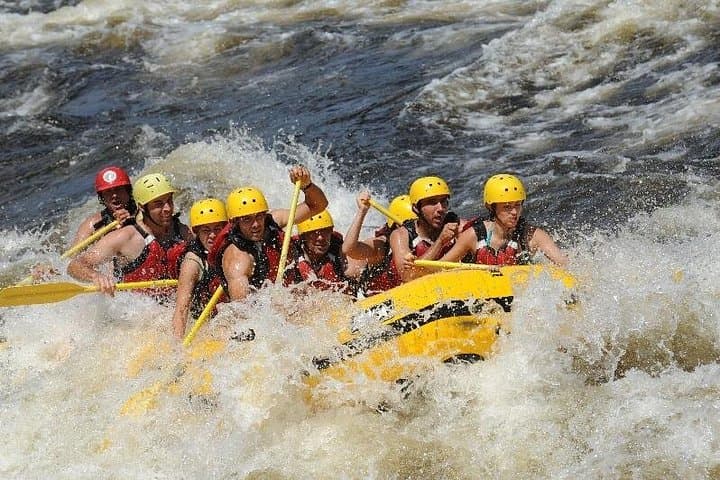
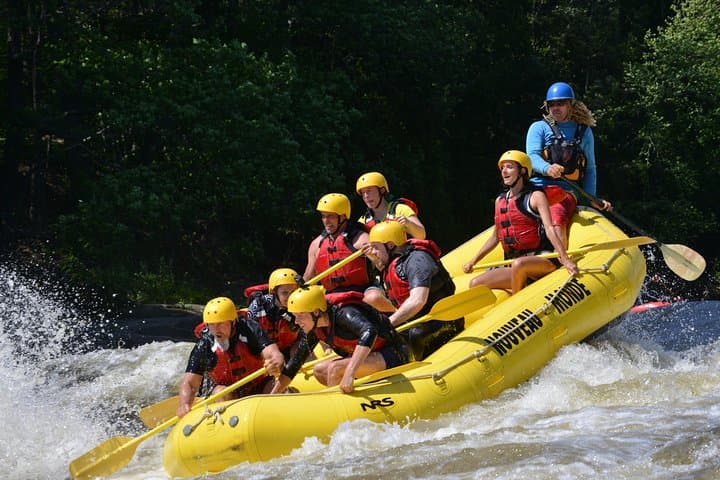
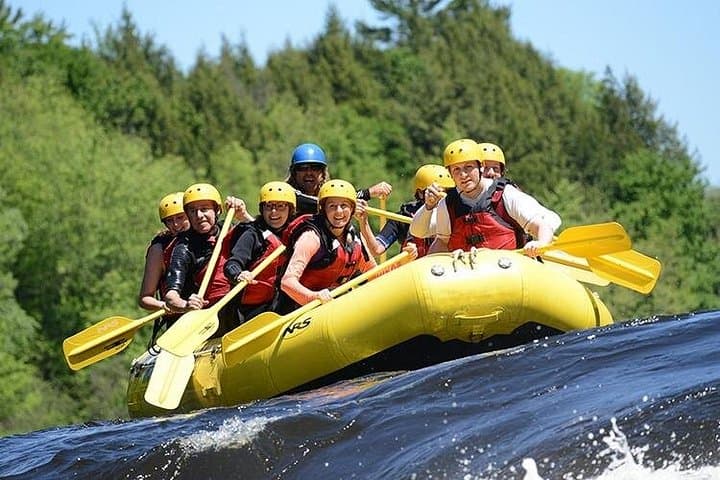
You step off the bus at basecamp and the Rouge River is already speaking — gurgling, tumbling, daring you downstream. Inflatable rafts bob against a shoreline of sandbars; guides check gear with steady, practiced hands. The canyon tightens and the current finds its voice.
You step off the bus at basecamp and the Rouge River is already speaking — gurgling, tumbling, daring you downstream. Inflatable rafts bob against a shoreline of sandbars; guides check gear with steady, practiced hands. The canyon tightens and the current finds its voice.
The Rouge has been a playground for paddlers and timber drivers for generations. Carved through ancient Canadian Shield rock, the river alternates broad, sandy pools with ledged drops and continuous rapids known locally as the Seven Sisters. The region sits at the junction of Outaouais and Laurentian landscapes, where glacial action scoured bedrock and left steep banks that funnel late-spring flows into punchy whitewater.
Local culture is river culture: small towns, seasonal outfitters, and a long history of recreational rafting that accelerated with first commercial trips in the late 20th century. Guides blend safety protocol with regional lore — pointing out geological folds, sandbar beaches, and quiet eddies where you can float and watch the forest breathe.
Practical guide: the trip covers roughly 16 km and about 4 hours on water, with full-day logistics including transport from Tremblant, a riverside picnic lunch, and post-raft hot tubs. Expect variable current speeds depending on rainfall; wear a swimsuit, secure footwear, and the provided wetsuit for cool water. All participants must be able to swim and be prepared for intermittent strong rapids and calm pools suitable for bodysurfing.
Timing: go in high spring for the biggest flows or late spring–summer for sustained, technical rapids. Stay hydrated, listen to your guide, and leave room for a steak or salmon dinner back at basecamp — a proper bookend to a full day on a river that won’t go quietly.