THE ADVENTURE COLLECTIVE® · Independent discovery and booking for outdoor travel

Travel the narrow place where dunes meet the Atlantic on a full-day 4x4 tour from Walvis Bay. Expect flamingos, seals, dune drives and a quiet beach picnic framed by red sand and blue sea.
Travel the narrow place where dunes meet the Atlantic on a full-day 4x4 tour from Walvis Bay. Expect flamingos, seals, dune drives and a quiet beach picnic framed by red sand and blue sea.
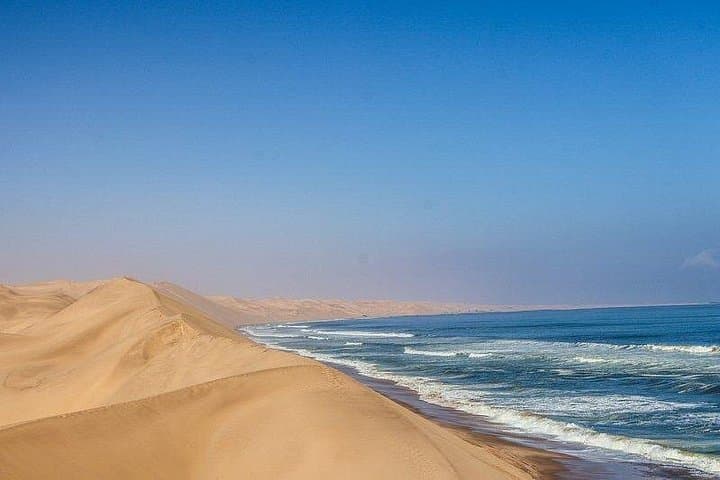
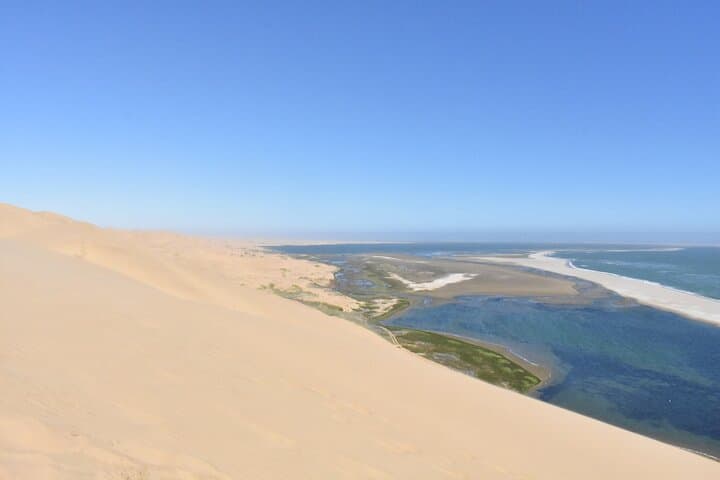
A low, wind-scrubbed ridge opens to a narrow ribbon where dunes meet the Atlantic — and suddenly the desert turns toward the sea.
Verified experiences and guided adventures in the surrounding area.
Operated by Sandwichharbourtours.com · Walvis Bay, Erongo Region
A low, wind-scrubbed ridge opens to a narrow ribbon where dunes meet the Atlantic — and suddenly the desert turns toward the sea.
You start at the Walvis Bay lagoon, where slick pink flocks of flamingos pick through salt pans and the guides lower tyre pressure to roughly 0.8 bar before the long beach run. The route follows salt flats and a broad shoreline into Sandwich Harbour, a place where towering red dunes press hard against surf and the ocean pushes forward in green-blue bays. Guides point out sleeping Cape fur seals, distant dolphins, and the odd oryx moving like ghostly figures along dune slopes.
Geology here is immediate: wind-sculpted dunes built from sand swept from the river plains, meeting an Atlantic that has shaped embayments and sandbanks for millennia. The area is part of the Namib’s dynamic dune–sea interface, culturally linked to coastal fishing towns and the long history of ship navigation along Namibia’s coast.
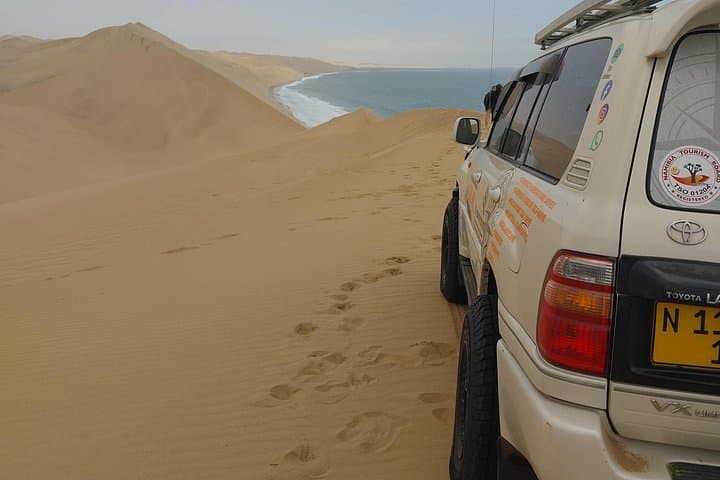
Practically, expect a mix of slow 4x4 dune driving, short hikes on loose sand, and a quiet picnic with wide views. The day lasts about six to seven hours; light changes fast so mornings and late afternoons give the best colors. Wear sturdy shoes for sand, wind-proof layers, and strong sun protection. Bring water, motion-sickness prevention if you’re sensitive to dune rides, and a camera with a polarizer for the vivid sea-to-dune contrast. Guides manage logistics — air up, air down, and scout wildlife — so you can focus on the landscape daring you to keep walking.
No — access typically requires a guided 4x4 tour because of deep sand and tidal zones; operators deflate tyres and know safe lines.
Facilities are extremely limited; plan for a full day with bottled water and any personal necessities.
The Atlantic here is cold with strong currents; swimming is not generally recommended and guides will advise on safety.
This tour is not recommended for pregnant travelers or people with significant spinal or cardiovascular conditions due to bumpy dune driving.
Sandwichharbourtours.com operates guided outdoor trips and adventures with an emphasis on safety, stewardship, and memorable experiences.

A low, wind-scrubbed ridge opens to a narrow ribbon where dunes meet the Atlantic — and suddenly the desert turns toward the sea.
A low, wind-scrubbed ridge opens to a narrow ribbon where dunes meet the Atlantic — and suddenly the desert turns toward the sea.
You start at the Walvis Bay lagoon, where slick pink flocks of flamingos pick through salt pans and the guides lower tyre pressure to roughly 0.8 bar before the long beach run. The route follows salt flats and a broad shoreline into Sandwich Harbour, a place where towering red dunes press hard against surf and the ocean pushes forward in green-blue bays. Guides point out sleeping Cape fur seals, distant dolphins, and the odd oryx moving like ghostly figures along dune slopes.
Geology here is immediate: wind-sculpted dunes built from sand swept from the river plains, meeting an Atlantic that has shaped embayments and sandbanks for millennia. The area is part of the Namib’s dynamic dune–sea interface, culturally linked to coastal fishing towns and the long history of ship navigation along Namibia’s coast.
Practically, expect a mix of slow 4x4 dune driving, short hikes on loose sand, and a quiet picnic with wide views. The day lasts about six to seven hours; light changes fast so mornings and late afternoons give the best colors. Wear sturdy shoes for sand, wind-proof layers, and strong sun protection. Bring water, motion-sickness prevention if you’re sensitive to dune rides, and a camera with a polarizer for the vivid sea-to-dune contrast. Guides manage logistics — air up, air down, and scout wildlife — so you can focus on the landscape daring you to keep walking.