THE ADVENTURE COLLECTIVE® · Independent discovery and booking for outdoor travel

Explore Santorini’s caldera rim in a single day: Oia’s alleys, Akrotiri’s ruins, the red cliffs and black sands, plus panoramic views from Profitis Ilias. This guided, private tour combines local insight with transport and planned stops for a thorough island introduction.
Explore Santorini’s caldera rim in a single day: Oia’s alleys, Akrotiri’s ruins, the red cliffs and black sands, plus panoramic views from Profitis Ilias. This guided, private tour combines local insight with transport and planned stops for a thorough island introduction.
You step out onto the caldera rim as the Aegean wind nudges you along white alleys; churches squat with blue domes and the sea below pulls the eye into a deep, volcanic blue.
Verified experiences and guided adventures in the surrounding area.
Operated by Debonair Santorini Exclusive Traveling · Fira (Thira), South Aegean
You step out onto the caldera rim as the Aegean wind nudges you along white alleys; churches squat with blue domes and the sea below pulls the eye into a deep, volcanic blue.
This full-day sightseeing loop threads Oia, Imerovigli, Fira, Firostefani, Pyrgos, the Monastery of Profitis Ilias, Akrotiri and both the Red and Black beaches. Santorini began as a violent volcanic collapse roughly 3,600 years ago—the eruption that formed the caldera and preserved the Bronze Age settlement at Akrotiri. The island’s geology is raw: layered pumice cliffs and iron-rich red and black sands that still tell the story of fire and sea.
Culturally, villages here grew from fishermen’s and vine-growers’ needs; narrow, stepped lanes and shaded kafeneia reflect a pace of life shaped by sun and wind. Local guides point out the 14th‑century churches, the Venetian castle ruins in Pyrgos and hillside vineyards that survive in sun-baked terraces.
Practical guidance: the day is long—expect 8–9 hours with several short walks on uneven stone and staircases. Bring sun protection, a refillable bottle, and shoes with good grip. Akrotiri’s archaeological site has limited access and is best planned into your schedule; some stops may have entrance fees. Timing matters: mornings are cooler and less crowded, while sunset viewpoints fill early. The operator typically provides private transport, onboard Wi‑Fi and bottled water, and pickup can often be arranged from Fira or cruise ports. Keep cash for small cafes and support local kafeneia—small purchases sustain these villages and keep trails passable for future visitors.
The tour offers private transportation and pickup can typically be arranged from Fira, cruise ports, or nearby hotels—confirm your pickup point when booking.
Some stops on the itinerary list admission as included while others may require separate tickets; check the booking details or confirm with the operator before arrival.
Expect several short walks on uneven stone and staircases in villages—most sections are accessible to travelers with average mobility but it’s not fully wheelchair-friendly.
Yes—Red Beach and Perivolos (Black Beach) allow swimming; bring swimwear and a towel and note that facilities vary by beach.
Debonair Santorini Exclusive Traveling operates guided outdoor trips and adventures with an emphasis on safety, stewardship, and memorable experiences.
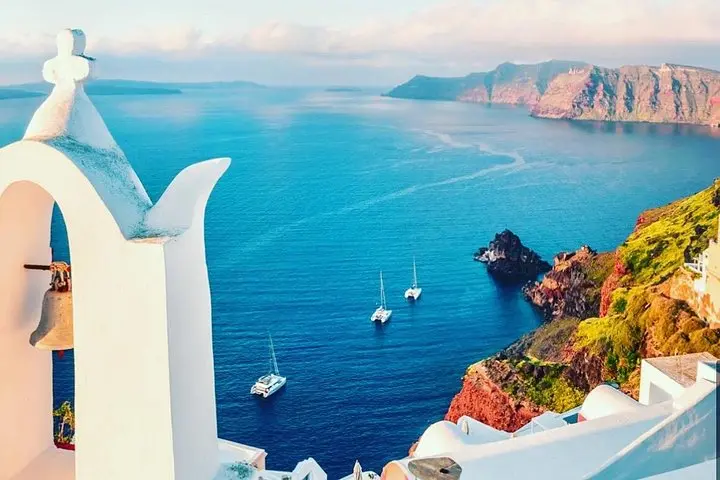
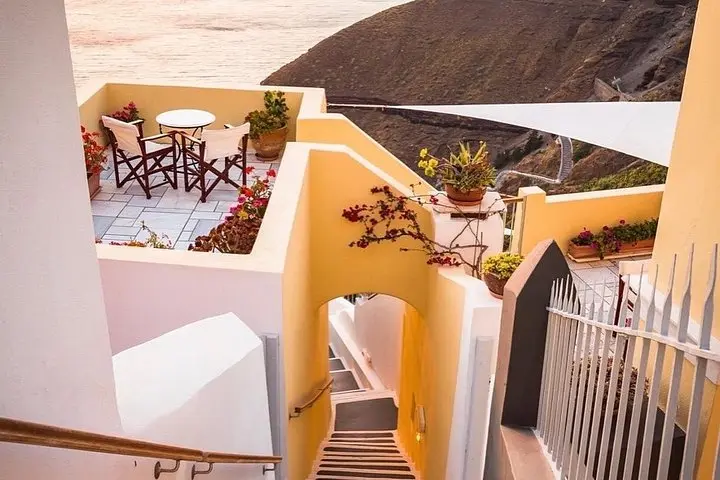

You step out onto the caldera rim as the Aegean wind nudges you along white alleys; churches squat with blue domes and the sea below pulls the eye into a deep, volcanic blue.
You step out onto the caldera rim as the Aegean wind nudges you along white alleys; churches squat with blue domes and the sea below pulls the eye into a deep, volcanic blue.
This full-day sightseeing loop threads Oia, Imerovigli, Fira, Firostefani, Pyrgos, the Monastery of Profitis Ilias, Akrotiri and both the Red and Black beaches. Santorini began as a violent volcanic collapse roughly 3,600 years ago—the eruption that formed the caldera and preserved the Bronze Age settlement at Akrotiri. The island’s geology is raw: layered pumice cliffs and iron-rich red and black sands that still tell the story of fire and sea.
Culturally, villages here grew from fishermen’s and vine-growers’ needs; narrow, stepped lanes and shaded kafeneia reflect a pace of life shaped by sun and wind. Local guides point out the 14th‑century churches, the Venetian castle ruins in Pyrgos and hillside vineyards that survive in sun-baked terraces.
Practical guidance: the day is long—expect 8–9 hours with several short walks on uneven stone and staircases. Bring sun protection, a refillable bottle, and shoes with good grip. Akrotiri’s archaeological site has limited access and is best planned into your schedule; some stops may have entrance fees. Timing matters: mornings are cooler and less crowded, while sunset viewpoints fill early. The operator typically provides private transport, onboard Wi‑Fi and bottled water, and pickup can often be arranged from Fira or cruise ports. Keep cash for small cafes and support local kafeneia—small purchases sustain these villages and keep trails passable for future visitors.