THE ADVENTURE COLLECTIVE® · Independent discovery and booking for outdoor travel

A long, rewarding day out of Colombo that pairs a dramatic rock fortress climb at Sigiriya with the painted sanctuaries of Dambulla and an eye‑level jeep safari in Minneriya. Expect varied terrain, ancient history and a chance to see wild Asian elephants up close.
A long, rewarding day out of Colombo that pairs a dramatic rock fortress climb at Sigiriya with the painted sanctuaries of Dambulla and an eye‑level jeep safari in Minneriya. Expect varied terrain, ancient history and a chance to see wild Asian elephants up close.
Before dawn the van slides out of Colombo like a shadow releasing a city full of lights. The highway unfurls through rubber plantations and rice paddies; the air grows greener by the hour and the outlines of a 200‑metre rock begin to assert themselves on the horizon — Sigiriya, ancient and abrupt, cutting the flatness of the central plains.
Verified experiences and guided adventures in the surrounding area.
Operated by Sigiri Tours · Sigiriya, Central Province
Before dawn the van slides out of Colombo like a shadow releasing a city full of lights. The highway unfurls through rubber plantations and rice paddies; the air grows greener by the hour and the outlines of a 200‑metre rock begin to assert themselves on the horizon — Sigiriya, ancient and abrupt, cutting the flatness of the central plains.
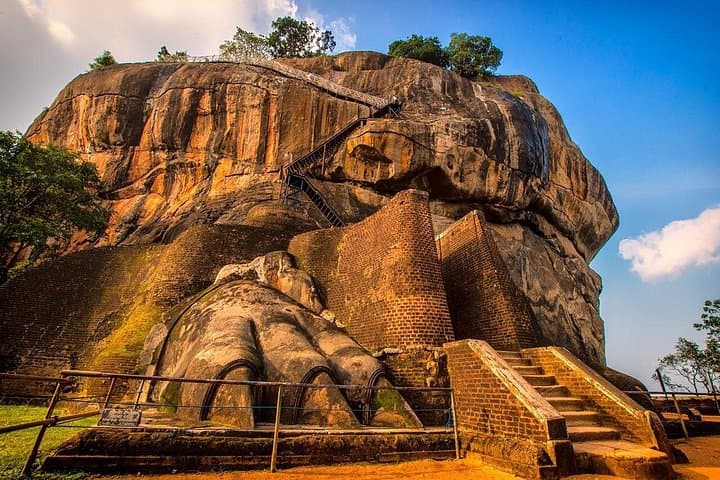
Climbing Sigiriya is not a long hike but it is theatrical: a sequence of terraces, iron staircases and carved rock galleries that push you upward into winds that seem to interrogate every slow step. Midway, the frescoes — winged, sensuous paint preserved under stone — watch as visitors negotiate the Lion’s Paw platform. From the plateau the view opens on flooded fields, scattered temples and a patchwork of villages that have changed little since the fortress was a royal capital under King Kashyapa in the fifth century.
The geology here is simple and stubborn: a hardened magma plug weathered into a near-vertical monolith that gave local kings a defensive advantage and modern archaeologists a clear site for frescoes, gardens and hydraulic works. The museum by the entry offers a tidy chronology of excavations; a knowledgeable guide fills in the politics, the iconography and the engineering of the water gardens below.
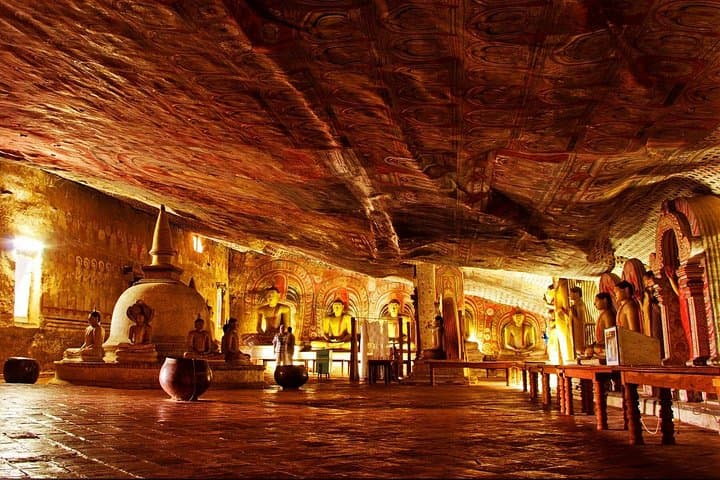
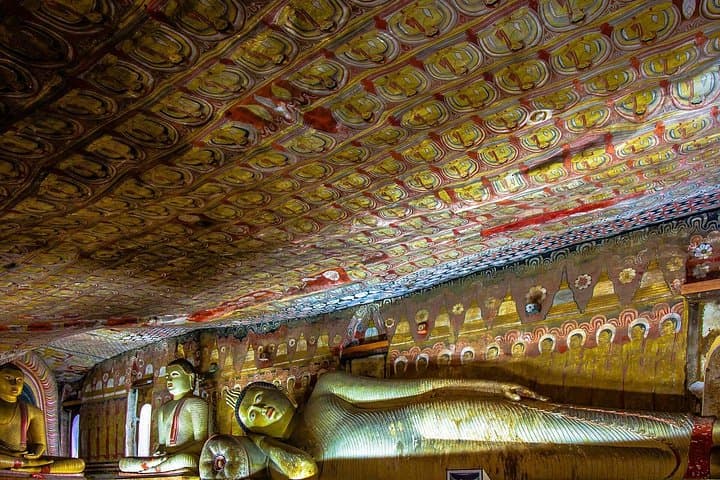
Drop down the road to Dambulla and the mood shifts from exposed rock to cool shadow. The rock temple caves hold over 150 Buddha images and murals that stretch across centuries — an uninterrupted strain of devotion painted into limestone. Light filters into the caverns and the painted narratives of rulers and worshippers take on a tactile immediacy.
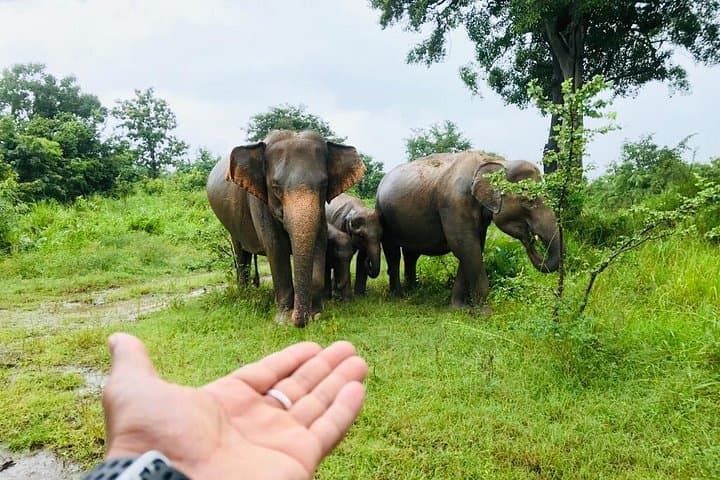
In the afternoon the terrain changes again to Minneriya National Park, where the jeep becomes the instrument of patience. If the herd has congregated — as it often does during dry months — the scene is dominated by gray bulk: adult elephants feeding, calves napping, bulls testing one another. An experienced naturalist will point out behavior and explain how seasonal water and crop cycles draw animals toward the park.
Practical planning matters: this is a long day (expect 10–13 hours), so pace yourself. Wear supportive shoes for uneven steps and bring sun protection and at least 2 liters of water; metal stair sections can be hot by midday. Confirm entrance fees before travel and ask whether Sigiriya admission is included. Cameras with telephoto lenses are useful at Minneriya; small-denomination rupees help with local purchases like snacks and temple offerings. Expect a full but efficient day that stitches archaeology, religion and wildlife into one continuous Sri Lankan landscape.
The tour runs approximately 10–13 hours depending on traffic and the time spent at each site; plan for a full day out of Colombo.
The itinerary lists Dambulla temple fees as included; confirm with the operator whether Sigiriya admission is covered or should be paid on arrival.
Many children complete the climb but supervision is required on narrow stair sections; consider skipping the summit for very young children or those uncomfortable with heights.
The park is best known for Asian elephants and often offers sightings of spotted deer and diverse birdlife; sightings are never guaranteed.
Yes — the operator provides pickup from Colombo hotels, Colombo airport and selected pickup points; confirm your exact pickup location when booking.
Dress respectfully (shoulders and knees covered) and carry small change for donations or souvenir purchases; shoes must be removed before entering temple caves.
Sigiri Tours operates guided outdoor trips and adventures with an emphasis on safety, stewardship, and memorable experiences.
Before dawn the van slides out of Colombo like a shadow releasing a city full of lights. The highway unfurls through rubber plantations and rice paddies; the air grows greener by the hour and the outlines of a 200‑metre rock begin to assert themselves on the horizon — Sigiriya, ancient and abrupt, cutting the flatness of the central plains.
Before dawn the van slides out of Colombo like a shadow releasing a city full of lights. The highway unfurls through rubber plantations and rice paddies; the air grows greener by the hour and the outlines of a 200‑metre rock begin to assert themselves on the horizon — Sigiriya, ancient and abrupt, cutting the flatness of the central plains.
Climbing Sigiriya is not a long hike but it is theatrical: a sequence of terraces, iron staircases and carved rock galleries that push you upward into winds that seem to interrogate every slow step. Midway, the frescoes — winged, sensuous paint preserved under stone — watch as visitors negotiate the Lion’s Paw platform. From the plateau the view opens on flooded fields, scattered temples and a patchwork of villages that have changed little since the fortress was a royal capital under King Kashyapa in the fifth century.
The geology here is simple and stubborn: a hardened magma plug weathered into a near-vertical monolith that gave local kings a defensive advantage and modern archaeologists a clear site for frescoes, gardens and hydraulic works. The museum by the entry offers a tidy chronology of excavations; a knowledgeable guide fills in the politics, the iconography and the engineering of the water gardens below.
Drop down the road to Dambulla and the mood shifts from exposed rock to cool shadow. The rock temple caves hold over 150 Buddha images and murals that stretch across centuries — an uninterrupted strain of devotion painted into limestone. Light filters into the caverns and the painted narratives of rulers and worshippers take on a tactile immediacy.
In the afternoon the terrain changes again to Minneriya National Park, where the jeep becomes the instrument of patience. If the herd has congregated — as it often does during dry months — the scene is dominated by gray bulk: adult elephants feeding, calves napping, bulls testing one another. An experienced naturalist will point out behavior and explain how seasonal water and crop cycles draw animals toward the park.
Practical planning matters: this is a long day (expect 10–13 hours), so pace yourself. Wear supportive shoes for uneven steps and bring sun protection and at least 2 liters of water; metal stair sections can be hot by midday. Confirm entrance fees before travel and ask whether Sigiriya admission is included. Cameras with telephoto lenses are useful at Minneriya; small-denomination rupees help with local purchases like snacks and temple offerings. Expect a full but efficient day that stitches archaeology, religion and wildlife into one continuous Sri Lankan landscape.