THE ADVENTURE COLLECTIVE® · Independent discovery and booking for outdoor travel

A full-day transfer from Split to Zagreb that stops for a guided visit to Plitvice Lakes National Park—16 linked lakes, wooden boardwalks, a boat across the largest lake, and panoramic train rides. Expect a long travel day balanced by four immersive hours inside one of Croatia’s greatest natural wonders.
A full-day transfer from Split to Zagreb that stops for a guided visit to Plitvice Lakes National Park—16 linked lakes, wooden boardwalks, a boat across the largest lake, and panoramic train rides. Expect a long travel day balanced by four immersive hours inside one of Croatia’s greatest natural wonders.
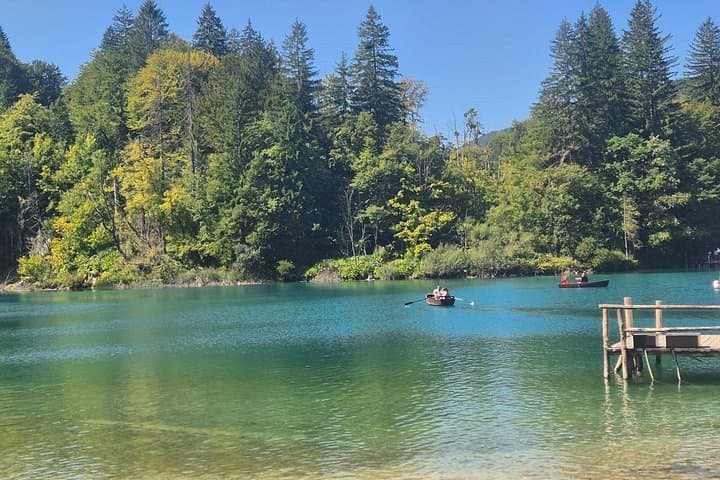
You step off the coastal morning air in Split, luggage stacked in the bus, and the Adriatic’s sun still warm on your shoulders. The road climbs away from the Dalmatian coast and the landscape changes in a matter of miles: vineyards and karst outcrops give way to dense beech and fir, and the blue of the sea is replaced by the jewel tones of inland water.
Verified experiences and guided adventures in the surrounding area.
Operated by Šugaman Tours · Plitvička Jezera, Lika-Senj County
You step off the coastal morning air in Split, luggage stacked in the bus, and the Adriatic’s sun still warm on your shoulders. The road climbs away from the Dalmatian coast and the landscape changes in a matter of miles: vineyards and karst outcrops give way to dense beech and fir, and the blue of the sea is replaced by the jewel tones of inland water.
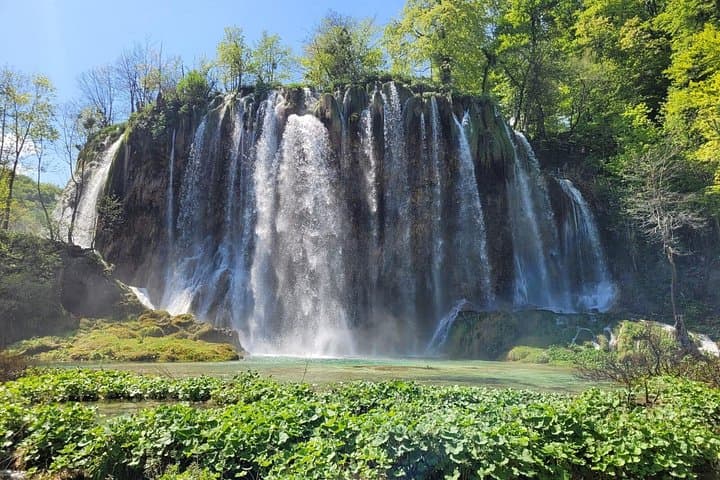
Plitvice Lakes does not announce itself so much as unfold. Walkways thread through a network of 16 tiered lakes that build upon travertine dams—mineral shelves that the water itself has raised over centuries. Water is the actor here: it pours, it whispers, it pushes you along boardwalks and around bends where cascades tumble in curtains. The park’s geology is straightforward and dramatic—the limestone bedrock, the constant interplay of calcium carbonate and plant life, creates the travertine barriers that make the lakes so photogenic and fragile.
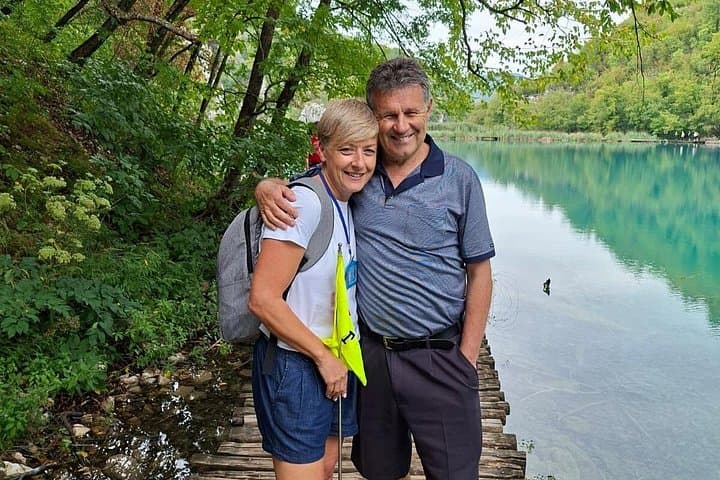
Historically, Plitvice has been a borderland of peoples and empires. In the early 20th century it became a protected area and today is a UNESCO World Heritage site; the wooden walkways you use are the park’s way of letting people witness a living geological process while limiting footprint. Local culture in the nearby villages is rural and rooted—simple mountain cuisine, shepherding traditions, and a hospitality shaped by distance and seasonal work.
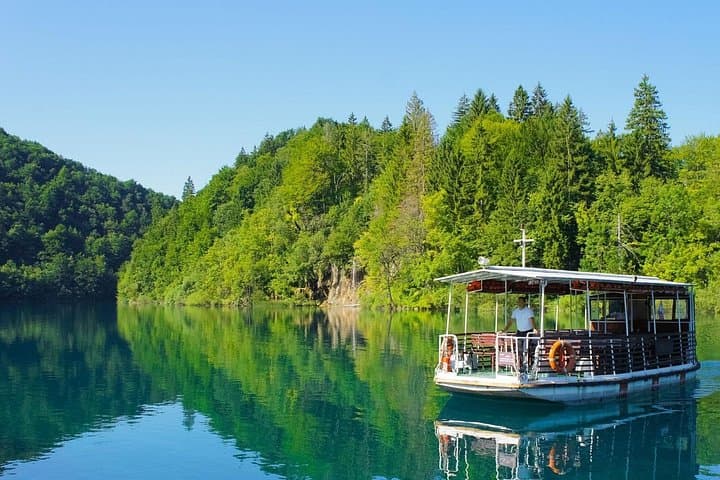
The tour is pragmatic: expect a full travel day (about 12 hours total), with roughly seven hours on the road and four hours inside the park—enough time to cover 6–8 kilometers of trails and boardwalks with a modest elevation gain (~150–250 m depending on route). Your itinerary includes a short sightseeing boat across the largest lake and an electric panoramic train to bridge the upper and lower sectors.
Practicalities matter. Park weather can be markedly cooler and wetter than Split; wear grippy walking shoes, bring layers, and carry water and snacks. Entrance fees are paid in cash on-site and change seasonally; in high summer expect higher prices and larger crowds. The transfer drops you in Zagreb by evening at Zrinjevac Park, giving you a soft landing in the city after a day of raw nature.
For travelers who want a concentrated encounter with Croatia’s best freshwater scenery without the logistics of driving, this transfer-and-visit package compresses the essentials: an inland road trip, a guided walk through geological time, and a closing city arrival that turns a travel day into an experience. Take your camera, but leave space for slow moments—the park rewards a measured pace.
Expect roughly 2.5–3.5 hours each way depending on traffic and stops; the full tour is about 12 hours including time in the park.
No—entrance fees are paid on-site in cash and vary seasonally (higher in June–September).
Children are welcome but infants must sit on laps; the walking includes boardwalks and moderate distances, so judge by ability to walk for a few hours.
Selected hotels are included in pickup options; otherwise meet at the agency on Split’s Riva 30 minutes before departure.
Tours run in light rain but the operator may cancel for severe weather; bring waterproof layers and expect slick surfaces.
Yes—this tour includes the sightseeing boat across the largest lake and the park’s electric panoramic train.
Šugaman Tours operates guided outdoor trips and adventures with an emphasis on safety, stewardship, and memorable experiences.
You step off the coastal morning air in Split, luggage stacked in the bus, and the Adriatic’s sun still warm on your shoulders. The road climbs away from the Dalmatian coast and the landscape changes in a matter of miles: vineyards and karst outcrops give way to dense beech and fir, and the blue of the sea is replaced by the jewel tones of inland water.
You step off the coastal morning air in Split, luggage stacked in the bus, and the Adriatic’s sun still warm on your shoulders. The road climbs away from the Dalmatian coast and the landscape changes in a matter of miles: vineyards and karst outcrops give way to dense beech and fir, and the blue of the sea is replaced by the jewel tones of inland water.
Plitvice Lakes does not announce itself so much as unfold. Walkways thread through a network of 16 tiered lakes that build upon travertine dams—mineral shelves that the water itself has raised over centuries. Water is the actor here: it pours, it whispers, it pushes you along boardwalks and around bends where cascades tumble in curtains. The park’s geology is straightforward and dramatic—the limestone bedrock, the constant interplay of calcium carbonate and plant life, creates the travertine barriers that make the lakes so photogenic and fragile.
Historically, Plitvice has been a borderland of peoples and empires. In the early 20th century it became a protected area and today is a UNESCO World Heritage site; the wooden walkways you use are the park’s way of letting people witness a living geological process while limiting footprint. Local culture in the nearby villages is rural and rooted—simple mountain cuisine, shepherding traditions, and a hospitality shaped by distance and seasonal work.
The tour is pragmatic: expect a full travel day (about 12 hours total), with roughly seven hours on the road and four hours inside the park—enough time to cover 6–8 kilometers of trails and boardwalks with a modest elevation gain (~150–250 m depending on route). Your itinerary includes a short sightseeing boat across the largest lake and an electric panoramic train to bridge the upper and lower sectors.
Practicalities matter. Park weather can be markedly cooler and wetter than Split; wear grippy walking shoes, bring layers, and carry water and snacks. Entrance fees are paid in cash on-site and change seasonally; in high summer expect higher prices and larger crowds. The transfer drops you in Zagreb by evening at Zrinjevac Park, giving you a soft landing in the city after a day of raw nature.
For travelers who want a concentrated encounter with Croatia’s best freshwater scenery without the logistics of driving, this transfer-and-visit package compresses the essentials: an inland road trip, a guided walk through geological time, and a closing city arrival that turns a travel day into an experience. Take your camera, but leave space for slow moments—the park rewards a measured pace.