THE ADVENTURE COLLECTIVE® · Independent discovery and booking for outdoor travel

Explore three of northern Armenia’s most striking medieval sites—Sanahin, Haghpat and Akhtala—on a full-day circuit that blends architectural history with dramatic geology. This guided tour pairs short walks with rich historical context and convenient transport from the region.
Explore three of northern Armenia’s most striking medieval sites—Sanahin, Haghpat and Akhtala—on a full-day circuit that blends architectural history with dramatic geology. This guided tour pairs short walks with rich historical context and convenient transport from the region.
You step out of the minivan where the road loosens and the valley opens—stone churches rise like deliberate ideas against a cool Lori sky. Wind runs along the deep canyons around Akhtala, and the basalt bridge near Sanahin dares you to read its weathered joints and imagine the carts that once crossed it.
Verified experiences and guided adventures in the surrounding area.
Operated by Ayrarat Tour · Alaverdi, Lori
You step out of the minivan where the road loosens and the valley opens—stone churches rise like deliberate ideas against a cool Lori sky. Wind runs along the deep canyons around Akhtala, and the basalt bridge near Sanahin dares you to read its weathered joints and imagine the carts that once crossed it.
This loop through Tashir-Dzoraget threads together Armenia’s medieval highland story. Sanahin and Haghpat are twin monastic complexes that served as centers of learning and manuscript production from the 10th–13th centuries; their carved cross-stones, domes and gavit halls reveal a mix of Byzantine form and Armenian vernacular engineering. The region’s geology—volcanic basalts and limestone cliffs—shapes the architecture and the landscape: fortresses cling to rocky spurs, bridges span narrow, fast streams, and quarry scars quietly match the masonry.
Culturally, villages nearby retain crafts and recipes handed down through generations; your guide will point out inscriptions, workshop sites and the local patterns in stonework.
Practical guidance: this is a long, full-day road itinerary (about 9–10 hours) with short on-foot visits at each site rather than long hikes. Wear sturdy walking shoes for uneven church yards and bridge stones, layer for mountain wind, and carry water—the tour includes bottled water and lunch. Photography is permitted at most sites but respect worship areas. Start early to avoid afternoon glare on the stonework and to make the most of cooler light for details on façades. With a bit of planning, this day becomes a compact, tangible primer on Armenia’s northern heritage.
This is a full-day (about 9–10 hour) guided tour with hotel pickup/drop-off, transport by air-conditioned minivan, lunch and bottled water included.
Sites have uneven ground, steps and some steep approaches; those with limited mobility should check specific access in advance and consider assistance for short climbs.
Admissions for listed monuments are noted as included in the itinerary; confirm with the operator if specific exhibits or guided interior access have extra fees.
Guides on these tours commonly speak English and Russian; confirm language availability at booking if you need another language.
Ayrarat Tour operates guided outdoor trips and adventures with an emphasis on safety, stewardship, and memorable experiences.
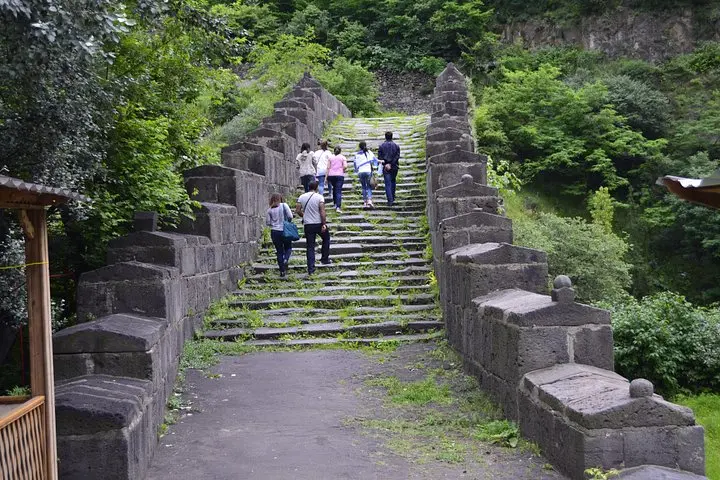
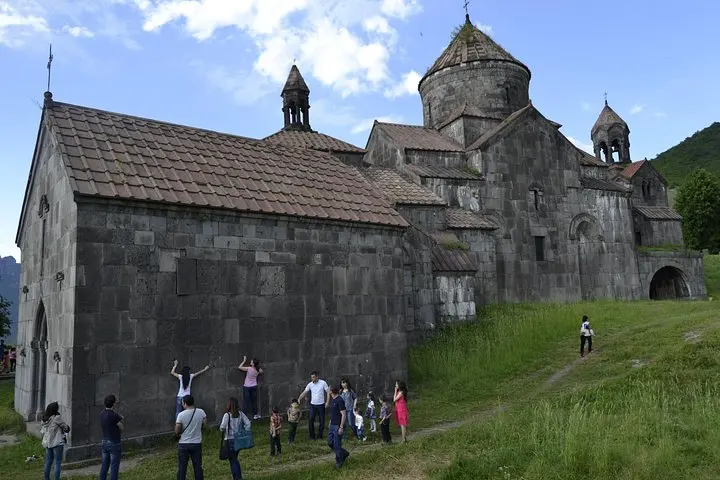
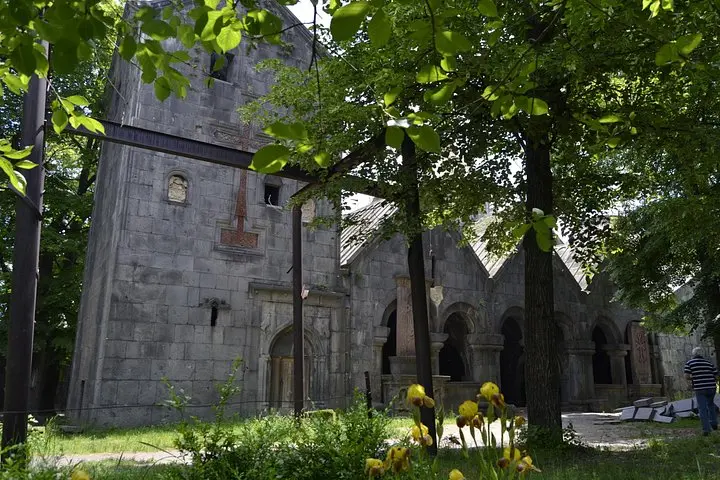
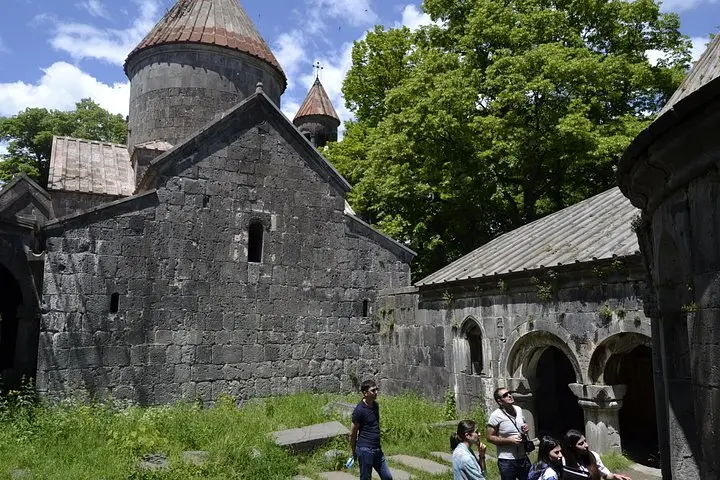
You step out of the minivan where the road loosens and the valley opens—stone churches rise like deliberate ideas against a cool Lori sky. Wind runs along the deep canyons around Akhtala, and the basalt bridge near Sanahin dares you to read its weathered joints and imagine the carts that once crossed it.
You step out of the minivan where the road loosens and the valley opens—stone churches rise like deliberate ideas against a cool Lori sky. Wind runs along the deep canyons around Akhtala, and the basalt bridge near Sanahin dares you to read its weathered joints and imagine the carts that once crossed it.
This loop through Tashir-Dzoraget threads together Armenia’s medieval highland story. Sanahin and Haghpat are twin monastic complexes that served as centers of learning and manuscript production from the 10th–13th centuries; their carved cross-stones, domes and gavit halls reveal a mix of Byzantine form and Armenian vernacular engineering. The region’s geology—volcanic basalts and limestone cliffs—shapes the architecture and the landscape: fortresses cling to rocky spurs, bridges span narrow, fast streams, and quarry scars quietly match the masonry.
Culturally, villages nearby retain crafts and recipes handed down through generations; your guide will point out inscriptions, workshop sites and the local patterns in stonework.
Practical guidance: this is a long, full-day road itinerary (about 9–10 hours) with short on-foot visits at each site rather than long hikes. Wear sturdy walking shoes for uneven church yards and bridge stones, layer for mountain wind, and carry water—the tour includes bottled water and lunch. Photography is permitted at most sites but respect worship areas. Start early to avoid afternoon glare on the stonework and to make the most of cooler light for details on façades. With a bit of planning, this day becomes a compact, tangible primer on Armenia’s northern heritage.