THE ADVENTURE COLLECTIVE® · Independent discovery and booking for outdoor travel

Spend a long day exploring Vietnam’s karst heart: a sampan through Trang An’s caves, a short pedal through rice‑flat villages, and a steep climb up Mua Cave for a Tam Coc panorama. This practical guide explains what to expect and how to prepare.
Spend a long day exploring Vietnam’s karst heart: a sampan through Trang An’s caves, a short pedal through rice‑flat villages, and a steep climb up Mua Cave for a Tam Coc panorama. This practical guide explains what to expect and how to prepare.
You step from the minibus onto a narrow riverside wharf; a row of wooden sampans waits beneath sheer limestone towers that push up from rice paddies like slow-moving cliffs. The boat guides pole you through dark cave mouths, the current nudging the hull onward as karst walls close in and then fling open to wide green fields.
Verified experiences and guided adventures in the surrounding area.
Operated by Local Tours ASIA · Ninh Binh, Ninh Binh Province
You step from the minibus onto a narrow riverside wharf; a row of wooden sampans waits beneath sheer limestone towers that push up from rice paddies like slow-moving cliffs. The boat guides pole you through dark cave mouths, the current nudging the hull onward as karst walls close in and then fling open to wide green fields.
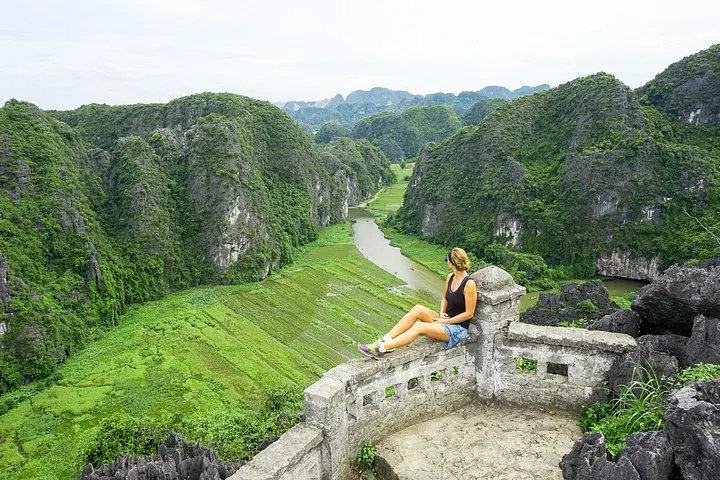
This full-day loop pairs history and geology: Hoa Lu, Vietnam’s 10th‑century capital, offers two compact temple compounds that speak to dynastic defense against northern incursions. The Trang An grottoes are classic tropical karst—limestone folded and dissolved over millions of years—forming tunnels, caves, and narrow waterways that earned UNESCO recognition in 2014. Mua Cave’s nearly 500-step climb tops a ridge called Lying Dragon Mountain and rewards effort with a sweeping Tam Coc basin view—rice plots, river oxbows, and distant peaks.
Expect two hours on the water, a 45-minute optional cycle through flat village lanes, and a 30–45 minute steep stair climb (roughly 400–600 steps; ~120–160 m ascent) to the Mua ridge. Terrain alternates between paved rural roads, compacted dirt, and stone stairways; boats are low and cramped but stable.
Practical notes: start early to avoid midday sun, carry 1–2 liters of water, wear good-grip shoes for the steps, and bring a waterproof sleeve for cameras. The tour includes lunch with local dishes, English narration, and hotel pickup from Hanoi; plan for a long travel day (about 11–12 hours total).
The scheduled boat portion is about two hours, moving through a series of caves and open waterways with brief stops for photos.
No—the cycling segment is optional and typically lasts around 30–45 minutes along flat village lanes; you can skip it and walk instead.
The ascent is steep—nearly 500 stone steps with short breaks—so take your time; it's manageable for most people in reasonable health.
Yes—most departures include roundtrip pickup and drop-off from hotels in Hanoi’s Old Quarter; confirm your pickup point at booking.
Local Tours ASIA operates guided outdoor trips and adventures with an emphasis on safety, stewardship, and memorable experiences.



You step from the minibus onto a narrow riverside wharf; a row of wooden sampans waits beneath sheer limestone towers that push up from rice paddies like slow-moving cliffs. The boat guides pole you through dark cave mouths, the current nudging the hull onward as karst walls close in and then fling open to wide green fields.
You step from the minibus onto a narrow riverside wharf; a row of wooden sampans waits beneath sheer limestone towers that push up from rice paddies like slow-moving cliffs. The boat guides pole you through dark cave mouths, the current nudging the hull onward as karst walls close in and then fling open to wide green fields.
This full-day loop pairs history and geology: Hoa Lu, Vietnam’s 10th‑century capital, offers two compact temple compounds that speak to dynastic defense against northern incursions. The Trang An grottoes are classic tropical karst—limestone folded and dissolved over millions of years—forming tunnels, caves, and narrow waterways that earned UNESCO recognition in 2014. Mua Cave’s nearly 500-step climb tops a ridge called Lying Dragon Mountain and rewards effort with a sweeping Tam Coc basin view—rice plots, river oxbows, and distant peaks.
Expect two hours on the water, a 45-minute optional cycle through flat village lanes, and a 30–45 minute steep stair climb (roughly 400–600 steps; ~120–160 m ascent) to the Mua ridge. Terrain alternates between paved rural roads, compacted dirt, and stone stairways; boats are low and cramped but stable.
Practical notes: start early to avoid midday sun, carry 1–2 liters of water, wear good-grip shoes for the steps, and bring a waterproof sleeve for cameras. The tour includes lunch with local dishes, English narration, and hotel pickup from Hanoi; plan for a long travel day (about 11–12 hours total).