THE ADVENTURE COLLECTIVE® · Independent discovery and booking for outdoor travel

Spend a full day walking the Imlil valley and Aremd in Morocco’s High Atlas. This guided trek combines mountain views, village culture, and local lunch with convenient hotel pickup from Marrakech.
Spend a full day walking the Imlil valley and Aremd in Morocco’s High Atlas. This guided trek combines mountain views, village culture, and local lunch with convenient hotel pickup from Marrakech.
A morning fog lifts off the terraces as you climb out of Imlil, the roar of a distant stream guiding the route. Dry stone walls and mule tracks direct the pace; the air thins and the High Atlas massif takes shape—granite ridges folded into sharp shoulders and gentler scree bowls. By midday you reach a viewpoint above Aremd where lunch is served with the valley spread below like a working map.
Verified experiences and guided adventures in the surrounding area.
Operated by Smart Morocco Tours Excursions · Imlil, Marrakech-Safi
A morning fog lifts off the terraces as you climb out of Imlil, the roar of a distant stream guiding the route. Dry stone walls and mule tracks direct the pace; the air thins and the High Atlas massif takes shape—granite ridges folded into sharp shoulders and gentler scree bowls. By midday you reach a viewpoint above Aremd where lunch is served with the valley spread below like a working map.
The High Atlas holds centuries of Amazigh (Berber) settlement; villages here were built with local stone and terraced fields cut into steep slopes. Geologically the range is young and rugged—granite and metamorphic plates uplifted by African-European plate interactions—and the valleys are carved by seasonal streams that swell with winter snows.
Culturally, trails link hamlets where guesthouses and gîtes host trekkers and donkeys still move goods. Guides from Imlil know the rhythms of Sidi Chamharouch’s small shrine and the local markets in Asni; they translate both language and landscape for visitors.
Practical guidance: expect 6–7 hours on mixed dirt tracks, rocky pitches, and stepped village paths with cumulative elevation changes of several hundred meters. Start early for cooler temperatures and clearer views; bring layers for wind and sun protection, 2–3 liters of water, and solid footwear with ankle support. Respect private terraces, give way to mules, and use your guide to navigate seasonal stream crossings. The day finishes back at Imlil with a short transfer to Marrakech, leaving time for an evening in the medina or a quiet riad recovery.
Most operators include hotel pickup and private transfers; confirm your pickup point when booking and allow travel time (approx. 1–1.5 hours each way).
Yes—this day trek is classified as moderate and is suitable for people with basic fitness; guides can set a comfortable pace and adjust route choices.
Elevation is modest compared with high-mountain expeditions, but some feel shortness of breath on climbs; pace yourself, hydrate, and communicate with your guide if you feel unwell.
Local guides commonly speak Arabic, Berber (Amazigh), and English; confirm language needs at booking for private tours.
Smart Morocco Tours Excursions operates guided outdoor trips and adventures with an emphasis on safety, stewardship, and memorable experiences.
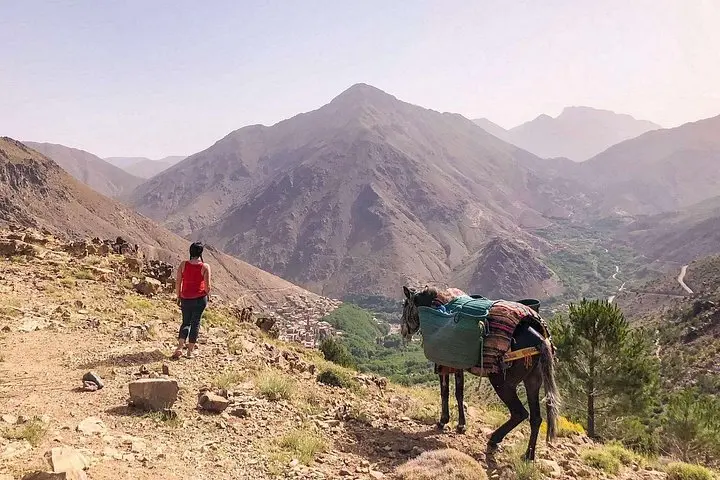
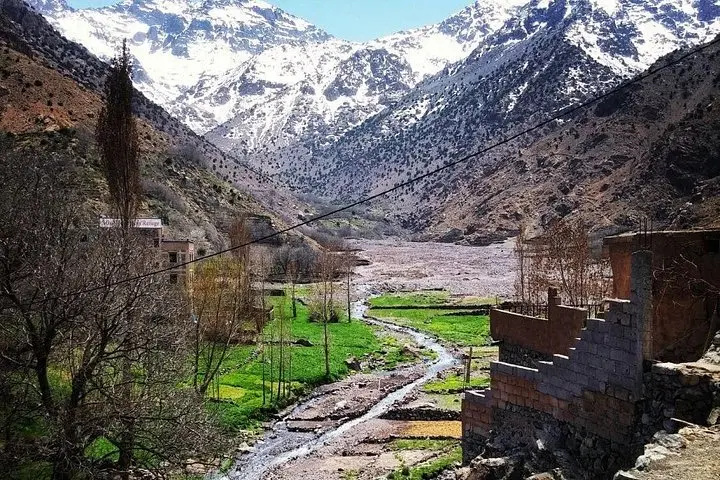
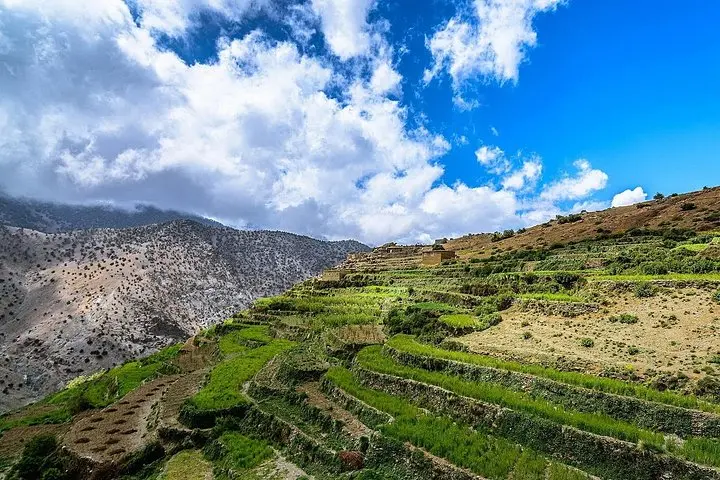
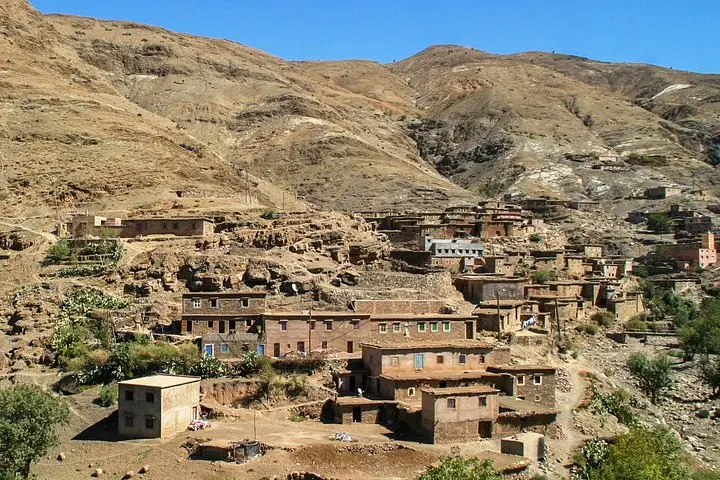
A morning fog lifts off the terraces as you climb out of Imlil, the roar of a distant stream guiding the route. Dry stone walls and mule tracks direct the pace; the air thins and the High Atlas massif takes shape—granite ridges folded into sharp shoulders and gentler scree bowls. By midday you reach a viewpoint above Aremd where lunch is served with the valley spread below like a working map.
A morning fog lifts off the terraces as you climb out of Imlil, the roar of a distant stream guiding the route. Dry stone walls and mule tracks direct the pace; the air thins and the High Atlas massif takes shape—granite ridges folded into sharp shoulders and gentler scree bowls. By midday you reach a viewpoint above Aremd where lunch is served with the valley spread below like a working map.
The High Atlas holds centuries of Amazigh (Berber) settlement; villages here were built with local stone and terraced fields cut into steep slopes. Geologically the range is young and rugged—granite and metamorphic plates uplifted by African-European plate interactions—and the valleys are carved by seasonal streams that swell with winter snows.
Culturally, trails link hamlets where guesthouses and gîtes host trekkers and donkeys still move goods. Guides from Imlil know the rhythms of Sidi Chamharouch’s small shrine and the local markets in Asni; they translate both language and landscape for visitors.
Practical guidance: expect 6–7 hours on mixed dirt tracks, rocky pitches, and stepped village paths with cumulative elevation changes of several hundred meters. Start early for cooler temperatures and clearer views; bring layers for wind and sun protection, 2–3 liters of water, and solid footwear with ankle support. Respect private terraces, give way to mules, and use your guide to navigate seasonal stream crossings. The day finishes back at Imlil with a short transfer to Marrakech, leaving time for an evening in the medina or a quiet riad recovery.