THE ADVENTURE COLLECTIVE® · Independent discovery and booking for outdoor travel

Escape Marrakech for a day to watch the El Abid river tumble over tiered cliffs, swim in natural pools, and meet a colony of Barbary macaques. This practical guide covers what to expect, how to prepare, and how to make the most of a full day at Ouzoud.
Escape Marrakech for a day to watch the El Abid river tumble over tiered cliffs, swim in natural pools, and meet a colony of Barbary macaques. This practical guide covers what to expect, how to prepare, and how to make the most of a full day at Ouzoud.
You leave Marrakech before the heat builds, the minivan threading through palm groves and then climbing into cedar- and olive-dotted hills. The road loosens the city’s bustle and, an hour or two later, the sound arrives first: a steady, liquid thunder that grows until the cascade comes into view — water overturning a limestone lip, spray bright in the sun, rainbows skimming the spray like quicksilver.
Verified experiences and guided adventures in the surrounding area.
Operated by Viajes Amazigh Marruecos · Ouzoud, Béni Mellal-Khénifra
You leave Marrakech before the heat builds, the minivan threading through palm groves and then climbing into cedar- and olive-dotted hills. The road loosens the city’s bustle and, an hour or two later, the sound arrives first: a steady, liquid thunder that grows until the cascade comes into view — water overturning a limestone lip, spray bright in the sun, rainbows skimming the spray like quicksilver.
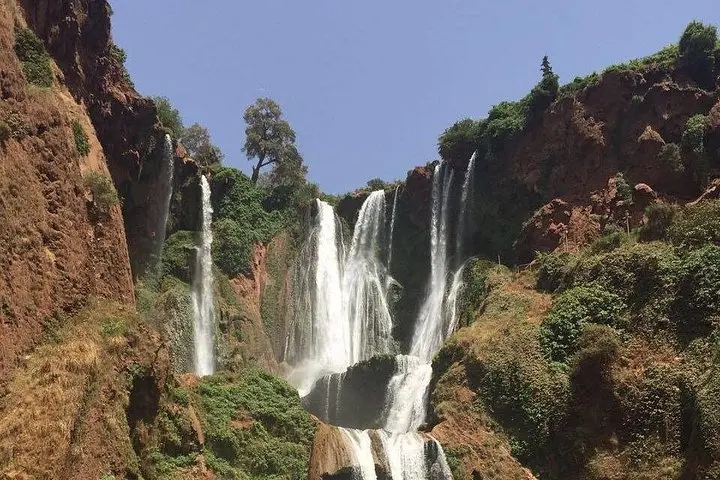
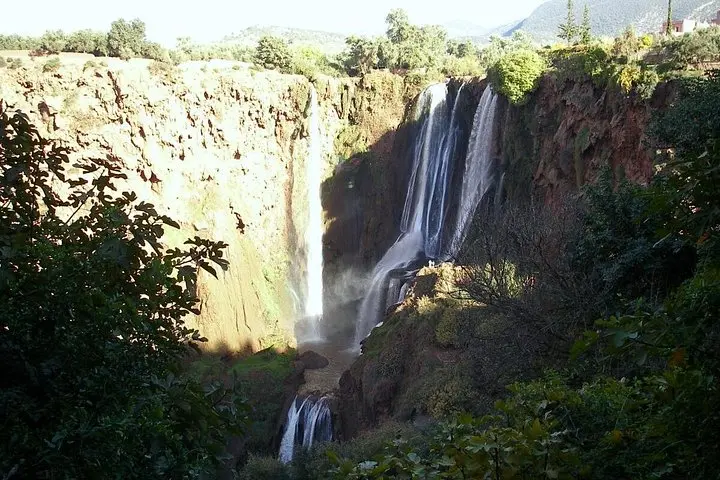
Ouzoud is less a single drop than a series of steps carved by the El Abid river, tumbling about 110 meters over basalt and sandstone ledges into turquoise plunge pools. The surrounding slopes are farmed terraces and ancient olive presses; in Tamazight and Arabic-speaking villages nearby, generations have milled olives and sung the rhythm of harvest. Geologically, the falls sit where harder rock resists erosion above softer strata, creating the shelves and narrow chutes that make for dramatic cascades and the deep pools below.
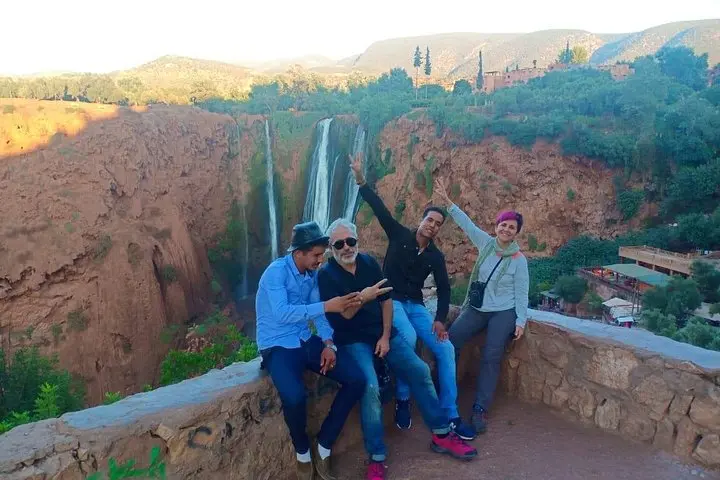
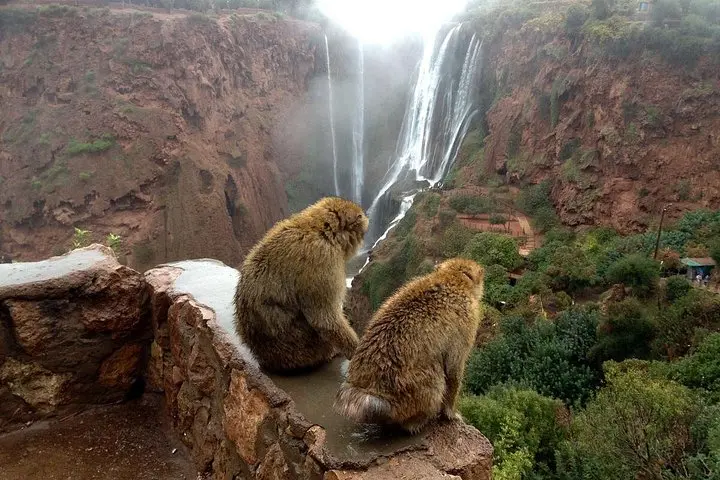
Culturally, the day at Ouzoud is equal parts nature and village life: cafés on the rim frying tagines and serving mint tea, Berber women weaving in shaded courtyards, and a stable colony of Barbary macaques who move boldly along paths and overlook seats. Local guides and boat operators offer short trips near the base of the falls; owners of riverside restaurants will invite you to eat while you watch the water work its way toward the plains.
Practically, expect a long day: the tour runs about 9–11 hours from Marrakech, with roughly four to six hours at the site to hike, swim, and explore. Trails around the falls form a roughly 5–6 km loop with frequent stone steps and intermittent elevation changes—plan for about 200 m of cumulative ascent and descent. The main viewing platform and lower paths are well-trodden but can be slick; after rain the rocks are especially treacherous.
If swimming, pick calmer pools or join a boat run by licensed operators; currents near the base can be deceptively strong. Keep bags zipped and food put away—macques are quick and persistent. Hiring a local guide clarifies the best viewpoints, arranges boat rides, and supports the village economy. Bring cash for small purchases and tipping; restaurants and stalls do not always take cards.
This day trip is ideal for families and anyone with moderate fitness who wants contrast to Marrakech’s medina: a humid, evergreen counterpoint to the city’s sunbaked alleys. With sensible shoes, plenty of water, and respect for wildlife and local customs, Ouzoud delivers one of Morocco’s most immediate nature experiences—sharp, social, and vividly wet.
The transfer is roughly 2.5–3 hours each way depending on traffic and stops, which is why the tour runs 9–11 hours total.
Yes—there are natural pools suitable for swimming, but choose calmer areas and be aware of strong currents near the falls; local operators can point out safe spots.
Barbary macaques are wild and can get aggressive over food; observe from a distance, do not feed them, and secure cameras and bags.
Food is typically not included; you’ll find riverside restaurants and cafés selling tagines and snacks—bring cash for meals.
Main viewpoints are reachable but many lower paths include steps and narrow trails—access is limited for wheelchairs and strollers beyond the rim.
A local guide adds context, navigates the best viewpoints, and can arrange boat rides; it’s recommended if you want deeper insight into the area.
Viajes Amazigh Marruecos operates guided outdoor trips and adventures with an emphasis on safety, stewardship, and memorable experiences.
You leave Marrakech before the heat builds, the minivan threading through palm groves and then climbing into cedar- and olive-dotted hills. The road loosens the city’s bustle and, an hour or two later, the sound arrives first: a steady, liquid thunder that grows until the cascade comes into view — water overturning a limestone lip, spray bright in the sun, rainbows skimming the spray like quicksilver.
You leave Marrakech before the heat builds, the minivan threading through palm groves and then climbing into cedar- and olive-dotted hills. The road loosens the city’s bustle and, an hour or two later, the sound arrives first: a steady, liquid thunder that grows until the cascade comes into view — water overturning a limestone lip, spray bright in the sun, rainbows skimming the spray like quicksilver.
Ouzoud is less a single drop than a series of steps carved by the El Abid river, tumbling about 110 meters over basalt and sandstone ledges into turquoise plunge pools. The surrounding slopes are farmed terraces and ancient olive presses; in Tamazight and Arabic-speaking villages nearby, generations have milled olives and sung the rhythm of harvest. Geologically, the falls sit where harder rock resists erosion above softer strata, creating the shelves and narrow chutes that make for dramatic cascades and the deep pools below.
Culturally, the day at Ouzoud is equal parts nature and village life: cafés on the rim frying tagines and serving mint tea, Berber women weaving in shaded courtyards, and a stable colony of Barbary macaques who move boldly along paths and overlook seats. Local guides and boat operators offer short trips near the base of the falls; owners of riverside restaurants will invite you to eat while you watch the water work its way toward the plains.
Practically, expect a long day: the tour runs about 9–11 hours from Marrakech, with roughly four to six hours at the site to hike, swim, and explore. Trails around the falls form a roughly 5–6 km loop with frequent stone steps and intermittent elevation changes—plan for about 200 m of cumulative ascent and descent. The main viewing platform and lower paths are well-trodden but can be slick; after rain the rocks are especially treacherous.
If swimming, pick calmer pools or join a boat run by licensed operators; currents near the base can be deceptively strong. Keep bags zipped and food put away—macques are quick and persistent. Hiring a local guide clarifies the best viewpoints, arranges boat rides, and supports the village economy. Bring cash for small purchases and tipping; restaurants and stalls do not always take cards.
This day trip is ideal for families and anyone with moderate fitness who wants contrast to Marrakech’s medina: a humid, evergreen counterpoint to the city’s sunbaked alleys. With sensible shoes, plenty of water, and respect for wildlife and local customs, Ouzoud delivers one of Morocco’s most immediate nature experiences—sharp, social, and vividly wet.