THE ADVENTURE COLLECTIVE® · Independent discovery and booking for outdoor travel

Escape Marrakech for a day and follow the El Abid River to the Cascades d’Ouzoud. This full-day tour pairs short hikes and dramatic viewpoints with village lunches and a glimpse into Amazigh life — an accessible, all-day adventure from the city.
Escape Marrakech for a day and follow the El Abid River to the Cascades d’Ouzoud. This full-day tour pairs short hikes and dramatic viewpoints with village lunches and a glimpse into Amazigh life — an accessible, all-day adventure from the city.
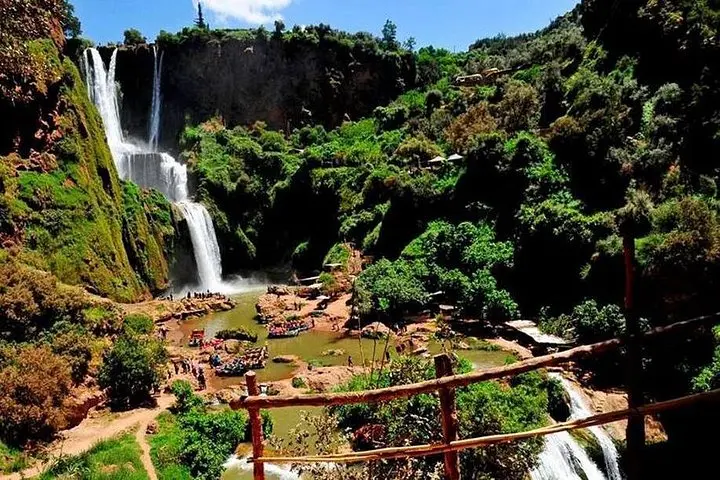
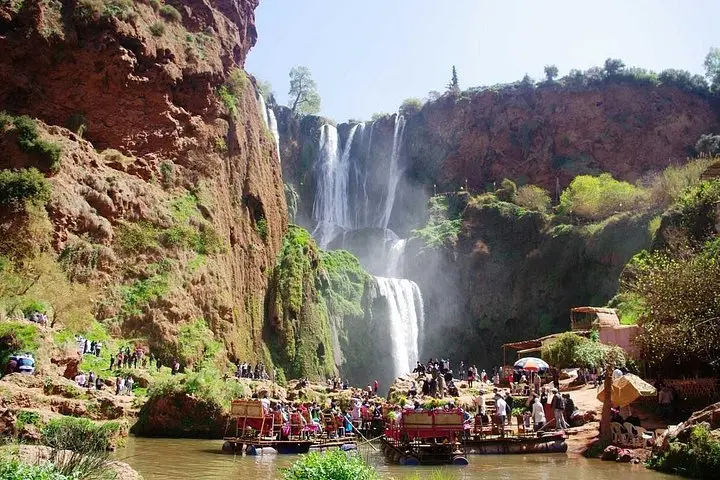
You arrive before the heat, the minivan threading out of Marrakech as the city’s ochre walls blur into olive-speckled plains. The road climbs slowly toward the High Atlas; by the time the driver parks and you step out, the air smells like river spray and sun-warmed stone. From the top rim the Cascades d’Ouzoud unspool in a broad, tiered curtain — white water cutting through rust-colored cliffs, spray throwing small rainbows that move with the wind.
Verified experiences and guided adventures in the surrounding area.
Operated by BOOKING LINKS · Ouzoud, Azilal Province
You arrive before the heat, the minivan threading out of Marrakech as the city’s ochre walls blur into olive-speckled plains. The road climbs slowly toward the High Atlas; by the time the driver parks and you step out, the air smells like river spray and sun-warmed stone. From the top rim the Cascades d’Ouzoud unspool in a broad, tiered curtain — white water cutting through rust-colored cliffs, spray throwing small rainbows that move with the wind.
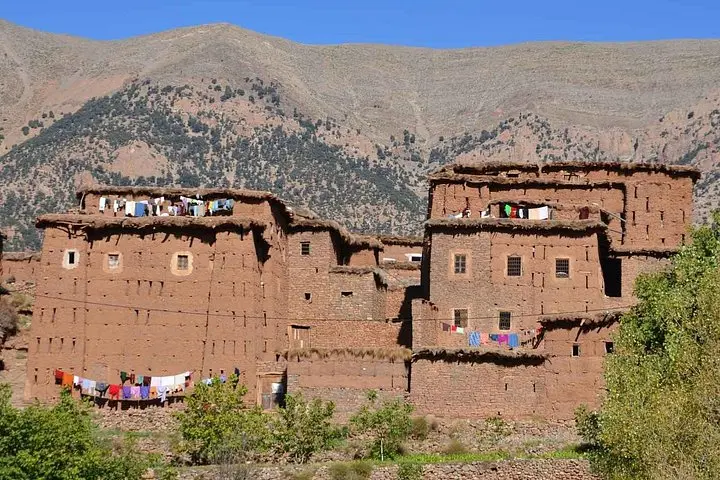
The falls are the work of the El Abid River, dropping roughly 110 meters across multiple tiers. Geologically, the gorge reveals layers of sedimentary rock scoured by seasonal flows and punctuated by terraces where small mills and olive groves cling to slopes. Culturally, the area is a doorway into Amazigh (Berber) life: simple villages, stone houses, and family-run restaurants where tagine and mint tea anchor the midday meal.
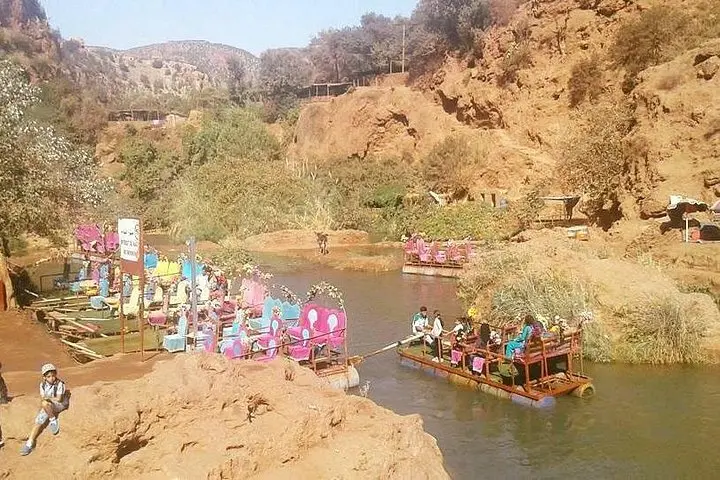
Locals have used these falls for centuries — mills once processed grain using the constant flow, and today mule tracks and footpaths connect clusters of homes. The Ouzoud valley is also small-scale farming country: terraces of olives and figs run down to the river, and goats pick the rock faces with deliberate steps. Monkeys — Barbary macaques — are common around the lookout points; they’re charismatic but opportunistic, so keep cameras and snacks secure.
This full-day tour is straightforward and practical: pickup from Marrakech at 8:00 AM, roughly 2.5–3 hours of driving through atlas foothills, 2–4 hours exploring the falls and village, then return to the city in the evening. The walking loop is short — roughly 2–3 kilometers if you visit both the top viewpoints and the base pools — but it’s steep in places, with stone steps and loose rock. Expect 110 meters of total vertical change between top and bottom.
Plan for sun and spray: quick-dry layers for the sun and a lightweight windbreaker for the misty sections. Footwear with good tread matters; sections near the water are slippery. Midday is the busiest time — arrive early with the tour’s 8 AM start to enjoy clearer viewpoints and quieter paths. Local restaurants near the rim serve generous tagines; ordering local dishes supports the small businesses that maintain trails and services.
Practical notes: swimming is possible in lower pools but conditions change with recent rains; follow local guidance. The trip runs as a private tour with an English-speaking guide and air-conditioned transport, so it suits mixed-ability groups. Bring cash for small purchases, and be prepared to tip guides and drivers for attentive service. With a little planning, a day at Ouzoud feels like a compact Atlas expedition: geological drama, river energy, and a human-scale cultural touch at every turn.
Expect about 2.5–3 hours each way depending on traffic and stops; the full tour runs 8–10 hours including transport and time at the falls.
Yes — there are shallow pools at the base where locals and visitors sometimes swim; water levels and currents vary, so follow local advice and avoid after heavy rains.
Yes — simple public toilets and family-run restaurants are near the main viewpoints; bring cash for smaller stalls.
The tour is family-friendly and described as physically easy overall, but paths include stairs and uneven sections; consider mobility constraints before booking.
You’ll likely see Barbary macaques near the viewpoints and local birds along the river; wildlife sightings are common but never guaranteed.
Guides often speak multiple languages, including English; tipping drivers and guides is customary and appreciated — small local currency notes are useful.
BOOKING LINKS operates guided outdoor trips and adventures with an emphasis on safety, stewardship, and memorable experiences.
You arrive before the heat, the minivan threading out of Marrakech as the city’s ochre walls blur into olive-speckled plains. The road climbs slowly toward the High Atlas; by the time the driver parks and you step out, the air smells like river spray and sun-warmed stone. From the top rim the Cascades d’Ouzoud unspool in a broad, tiered curtain — white water cutting through rust-colored cliffs, spray throwing small rainbows that move with the wind.
You arrive before the heat, the minivan threading out of Marrakech as the city’s ochre walls blur into olive-speckled plains. The road climbs slowly toward the High Atlas; by the time the driver parks and you step out, the air smells like river spray and sun-warmed stone. From the top rim the Cascades d’Ouzoud unspool in a broad, tiered curtain — white water cutting through rust-colored cliffs, spray throwing small rainbows that move with the wind.
The falls are the work of the El Abid River, dropping roughly 110 meters across multiple tiers. Geologically, the gorge reveals layers of sedimentary rock scoured by seasonal flows and punctuated by terraces where small mills and olive groves cling to slopes. Culturally, the area is a doorway into Amazigh (Berber) life: simple villages, stone houses, and family-run restaurants where tagine and mint tea anchor the midday meal.
Locals have used these falls for centuries — mills once processed grain using the constant flow, and today mule tracks and footpaths connect clusters of homes. The Ouzoud valley is also small-scale farming country: terraces of olives and figs run down to the river, and goats pick the rock faces with deliberate steps. Monkeys — Barbary macaques — are common around the lookout points; they’re charismatic but opportunistic, so keep cameras and snacks secure.
This full-day tour is straightforward and practical: pickup from Marrakech at 8:00 AM, roughly 2.5–3 hours of driving through atlas foothills, 2–4 hours exploring the falls and village, then return to the city in the evening. The walking loop is short — roughly 2–3 kilometers if you visit both the top viewpoints and the base pools — but it’s steep in places, with stone steps and loose rock. Expect 110 meters of total vertical change between top and bottom.
Plan for sun and spray: quick-dry layers for the sun and a lightweight windbreaker for the misty sections. Footwear with good tread matters; sections near the water are slippery. Midday is the busiest time — arrive early with the tour’s 8 AM start to enjoy clearer viewpoints and quieter paths. Local restaurants near the rim serve generous tagines; ordering local dishes supports the small businesses that maintain trails and services.
Practical notes: swimming is possible in lower pools but conditions change with recent rains; follow local guidance. The trip runs as a private tour with an English-speaking guide and air-conditioned transport, so it suits mixed-ability groups. Bring cash for small purchases, and be prepared to tip guides and drivers for attentive service. With a little planning, a day at Ouzoud feels like a compact Atlas expedition: geological drama, river energy, and a human-scale cultural touch at every turn.