THE ADVENTURE COLLECTIVE® · Independent discovery and booking for outdoor travel

Spend a full day from Cancun exploring coastal Tulum, climb Coba’s Nohoch Muul, and cool off in a sacred cenote. This long but accessible tour blends Maya history, jungle climbs, and a refreshing swim.
Spend a full day from Cancun exploring coastal Tulum, climb Coba’s Nohoch Muul, and cool off in a sacred cenote. This long but accessible tour blends Maya history, jungle climbs, and a refreshing swim.
You step off the van into humidity and jungle light — palms flick like flags and the Caribbean horizon waits beyond a low stone wall. The day moves fast: salt air at Tulum, the dense green climb to Coba’s highest pyramid, and the cool, mineral hush of a cenote where the water seems to hold the heat at bay.
Verified experiences and guided adventures in the surrounding area.
Operated by Kbron travel · Tulum, Quintana Roo
You step off the van into humidity and jungle light — palms flick like flags and the Caribbean horizon waits beyond a low stone wall. The day moves fast: salt air at Tulum, the dense green climb to Coba’s highest pyramid, and the cool, mineral hush of a cenote where the water seems to hold the heat at bay.
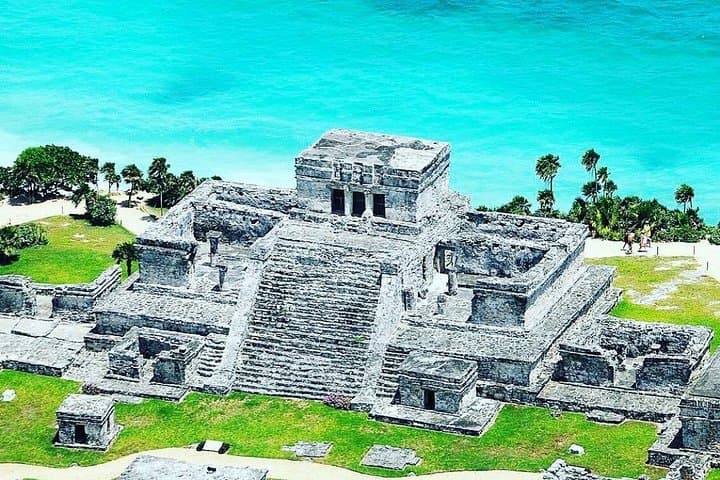
Tulum sits on a limestone cliff that once marked a coastal Maya port during the Postclassic period, its buildings oriented toward sea and trade. Inland, Coba is older and wilder, a network of causeways and stelae surrounding Nohoch Muul, the peninsula’s tallest pyramid (about 42 m high) that still rewards climbers with a far-reaching jungle view. Geologically the region is porous limestone; cenotes are the roofless windows into the Yucatán’s underground aquifer — sacred, delicate pools fed by freshwater springs.
Culturally the route threads living Maya communities and modern beach towns like Playa del Carmen, so expect roadside stands, local storytelling, and a straightforward buffet lunch featuring regional staples.
Practical guidance: this is a long day (approximately 11–13 hours) with hotel pickup from Cancun, periods of walking on uneven stone, and a short climb to a pyramid summit. Bring reef-safe sunscreen, quick-dry clothing, sturdy shoes, and cash for small purchases. Time your tour to avoid the midday heat if possible, and follow guide instructions at archaeological sites and cenotes — they protect fragile structures and water quality. The result is a compact window into Maya history, jungle geography, and the soft blue of a subterranean lake.
No—climbing is optional. Guides will point out the route; those who climb should take care on steep steps and avoid the top in wet conditions.
This tour includes some admissions (cenote and certain sites may be covered), but check the booking details—some archaeological entries may be paid on site depending on the operator.
Yes, the tour includes round‑trip transport from Cancun with pickup windows; exact times are confirmed after booking.
Children can join; infants may need to sit on laps during transport. Cenote safety varies—follow guide instructions, supervise children, and use flotation if needed.
Kbron travel operates guided outdoor trips and adventures with an emphasis on safety, stewardship, and memorable experiences.


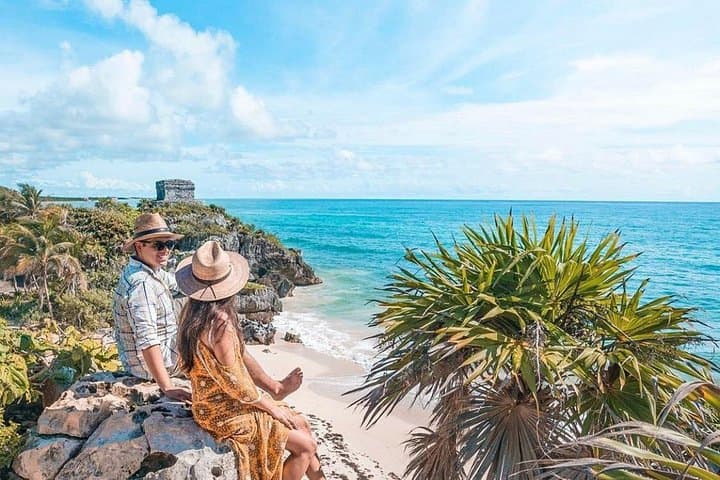
You step off the van into humidity and jungle light — palms flick like flags and the Caribbean horizon waits beyond a low stone wall. The day moves fast: salt air at Tulum, the dense green climb to Coba’s highest pyramid, and the cool, mineral hush of a cenote where the water seems to hold the heat at bay.
You step off the van into humidity and jungle light — palms flick like flags and the Caribbean horizon waits beyond a low stone wall. The day moves fast: salt air at Tulum, the dense green climb to Coba’s highest pyramid, and the cool, mineral hush of a cenote where the water seems to hold the heat at bay.
Tulum sits on a limestone cliff that once marked a coastal Maya port during the Postclassic period, its buildings oriented toward sea and trade. Inland, Coba is older and wilder, a network of causeways and stelae surrounding Nohoch Muul, the peninsula’s tallest pyramid (about 42 m high) that still rewards climbers with a far-reaching jungle view. Geologically the region is porous limestone; cenotes are the roofless windows into the Yucatán’s underground aquifer — sacred, delicate pools fed by freshwater springs.
Culturally the route threads living Maya communities and modern beach towns like Playa del Carmen, so expect roadside stands, local storytelling, and a straightforward buffet lunch featuring regional staples.
Practical guidance: this is a long day (approximately 11–13 hours) with hotel pickup from Cancun, periods of walking on uneven stone, and a short climb to a pyramid summit. Bring reef-safe sunscreen, quick-dry clothing, sturdy shoes, and cash for small purchases. Time your tour to avoid the midday heat if possible, and follow guide instructions at archaeological sites and cenotes — they protect fragile structures and water quality. The result is a compact window into Maya history, jungle geography, and the soft blue of a subterranean lake.