THE ADVENTURE COLLECTIVE® · Independent discovery and booking for outdoor travel

Spend a full day crossing the Salar de Uyuni: train cemetery, Colchani’s salt workshops, a cactus walk on Isla Incahuasi, and sunset on the salt flats. This shared 4x4 tour covers key highlights with lunch included.
Spend a full day crossing the Salar de Uyuni: train cemetery, Colchani’s salt workshops, a cactus walk on Isla Incahuasi, and sunset on the salt flats. This shared 4x4 tour covers key highlights with lunch included.
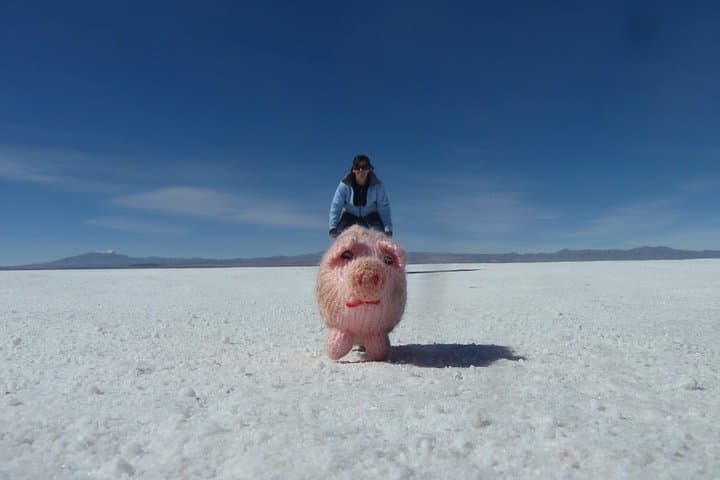
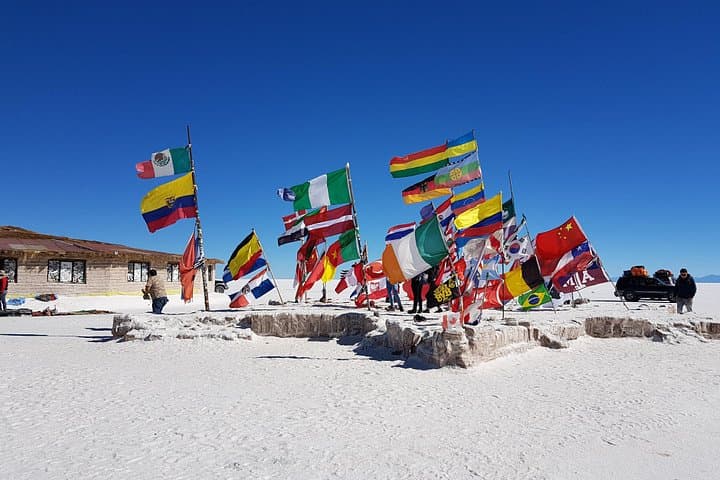
You step out of the 4x4 onto a blinding white plane that swallows direction — the Salar de Uyuni at roughly 3,650 meters. Wind scours the salt into low ridges and the horizon goes flat and infinite; cactus-dotted Isla Incahuasi rises like an island in a frozen sea and the light begins to sharpen.
Verified experiences and guided adventures in the surrounding area.
Operated by Andes 2 Amazon · Uyuni, Potosí Department
You step out of the 4x4 onto a blinding white plane that swallows direction — the Salar de Uyuni at roughly 3,650 meters. Wind scours the salt into low ridges and the horizon goes flat and infinite; cactus-dotted Isla Incahuasi rises like an island in a frozen sea and the light begins to sharpen.
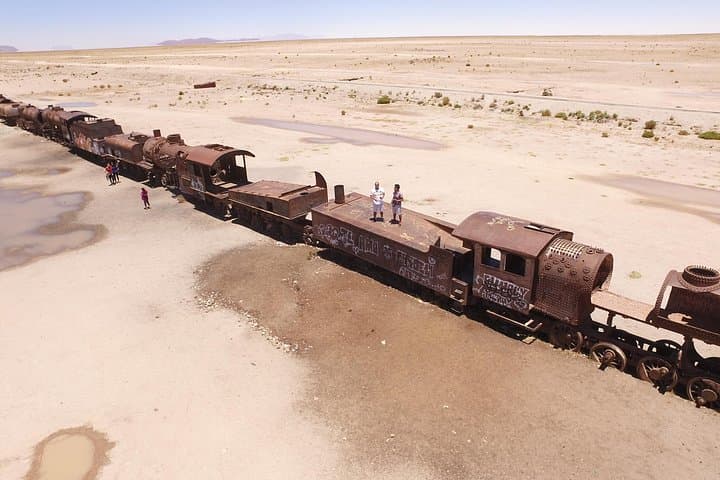
The route threads through Bolivia’s high plains: a rail graveyard of rusted locomotives that speak to the mining boom of the 19th century, the salt-harvesting village of Colchani where artisans press brick-like panels and weave alpaca textiles, and then the salt flats themselves—lakes that evaporated millennia ago leaving a crust of hexagonal salt crystals. Isla Incahuasi preserves fossilized coral and giant cacti, a geological record of a time when this basin held water.
Culture here is practical and durable: Quechua and Aymara communities shaped the salt economy and still sell handcrafted souvenirs in Colchani. The landscape demands respect—altitude forces a slower pace and weather can turn sharply as the sun drops.
Practical guide: expect a full 6-hour day (itinerary typically 10:30–19:30), moderate exertion with a 40-minute island walk, and several short stops including the Salt Hotel museum and ‘eyes’ of salt water. Bring layered clothing for wind and cold at sunset, sun protection for the glaring flats, a refillable water bottle, and a camera with plenty of battery. Most tours use 4x4s; the driving is bumpy but straightforward. If you’re sensitive to altitude, take it easy the first day and hydrate well—this is a spectacular, elemental landscape that rewards patience and simple preparation.
The itinerary reaches around 3,650 meters; many visitors feel mild symptoms—headache or shortness of breath. Hydrate, avoid alcohol beforehand, and speak to your guide if symptoms worsen.
Children can join but must be accompanied by an adult; the operator advises the tour is not recommended for pregnant travelers due to high altitude and remote conditions.
Exceptional: the hexagonal salt crust, reflective wet-season mirrors, Isla Incahuasi cactus fields, and sunset compositions; bring extra batteries and a lens cloth for salt spray.
Facilities are limited—there are basic restrooms at some stops like Colchani and the salt hotel museum; guides usually plan short breaks throughout the day.
Andes 2 Amazon operates guided outdoor trips and adventures with an emphasis on safety, stewardship, and memorable experiences.

You step out of the 4x4 onto a blinding white plane that swallows direction — the Salar de Uyuni at roughly 3,650 meters. Wind scours the salt into low ridges and the horizon goes flat and infinite; cactus-dotted Isla Incahuasi rises like an island in a frozen sea and the light begins to sharpen.
You step out of the 4x4 onto a blinding white plane that swallows direction — the Salar de Uyuni at roughly 3,650 meters. Wind scours the salt into low ridges and the horizon goes flat and infinite; cactus-dotted Isla Incahuasi rises like an island in a frozen sea and the light begins to sharpen.
The route threads through Bolivia’s high plains: a rail graveyard of rusted locomotives that speak to the mining boom of the 19th century, the salt-harvesting village of Colchani where artisans press brick-like panels and weave alpaca textiles, and then the salt flats themselves—lakes that evaporated millennia ago leaving a crust of hexagonal salt crystals. Isla Incahuasi preserves fossilized coral and giant cacti, a geological record of a time when this basin held water.
Culture here is practical and durable: Quechua and Aymara communities shaped the salt economy and still sell handcrafted souvenirs in Colchani. The landscape demands respect—altitude forces a slower pace and weather can turn sharply as the sun drops.
Practical guide: expect a full 6-hour day (itinerary typically 10:30–19:30), moderate exertion with a 40-minute island walk, and several short stops including the Salt Hotel museum and ‘eyes’ of salt water. Bring layered clothing for wind and cold at sunset, sun protection for the glaring flats, a refillable water bottle, and a camera with plenty of battery. Most tours use 4x4s; the driving is bumpy but straightforward. If you’re sensitive to altitude, take it easy the first day and hydrate well—this is a spectacular, elemental landscape that rewards patience and simple preparation.