THE ADVENTURE COLLECTIVE® · Independent discovery and booking for outdoor travel

Spend a day exploring the world’s largest salt flat: visit the Train Cemetery, watch artisans in Colchani, eat lunch on the Salar and finish with Tunupa’s sunset. Practical, photo-ready and high-altitude—this private tour is designed for curious travelers who want a full-day immersion.
Spend a day exploring the world’s largest salt flat: visit the Train Cemetery, watch artisans in Colchani, eat lunch on the Salar and finish with Tunupa’s sunset. Practical, photo-ready and high-altitude—this private tour is designed for curious travelers who want a full-day immersion.
You step from the vehicle into a flat so vast it reads like a white page—salt crust crunching underfoot, wind shaping low ridges, sky and ground arguing about where the horizon belongs. By midday the sun throws hard light; at dusk Tunupa’s silhouette draws a slow, deep line across the glow as you raise a glass to the plain.
Verified experiences and guided adventures in the surrounding area.
Operated by Mundicontact Expeditions · Uyuni, Potosí
You step from the vehicle into a flat so vast it reads like a white page—salt crust crunching underfoot, wind shaping low ridges, sky and ground arguing about where the horizon belongs. By midday the sun throws hard light; at dusk Tunupa’s silhouette draws a slow, deep line across the glow as you raise a glass to the plain.
This full-day private excursion moves from the iron skeletons of the Train Cemetery—left from the late 19th-century mining boom—through Colchani’s salt workshops and onto the Playa Blanca and the heart of Salar de Uyuni. Geologically the salar is the exposed bed of a prehistoric lake, covered by up to several meters of salt crust above a brine-rich water table; the area’s lagoons and the slopes of dormant Tunupa volcano harbor Andean wildlife and archaeological sites like the Coquesa caves nearby.
Expect shallow walks, photography stops and a lunch served on the salt surface; the tour covers roughly 10–11 hours with hotel pickup in Uyuni. At 3,656 m (about 12,000 ft) the air is thin—pace yourself, hydrate and avoid heavy exertion your first day. Pack high-SPF sun protection, mirrored sunglasses, and warm layers for evening. In the rainy season (roughly Dec–Mar) the salar can behave like a mirror; in the dry months the salt crust is walkable and forms geometric polygons.
Practical tip: battery life drains faster in cold and at altitude—bring spares. Respect marked vehicle tracks to protect microbial crusts and carry out all trash. The tour is photo-focused and accessible for most travelers, but altitude awareness is essential.
The tour runs about 10–11 hours with hotel pickup in Uyuni; exact pickup time depends on the operator and season but generally starts early morning.
Uyuni sits around 3,650 m (12,000 ft). Mild symptoms are common; acclimatize beforehand, hydrate, avoid alcohol and notify the guide if you feel unwell.
Lunch, snacks and complimentary drinks (including a glass of wine for sunset) are included according to the itinerary; confirm any dietary needs when booking.
The listing notes wheelchair accessibility, but terrain on the salar and at viewpoints like Tunupa can be uneven—check specifics with the operator for your needs.
Mundicontact Expeditions operates guided outdoor trips and adventures with an emphasis on safety, stewardship, and memorable experiences.

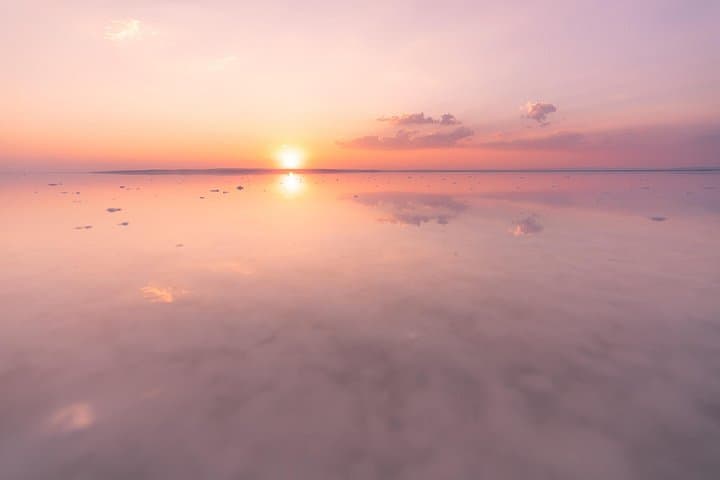
You step from the vehicle into a flat so vast it reads like a white page—salt crust crunching underfoot, wind shaping low ridges, sky and ground arguing about where the horizon belongs. By midday the sun throws hard light; at dusk Tunupa’s silhouette draws a slow, deep line across the glow as you raise a glass to the plain.
You step from the vehicle into a flat so vast it reads like a white page—salt crust crunching underfoot, wind shaping low ridges, sky and ground arguing about where the horizon belongs. By midday the sun throws hard light; at dusk Tunupa’s silhouette draws a slow, deep line across the glow as you raise a glass to the plain.
This full-day private excursion moves from the iron skeletons of the Train Cemetery—left from the late 19th-century mining boom—through Colchani’s salt workshops and onto the Playa Blanca and the heart of Salar de Uyuni. Geologically the salar is the exposed bed of a prehistoric lake, covered by up to several meters of salt crust above a brine-rich water table; the area’s lagoons and the slopes of dormant Tunupa volcano harbor Andean wildlife and archaeological sites like the Coquesa caves nearby.
Expect shallow walks, photography stops and a lunch served on the salt surface; the tour covers roughly 10–11 hours with hotel pickup in Uyuni. At 3,656 m (about 12,000 ft) the air is thin—pace yourself, hydrate and avoid heavy exertion your first day. Pack high-SPF sun protection, mirrored sunglasses, and warm layers for evening. In the rainy season (roughly Dec–Mar) the salar can behave like a mirror; in the dry months the salt crust is walkable and forms geometric polygons.
Practical tip: battery life drains faster in cold and at altitude—bring spares. Respect marked vehicle tracks to protect microbial crusts and carry out all trash. The tour is photo-focused and accessible for most travelers, but altitude awareness is essential.