THE ADVENTURE COLLECTIVE® · Independent discovery and booking for outdoor travel

A full-day private transfer from the Dead Sea delivers you into the red-rock drama of Wadi Rum—Martian flats, narrow gorges and Bedouin hospitality—via a guided 4x4 tour with optional camel ride and extra jeep time.
A full-day private transfer from the Dead Sea delivers you into the red-rock drama of Wadi Rum—Martian flats, narrow gorges and Bedouin hospitality—via a guided 4x4 tour with optional camel ride and extra jeep time.
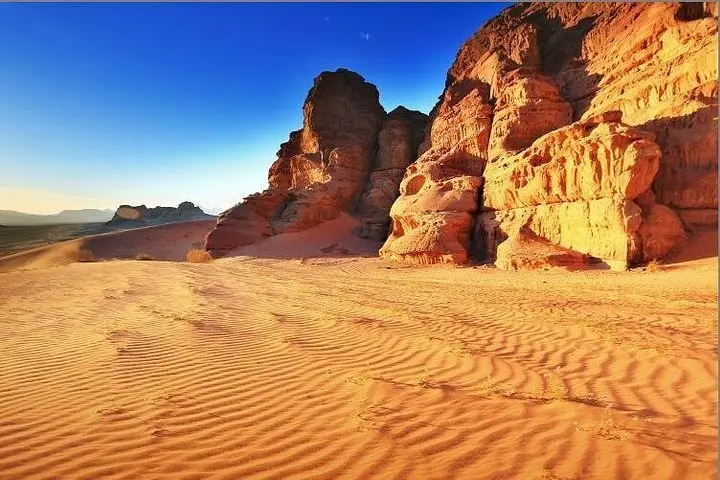
You arrive at the rim of Wadi Rum as light thins and the desert seems to inhale. Wind smooths the dunes into rippled skin and sandstone behemoths—walls, arches, and towers—stand like weathered sculptures. The driver cuts the engine and the silence presses in: this is the place the Martian landscape in film-makers’ imaginations borrowed from.
Verified experiences and guided adventures in the surrounding area.
Operated by Zaid Tours and Travel · Wadi Rum Village, Ma'an Governorate
You arrive at the rim of Wadi Rum as light thins and the desert seems to inhale. Wind smooths the dunes into rippled skin and sandstone behemoths—walls, arches, and towers—stand like weathered sculptures. The driver cuts the engine and the silence presses in: this is the place the Martian landscape in film-makers’ imaginations borrowed from.
Wadi Rum is a broad, protected valley of red sand and sculpted sandstone that records millions of years of erosion. Bands of iron and other minerals give the rock its spectrum of browns, pinks and rust; wind and flash floods have carved bridges and narrow siqs that funnel light into dramatic shafts. Humans have left marks here for millennia—Nabatean petroglyphs and Thamudic inscriptions sit alongside Hellenistic and Ottoman traces—and during World War I, T.E. Lawrence used the valley as a base while coordinating with local Bedouin fighters.
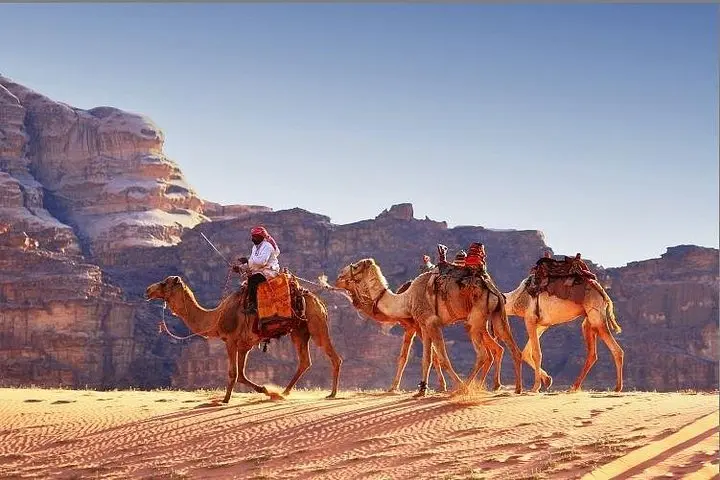
A private full-day trip from the Dead Sea turns those textbook details into a tactile day of motion: a comfortable, air-conditioned transfer south through the desert, then a two-hour 4x4 sweep with a local Bedouin driver-guide. The jeep trundles over red plains, threads narrow gorges, and pauses at cinematic stops—the “Martian” sand flats, natural bridges, and the Seven Pillars of Wisdom. Optional upgrades add a 30-minute camel ride and an extra two hours in the jeep to reach the Large Bridge or deeper canyons.
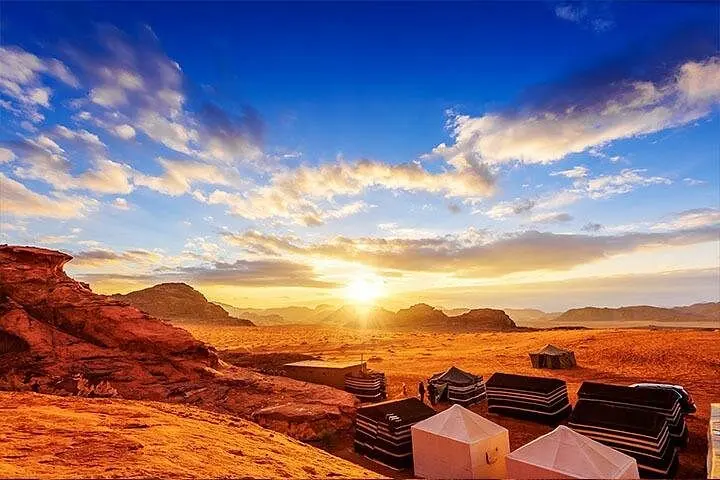
Culture arrives in small, decisive moments: a cup of mint tea in a Bedouin tent, a guide negotiating routes by memory and sky, and stories about Lawrence and caravan trade routes. The experience is light on technical challenge and heavy on sensory detail: the grit of sand in the teeth of the wind, the sun warming stone until it seems to glow, the sudden welcome of shade in a narrow siq.
Practicalities: this is a long day—expect around 12 hours including drive time. Bring sun protection, at least 2 liters of water, sturdy walking shoes for short walks, and a small daypack. If you want to shoot dramatic photos, plan to be on site for sunrise or late afternoon; midday light flattens color and creates harsh shadows. The tour operator provides pickup from Dead Sea hotels; check in 24 hours prior to confirm timing.
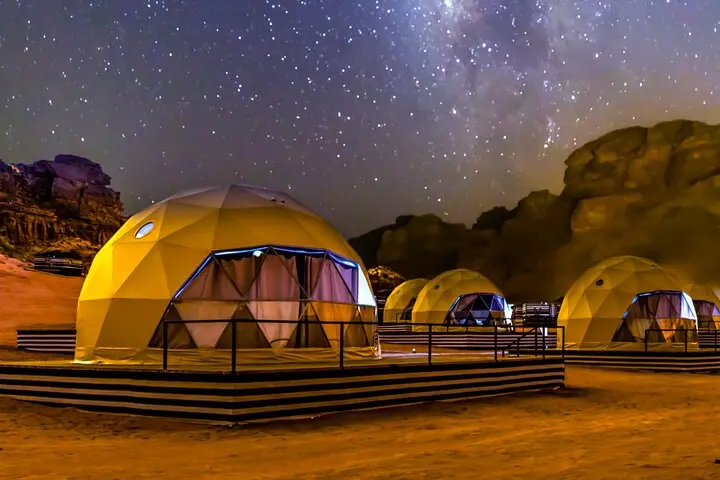
Respect the fragile desert—stay on trails the guide recommends, avoid climbing fragile arches, and take all trash with you. For visitors who want something slower, swap extra jeep time for a longer walk in a canyon or arrange to stay overnight in a Bedouin camp and see the desert by starlight. Wadi Rum asks only that you arrive curious, prepared, and ready to move between silence and spectacle.
Expect roughly 3.5–4 hours each way by private vehicle depending on traffic and stops; the full experience is an all-day outing.
If you selected the Jordan Pass option at booking, entrance may be covered; otherwise you can pay local entrance fees—confirm with the operator prior to travel.
Yes—there are upgrade options for a 30-minute camel ride and an additional two-hour jeep leg to reach sites like the Large Bridge.
The tour is family-friendly, but you should contact the operator regarding mobility needs; jeeps require stepping up and short walks can be on loose sand.
Basic facilities exist at visitor areas and camps; during jeep legs stops are primitive—plan accordingly.
Tipping is customary; bring small local currency to show appreciation for guiding, tea service, and any assistance.
Zaid Tours and Travel operates guided outdoor trips and adventures with an emphasis on safety, stewardship, and memorable experiences.
You arrive at the rim of Wadi Rum as light thins and the desert seems to inhale. Wind smooths the dunes into rippled skin and sandstone behemoths—walls, arches, and towers—stand like weathered sculptures. The driver cuts the engine and the silence presses in: this is the place the Martian landscape in film-makers’ imaginations borrowed from.
You arrive at the rim of Wadi Rum as light thins and the desert seems to inhale. Wind smooths the dunes into rippled skin and sandstone behemoths—walls, arches, and towers—stand like weathered sculptures. The driver cuts the engine and the silence presses in: this is the place the Martian landscape in film-makers’ imaginations borrowed from.
Wadi Rum is a broad, protected valley of red sand and sculpted sandstone that records millions of years of erosion. Bands of iron and other minerals give the rock its spectrum of browns, pinks and rust; wind and flash floods have carved bridges and narrow siqs that funnel light into dramatic shafts. Humans have left marks here for millennia—Nabatean petroglyphs and Thamudic inscriptions sit alongside Hellenistic and Ottoman traces—and during World War I, T.E. Lawrence used the valley as a base while coordinating with local Bedouin fighters.
A private full-day trip from the Dead Sea turns those textbook details into a tactile day of motion: a comfortable, air-conditioned transfer south through the desert, then a two-hour 4x4 sweep with a local Bedouin driver-guide. The jeep trundles over red plains, threads narrow gorges, and pauses at cinematic stops—the “Martian” sand flats, natural bridges, and the Seven Pillars of Wisdom. Optional upgrades add a 30-minute camel ride and an extra two hours in the jeep to reach the Large Bridge or deeper canyons.
Culture arrives in small, decisive moments: a cup of mint tea in a Bedouin tent, a guide negotiating routes by memory and sky, and stories about Lawrence and caravan trade routes. The experience is light on technical challenge and heavy on sensory detail: the grit of sand in the teeth of the wind, the sun warming stone until it seems to glow, the sudden welcome of shade in a narrow siq.
Practicalities: this is a long day—expect around 12 hours including drive time. Bring sun protection, at least 2 liters of water, sturdy walking shoes for short walks, and a small daypack. If you want to shoot dramatic photos, plan to be on site for sunrise or late afternoon; midday light flattens color and creates harsh shadows. The tour operator provides pickup from Dead Sea hotels; check in 24 hours prior to confirm timing.
Respect the fragile desert—stay on trails the guide recommends, avoid climbing fragile arches, and take all trash with you. For visitors who want something slower, swap extra jeep time for a longer walk in a canyon or arrange to stay overnight in a Bedouin camp and see the desert by starlight. Wadi Rum asks only that you arrive curious, prepared, and ready to move between silence and spectacle.