THE ADVENTURE COLLECTIVE® · Independent discovery and booking for outdoor travel

A full-day 4x4 through Wadi Rum moves like a well-told story—speeding over red dunes, pausing at canyons carved by ancient water, and breaking for Bedouin tea beneath towering cliffs. Expect sandboarding, short hikes, and a guide who knows the desert’s secrets.
A full-day 4x4 through Wadi Rum moves like a well-told story—speeding over red dunes, pausing at canyons carved by ancient water, and breaking for Bedouin tea beneath towering cliffs. Expect sandboarding, short hikes, and a guide who knows the desert’s secrets.
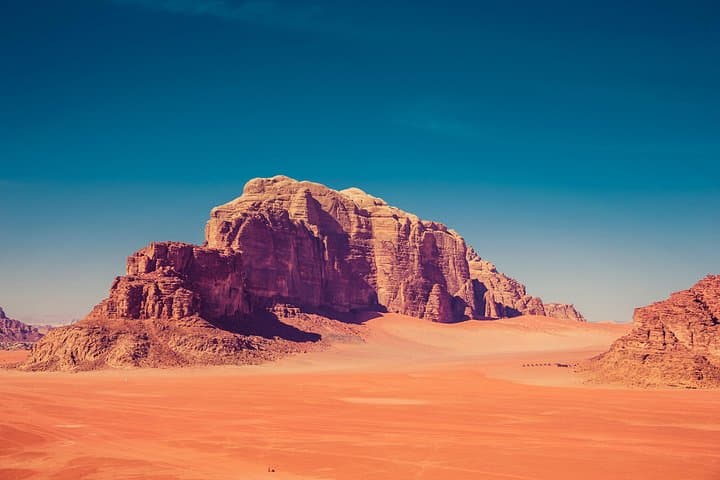
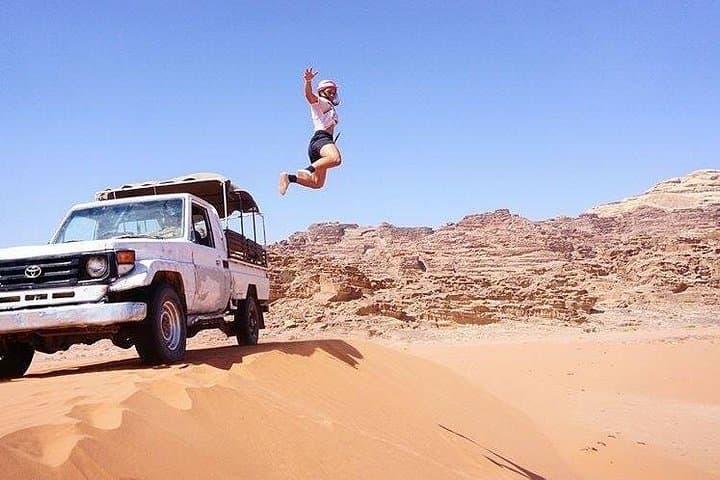
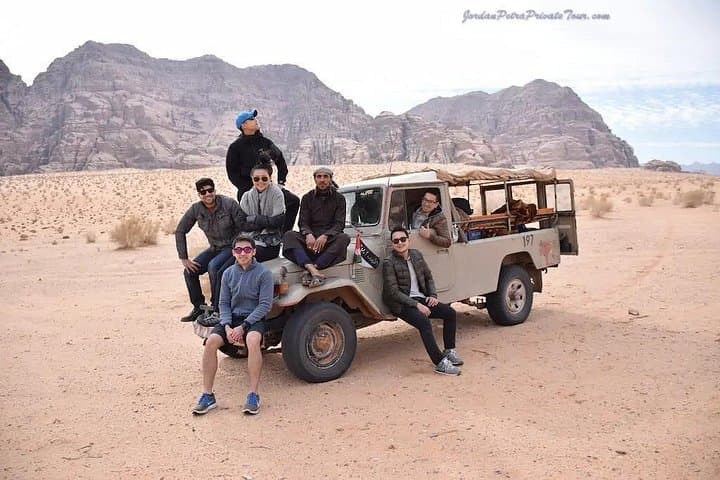
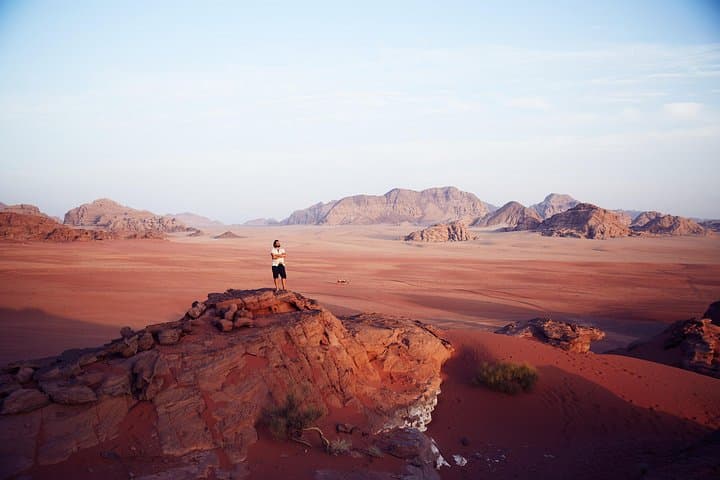
The Jeep grumbles to life at the Wadi Rum Rest House and, within minutes, you are cutting across a sea of red sand where the horizon keeps moving—rocks rise like carved islands and dunes roll like a slow, patient tide. Your Bedouin guide points to a jagged skyline: a cluster of towers where ancient rivers carved canyons, a smear of petroglyphs on a granite face, and a narrow slot canyon that invites another quick scramble. The day unfolds as a rhythm of motion—speed, stop, walk, sip steaming Bedouin tea—and the desert answers in color and silence.
Verified experiences and guided adventures in the surrounding area.
Operated by Wadi Rum Camp and Tours · Wadi Rum Village, Ma'an Governorate
The Jeep grumbles to life at the Wadi Rum Rest House and, within minutes, you are cutting across a sea of red sand where the horizon keeps moving—rocks rise like carved islands and dunes roll like a slow, patient tide. Your Bedouin guide points to a jagged skyline: a cluster of towers where ancient rivers carved canyons, a smear of petroglyphs on a granite face, and a narrow slot canyon that invites another quick scramble. The day unfolds as a rhythm of motion—speed, stop, walk, sip steaming Bedouin tea—and the desert answers in color and silence.
Wadi Rum is layered history: Nabatean caravan routes, Ottoman-era grazing grounds, and the theatrical footprint of T.E. Lawrence, whose camps and stories still surface in rock and local lore. Geologically the valley is a ripped canvas of sandstone and granite—the sandstone cliffs fluted by wind and occasional flash-floods into arches and honeycombed spires. Bedouin culture is present not as a museum piece but in the way routes are chosen, tea is brewed, and stories are traded next to a picnic spread.
On a full-day 4x4 tour you’ll cross the protected area’s tracks for roughly 5–8 hours, visiting signature sites—Lawrence’s house, water springs, narrow canyons, and high dunes built for sandboarding. Guides balance driving with short hikes and scrambling; some viewpoints require a five- to twenty-minute climb across soft sand or rock. Expect to cover tens of kilometers by jeep while stopping frequently for photos, exploration, and a modest picnic lunch.
Practical edge: meet at the Wadi Rum Rest House (about 7 km from the Visitor Center), bring sun protection, at least 2 liters of water, and a face covering for dust when the jeep kicks up sand. Sandboarding is included; camel rides and longer hikes are available for extra fees—carry cash (Jordanian dinar) for add-ons. Footwear should be sturdy and slip-resistant; you'll alternate between walking on hot sand, rocky ledges, and climbing short steps. If heat or mobility concerns are an issue, opt for a shorter tour or morning/late-afternoon departure. The tour is friendly for most fitness levels but not recommended for pregnant travelers or those with severe back problems.
A full-day jeep tour of Wadi Rum is a compact education in geology and human adaptation—fast enough to feel adventurous, deliberate enough to leave you with clear images: red dunes sliding under a board, the clink of glass teacups on rock, and the sun lowering itself behind a stone ridge until the desert sighs into blue.
Meet at the Wadi Rum Rest House in Wadi Rum Village; it’s roughly 7 km from the official Visitor Center and is the standard pickup point for full-day tours.
Yes—sandboarding is listed as included in the tour inclusions; bring closed-toe shoes and be prepared for short climbs up dunes.
Yes—camel rides are available for an extra fee (about 10 JOD for 30 minutes, 15 JOD for an hour); bring cash as card payment may not be accepted in the field.
The tour is suitable for most ages, but short hikes and open-jeep seating may be uncomfortable for those with limited mobility; pregnancy and serious back problems are contraindications.
Light, breathable layers, a hat, sunglasses, and closed-toe shoes; evenings can be cool so carry a light jacket if staying for sunset.
Walking is intermittent—short hikes or scrambles of five to twenty minutes between jeep stops; the tour is primarily by 4x4 with regular photo and exploration breaks.
Wadi Rum Camp and Tours operates guided outdoor trips and adventures with an emphasis on safety, stewardship, and memorable experiences.
The Jeep grumbles to life at the Wadi Rum Rest House and, within minutes, you are cutting across a sea of red sand where the horizon keeps moving—rocks rise like carved islands and dunes roll like a slow, patient tide. Your Bedouin guide points to a jagged skyline: a cluster of towers where ancient rivers carved canyons, a smear of petroglyphs on a granite face, and a narrow slot canyon that invites another quick scramble. The day unfolds as a rhythm of motion—speed, stop, walk, sip steaming Bedouin tea—and the desert answers in color and silence.
The Jeep grumbles to life at the Wadi Rum Rest House and, within minutes, you are cutting across a sea of red sand where the horizon keeps moving—rocks rise like carved islands and dunes roll like a slow, patient tide. Your Bedouin guide points to a jagged skyline: a cluster of towers where ancient rivers carved canyons, a smear of petroglyphs on a granite face, and a narrow slot canyon that invites another quick scramble. The day unfolds as a rhythm of motion—speed, stop, walk, sip steaming Bedouin tea—and the desert answers in color and silence.
Wadi Rum is layered history: Nabatean caravan routes, Ottoman-era grazing grounds, and the theatrical footprint of T.E. Lawrence, whose camps and stories still surface in rock and local lore. Geologically the valley is a ripped canvas of sandstone and granite—the sandstone cliffs fluted by wind and occasional flash-floods into arches and honeycombed spires. Bedouin culture is present not as a museum piece but in the way routes are chosen, tea is brewed, and stories are traded next to a picnic spread.
On a full-day 4x4 tour you’ll cross the protected area’s tracks for roughly 5–8 hours, visiting signature sites—Lawrence’s house, water springs, narrow canyons, and high dunes built for sandboarding. Guides balance driving with short hikes and scrambling; some viewpoints require a five- to twenty-minute climb across soft sand or rock. Expect to cover tens of kilometers by jeep while stopping frequently for photos, exploration, and a modest picnic lunch.
Practical edge: meet at the Wadi Rum Rest House (about 7 km from the Visitor Center), bring sun protection, at least 2 liters of water, and a face covering for dust when the jeep kicks up sand. Sandboarding is included; camel rides and longer hikes are available for extra fees—carry cash (Jordanian dinar) for add-ons. Footwear should be sturdy and slip-resistant; you'll alternate between walking on hot sand, rocky ledges, and climbing short steps. If heat or mobility concerns are an issue, opt for a shorter tour or morning/late-afternoon departure. The tour is friendly for most fitness levels but not recommended for pregnant travelers or those with severe back problems.
A full-day jeep tour of Wadi Rum is a compact education in geology and human adaptation—fast enough to feel adventurous, deliberate enough to leave you with clear images: red dunes sliding under a board, the clink of glass teacups on rock, and the sun lowering itself behind a stone ridge until the desert sighs into blue.