THE ADVENTURE COLLECTIVE® · Independent discovery and booking for outdoor travel

Charge down the Haute-Isère for a two-hour raft descent from the Macôt-La Plagne base. Expect glacial-fed rapids, certified guides, full wetsuit kit and a 3–3.5 hour outing that pairs adrenaline with alpine scenery.
Charge down the Haute-Isère for a two-hour raft descent from the Macôt-La Plagne base. Expect glacial-fed rapids, certified guides, full wetsuit kit and a 3–3.5 hour outing that pairs adrenaline with alpine scenery.
The raft slips into cold, pale-blue water that has carved the Tarentaise valley since the last ice age. Mountains press close, snowfields still on higher ridges, and the Isère pushes you downstream with a steady, insistent energy — two hours of continuous rapids, eddies and scenic runs between forested banks and rock-strewn chutes.
Verified experiences and guided adventures in the surrounding area.
Operated by AN Rafting · Bourg-Saint-Maurice, Auvergne-Rhône-Alpes
The raft slips into cold, pale-blue water that has carved the Tarentaise valley since the last ice age. Mountains press close, snowfields still on higher ridges, and the Isère pushes you downstream with a steady, insistent energy — two hours of continuous rapids, eddies and scenic runs between forested banks and rock-strewn chutes.
This is the Haute-Isère, one of Europe’s classic whitewater arteries shaped by glacial runoff and fractured alpine limestone. The valley has long been a transit corridor: shepherd paths, hydro works and the modern rail and road lines that feed nearby ski resorts. Local guides combine technical rivercraft with regional knowledge — expect mentions of La Plagne, Bourg-Saint-Maurice markets, and the river’s role in hydroelectric development.
Practically, the operator meets at the whitewater base in Macôt-La Plagne (usually 8:45 a.m.), fits you with a wetsuit, boots, helmet and lifejacket, runs a safety briefing and handles transfers. The advertised on-water time is two hours; allow 3–3.5 hours total for check-in and transport. Minimum age is typically 12 and participants should be comfortable in water. Rapids range from playful to demanding depending on spring melt — guides set the pace.
Bring a swimsuit, towel, sun protection and sturdy shoes for the short walks to boats. Cameras should be secured in waterproof cases or left ashore. Listen to your guide, follow paddle commands, and lean into the river: the current is a character here, always ready to test balance and reward momentum.
Minimum age is generally 12 years old; participants must be able to swim and follow safety instructions.
Yes — guides supply wetsuits, neoprene boots, lifejackets, helmets and paddles; bring a swimsuit and towel.
On-water time is about two hours; allow approximately 3–3.5 hours total for briefing, transfers and return.
Operators monitor river conditions daily; trips may be adjusted or rescheduled for safety — check with the provider for last-minute changes.
AN Rafting operates guided outdoor trips and adventures with an emphasis on safety, stewardship, and memorable experiences.
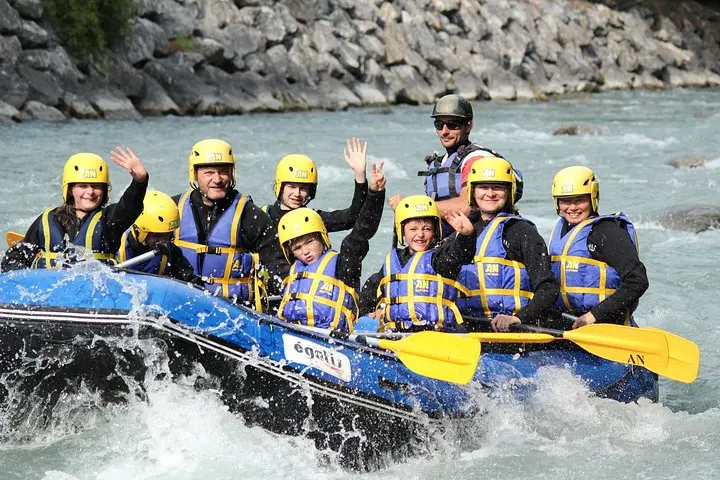
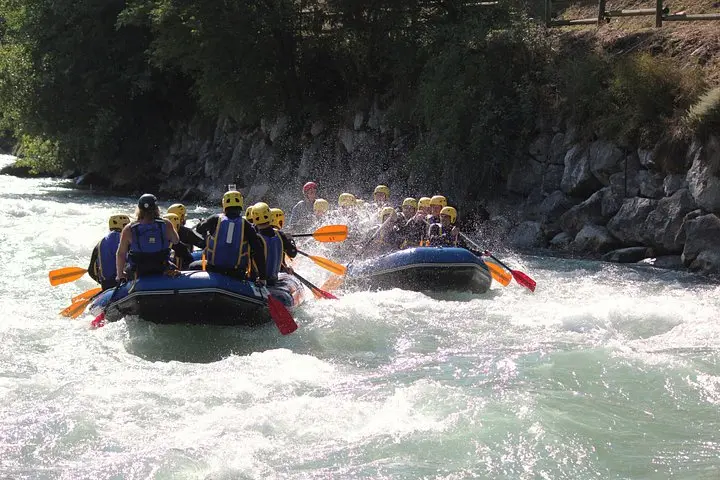
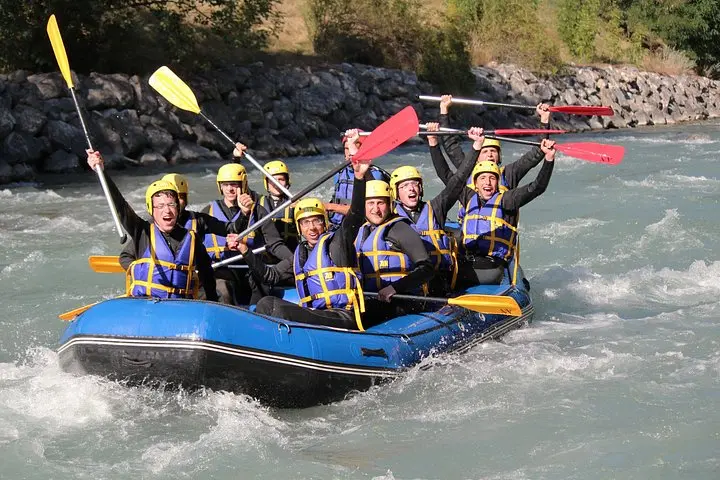
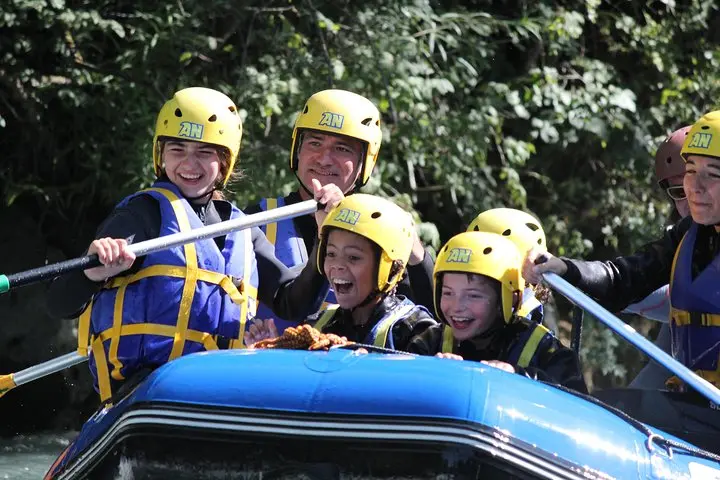
The raft slips into cold, pale-blue water that has carved the Tarentaise valley since the last ice age. Mountains press close, snowfields still on higher ridges, and the Isère pushes you downstream with a steady, insistent energy — two hours of continuous rapids, eddies and scenic runs between forested banks and rock-strewn chutes.
The raft slips into cold, pale-blue water that has carved the Tarentaise valley since the last ice age. Mountains press close, snowfields still on higher ridges, and the Isère pushes you downstream with a steady, insistent energy — two hours of continuous rapids, eddies and scenic runs between forested banks and rock-strewn chutes.
This is the Haute-Isère, one of Europe’s classic whitewater arteries shaped by glacial runoff and fractured alpine limestone. The valley has long been a transit corridor: shepherd paths, hydro works and the modern rail and road lines that feed nearby ski resorts. Local guides combine technical rivercraft with regional knowledge — expect mentions of La Plagne, Bourg-Saint-Maurice markets, and the river’s role in hydroelectric development.
Practically, the operator meets at the whitewater base in Macôt-La Plagne (usually 8:45 a.m.), fits you with a wetsuit, boots, helmet and lifejacket, runs a safety briefing and handles transfers. The advertised on-water time is two hours; allow 3–3.5 hours total for check-in and transport. Minimum age is typically 12 and participants should be comfortable in water. Rapids range from playful to demanding depending on spring melt — guides set the pace.
Bring a swimsuit, towel, sun protection and sturdy shoes for the short walks to boats. Cameras should be secured in waterproof cases or left ashore. Listen to your guide, follow paddle commands, and lean into the river: the current is a character here, always ready to test balance and reward momentum.