THE ADVENTURE COLLECTIVE® · Independent discovery and booking for outdoor travel

Walk through Kyoto’s endless corridor of torii with an expert guide who explains the shrine’s religious history and leads you up Mount Inari to panoramic views. Expect 3–4 km of walking, stone steps, and living Shinto traditions.
Walk through Kyoto’s endless corridor of torii with an expert guide who explains the shrine’s religious history and leads you up Mount Inari to panoramic views. Expect 3–4 km of walking, stone steps, and living Shinto traditions.
You step out of the station into a ribbon of vermilion—rows of torii folding into shadow and light, each gate a narrow corridor that pushes you uphill. The air is cooler as the paved walk becomes stone steps; fox statues peer from mossy alcoves while the city of Kyoto shrinks below.
Verified experiences and guided adventures in the surrounding area.
Operated by Nara Guide · Kyoto, Kyoto
You step out of the station into a ribbon of vermilion—rows of torii folding into shadow and light, each gate a narrow corridor that pushes you uphill. The air is cooler as the paved walk becomes stone steps; fox statues peer from mossy alcoves while the city of Kyoto shrinks below.
Fushimi Inari Taisha dates back to the early eighth century and honors Inari, the kami of rice, commerce and prosperity. The shrine complex spreads across Mount Inari, a wooded hill whose stair-cut trails and stone lanterns were added over centuries by merchants and farmers who donated torii. The ritual landscape mixes Shinto devotion with practical wayfinding: gates mark donors and offer passage deeper into the sacred slope.
Culturally the site remains active—visit rituals, ema plaques and fox imagery show a living tradition. Geologically the climb is a bucolic ascent through cedar and cypress stands with stone steps worn smooth by centuries of pilgrims; the hill culminates at an observation point with a clear view over Kyoto.
Practically, the guided half-day covers the main hall, the romon gate, the tunnel of torii and a climb toward the summit lookout. Expect roughly 200–230 m of ascent and about 3–4 km total walking; wear sturdy shoes, carry water and plan for variable weather. Early starts cut crowds and noon brings the busiest foot traffic. Guides add historical context, point out lesser-known shrines on the upper trail and manage pacing for mixed groups. The experience is equal parts cultural immersion and short mountain hike—bring curiosity and comfortable legs.
No entrance fee is required to visit Fushimi Inari Taisha; the guided tour covers interpretation and route planning but not permit costs.
The trail involves many stone stairs and about 200–230 m of elevation gain; it’s a steady climb but manageable for moderately fit people with breaks.
The main shrine area is accessible, but the upper trails with steep stairs are not suitable for wheelchairs or strollers—discuss options with the guide beforehand.
Guides usually meet near Keihan Fushimi-Inari or JR Inari station exits and conclude back near the shrine entrance for easy public transport connections.
Nara Guide operates guided outdoor trips and adventures with an emphasis on safety, stewardship, and memorable experiences.
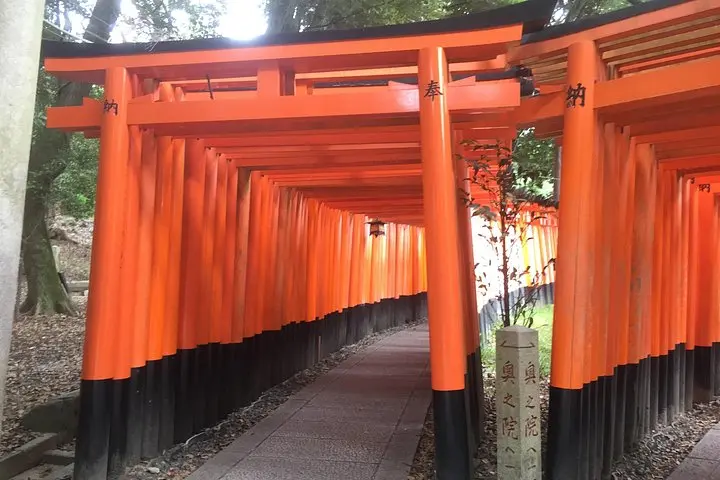
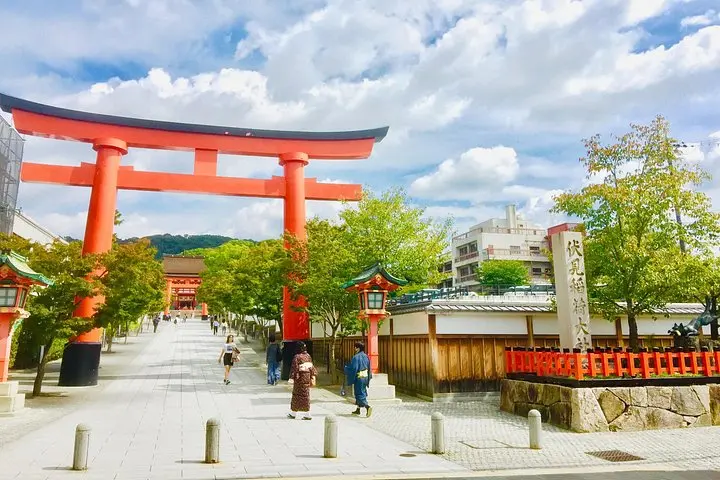
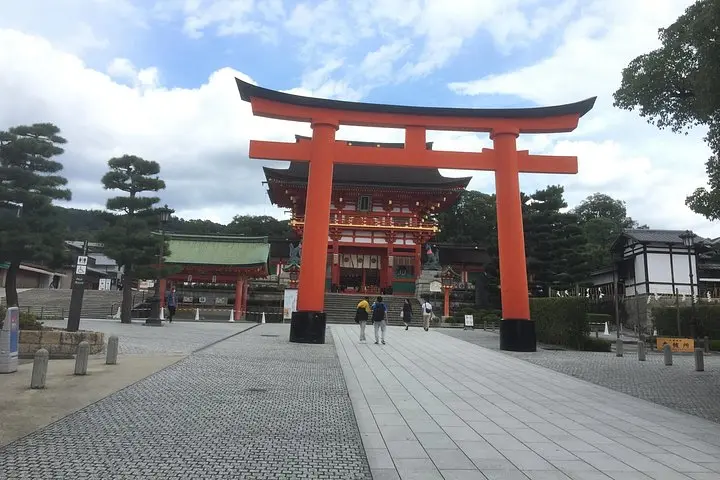
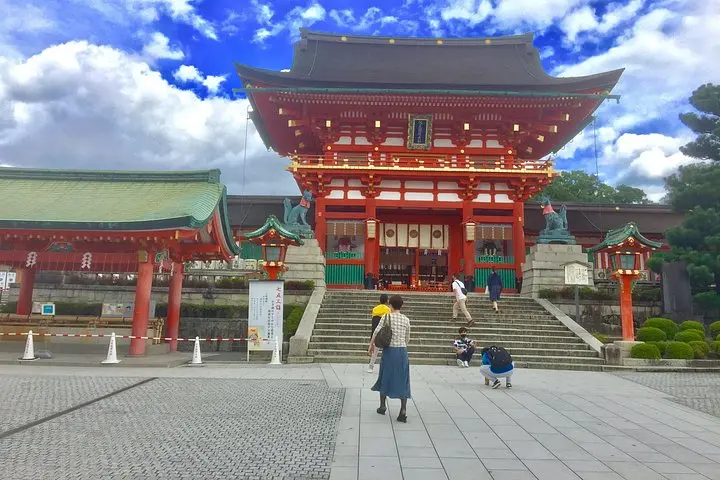
You step out of the station into a ribbon of vermilion—rows of torii folding into shadow and light, each gate a narrow corridor that pushes you uphill. The air is cooler as the paved walk becomes stone steps; fox statues peer from mossy alcoves while the city of Kyoto shrinks below.
You step out of the station into a ribbon of vermilion—rows of torii folding into shadow and light, each gate a narrow corridor that pushes you uphill. The air is cooler as the paved walk becomes stone steps; fox statues peer from mossy alcoves while the city of Kyoto shrinks below.
Fushimi Inari Taisha dates back to the early eighth century and honors Inari, the kami of rice, commerce and prosperity. The shrine complex spreads across Mount Inari, a wooded hill whose stair-cut trails and stone lanterns were added over centuries by merchants and farmers who donated torii. The ritual landscape mixes Shinto devotion with practical wayfinding: gates mark donors and offer passage deeper into the sacred slope.
Culturally the site remains active—visit rituals, ema plaques and fox imagery show a living tradition. Geologically the climb is a bucolic ascent through cedar and cypress stands with stone steps worn smooth by centuries of pilgrims; the hill culminates at an observation point with a clear view over Kyoto.
Practically, the guided half-day covers the main hall, the romon gate, the tunnel of torii and a climb toward the summit lookout. Expect roughly 200–230 m of ascent and about 3–4 km total walking; wear sturdy shoes, carry water and plan for variable weather. Early starts cut crowds and noon brings the busiest foot traffic. Guides add historical context, point out lesser-known shrines on the upper trail and manage pacing for mixed groups. The experience is equal parts cultural immersion and short mountain hike—bring curiosity and comfortable legs.