THE ADVENTURE COLLECTIVE® · Independent discovery and booking for outdoor travel

Glide across Sri Lanka’s largest reservoir to watch elephants swim between islands and visit shore-side indigenous communities. This boat safari combines wildlife encounters with local culture and practical, small-boat exploration.
Glide across Sri Lanka’s largest reservoir to watch elephants swim between islands and visit shore-side indigenous communities. This boat safari combines wildlife encounters with local culture and practical, small-boat exploration.
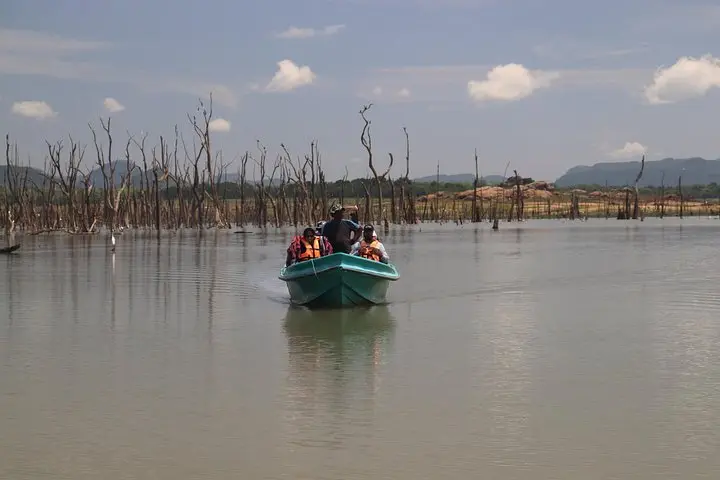
Before the sun clears the eastern rim, a low boat slips across Senanayake Samudra and the reservoir opens up like a liquid plain. Mist lifts from the water and trunks break the surface—elephants paddling between islands with the casual concentration of commuters. The motor hums, the guide points, and the day’s rhythm becomes a pulse of water, reed, and call.
Verified experiences and guided adventures in the surrounding area.
Operated by Sri Lanka Day Tours · Batticaloa, Eastern Province
Before the sun clears the eastern rim, a low boat slips across Senanayake Samudra and the reservoir opens up like a liquid plain. Mist lifts from the water and trunks break the surface—elephants paddling between islands with the casual concentration of commuters. The motor hums, the guide points, and the day’s rhythm becomes a pulse of water, reed, and call.
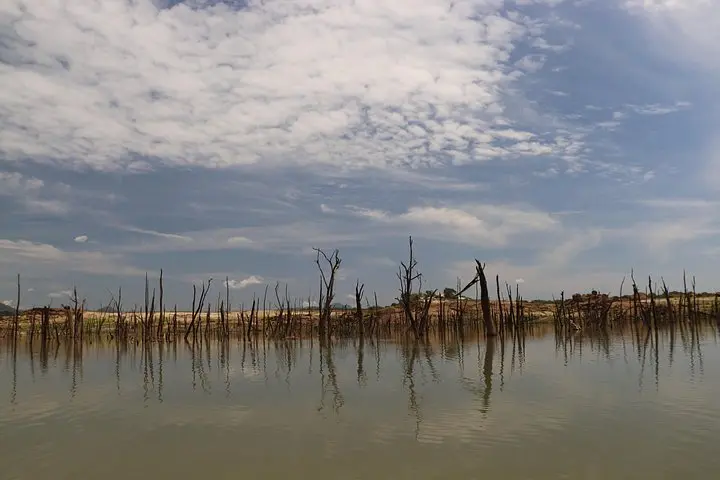
Gal Oya is defined by its reservoir and the dry-zone forest islands left behind when engineers created the lake in the mid-20th century for irrigation and settlement. Those islands now host pockets of wildlife and small indigenous settlements; Vedda families and local fishing communities maintain ways of life that predate the dam. Geologically the park sits where low hills meet flat plains, creating shoreline shelves and shallow channels that encourage crossings and congregation.
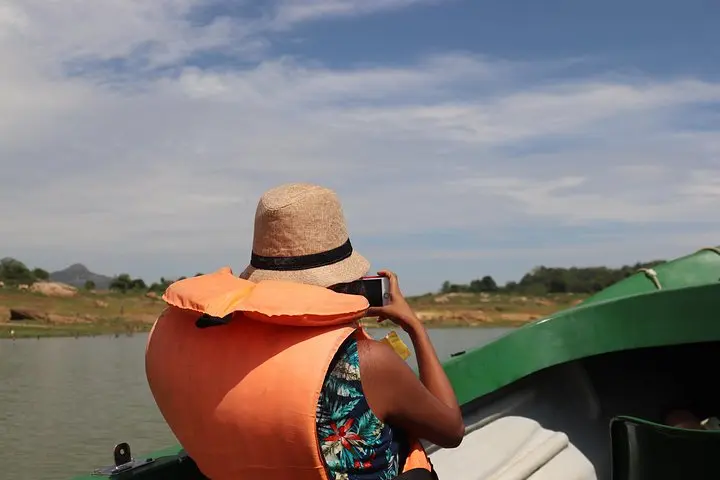
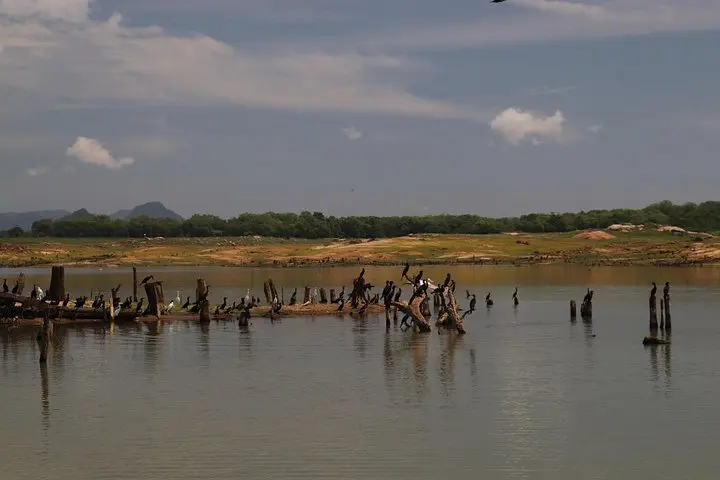
Expect up-close wildlife viewing from a stable, small boat: elephants entering and exiting the water, herons and storks hunting shallow edges, and troops of macaques at shore. Local guides read the light and water—choosing morning or evening runs maximizes sightings, while full-day safaris explore further islands and cultural stops.
Practical notes: trips usually run 2–3 hours, boats carry minimal shade, and conditions can be hot and dusty. Wear sun protection, bring water and binoculars, and plan for simple boarding steps onto the boat. Respect private island communities—ask before photographing people—and follow guide instructions to minimize disturbance to wildlife. With common-sense preparation, a Gal Oya boat safari is a rare chance to see elephants swim, learn local history, and travel a landscape formed where engineering met ecosystem.
Most safaris are 2–3 hours for morning/evening options; a full-day option explores more islands and cultural stops.
Families are welcome; infants are typically required to sit on an adult’s lap and boats have limited safety gear—check with the operator for child seating and lifejacket availability.
Common sightings include Sri Lankan elephants swimming or grazing at the water’s edge, water birds such as storks and pelicans, macaques, and occasional deer by shorelines.
The trip is rated easy physically but involves boarding a low boat and walking on uneven island beaches—notify the operator in advance to assess accessibility and assistance needs.
Sri Lanka Day Tours operates guided outdoor trips and adventures with an emphasis on safety, stewardship, and memorable experiences.
Before the sun clears the eastern rim, a low boat slips across Senanayake Samudra and the reservoir opens up like a liquid plain. Mist lifts from the water and trunks break the surface—elephants paddling between islands with the casual concentration of commuters. The motor hums, the guide points, and the day’s rhythm becomes a pulse of water, reed, and call.
Before the sun clears the eastern rim, a low boat slips across Senanayake Samudra and the reservoir opens up like a liquid plain. Mist lifts from the water and trunks break the surface—elephants paddling between islands with the casual concentration of commuters. The motor hums, the guide points, and the day’s rhythm becomes a pulse of water, reed, and call.
Gal Oya is defined by its reservoir and the dry-zone forest islands left behind when engineers created the lake in the mid-20th century for irrigation and settlement. Those islands now host pockets of wildlife and small indigenous settlements; Vedda families and local fishing communities maintain ways of life that predate the dam. Geologically the park sits where low hills meet flat plains, creating shoreline shelves and shallow channels that encourage crossings and congregation.
Expect up-close wildlife viewing from a stable, small boat: elephants entering and exiting the water, herons and storks hunting shallow edges, and troops of macaques at shore. Local guides read the light and water—choosing morning or evening runs maximizes sightings, while full-day safaris explore further islands and cultural stops.
Practical notes: trips usually run 2–3 hours, boats carry minimal shade, and conditions can be hot and dusty. Wear sun protection, bring water and binoculars, and plan for simple boarding steps onto the boat. Respect private island communities—ask before photographing people—and follow guide instructions to minimize disturbance to wildlife. With common-sense preparation, a Gal Oya boat safari is a rare chance to see elephants swim, learn local history, and travel a landscape formed where engineering met ecosystem.