THE ADVENTURE COLLECTIVE® · Independent discovery and booking for outdoor travel

An eight-day island-hopping loop that pairs guided wildlife excursions with free time to explore beaches, highlands and world-class snorkeling spots like Los Tuneles and Kicker Rock. Practical, active and rich in endemic species, this trip is for travelers ready to trade comfort for encounters.
An eight-day island-hopping loop that pairs guided wildlife excursions with free time to explore beaches, highlands and world-class snorkeling spots like Los Tuneles and Kicker Rock. Practical, active and rich in endemic species, this trip is for travelers ready to trade comfort for encounters.
The first morning in the Galapagos feels like stepping into another set of rules. Salt hits the air, frigatebirds wheel and the public speedboat hums as it parts the glassy channel toward your first stop: Kicker Rock, two volcanic sentinels rising 140 meters from the sea. You don a mask and the current seems to dare you — sharks and rays slip through a cleft carved by millennia of erosion while blue-footed boobies patrol the sky.
Verified experiences and guided adventures in the surrounding area.
Operated by Rebecca Adventure Travel · Puerto Ayora, Galápagos
The first morning in the Galapagos feels like stepping into another set of rules. Salt hits the air, frigatebirds wheel and the public speedboat hums as it parts the glassy channel toward your first stop: Kicker Rock, two volcanic sentinels rising 140 meters from the sea. You don a mask and the current seems to dare you — sharks and rays slip through a cleft carved by millennia of erosion while blue-footed boobies patrol the sky.
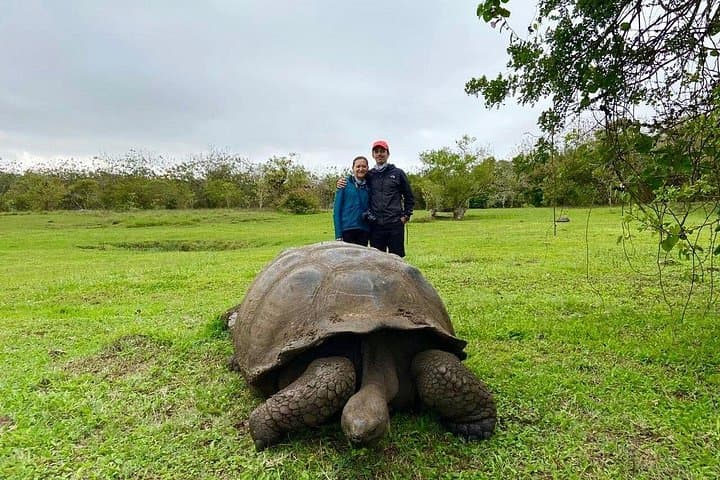
Across eight days you move like a careful insect through islands that wear different faces: the sculpted lava arches of Los Tuneles, the scrubby highlands of Santa Cruz where giant tortoises browse, and the wind-brushed shores of Floreana and North Seymour. The itinerary balances guided day trips to protected sites with pockets of free time to explore Puerto Ayora or Playa Mann, and ends with a short inter-island flight to Baltra.
Geology here is immediate. Basalt flows and collapsed lava tubes produce tunnels and arches at Los Tuneles; the highlands sit at roughly 300–400 meters elevation where ancient magma once pooled and cooling produced the rolling farmland that now shelters tortoises. Culturally, the inhabited islands are small communities shaped by fishing and tourism — simple restaurants, a handful of hotels, and interpretation centers that frame Darwin and the islands history in plain terms.
Practical decisions matter. The Galapagos National Park entrance is paid in cash on arrival (about $100), public speedboats run on fixed schedules and can be bouncy, and luggage should be compact because island transfers favor small ferries. Guides certified by the park lead all excursions, but during boat transfers you are on your own; seasickness pills are recommended if you are sensitive. Drinking water should be bottled or purified — tap water is untreated and can cause stomach trouble.
Expect daily rhythms of activity: morning snorkeling or hikes, a boxed lunch on busy days, and late afternoons to wander local shops or watch iguanas warm themselves on volcanic rocks. Fitness requirements are moderate — short hikes and swimming with currents are the norm — but no technical climbing skills are needed. Pack reef-safe sunscreen, sturdy water shoes for rocky shore entries, and a light rain layer: weather shifts between warm wet months and cooler, misty periods.
This trip is an active primer to Galapagos biodiversity, with practical trade-offs: structured logistics for maximum wildlife access, plus enough independent time to feel the islands on your own terms. Whether you come for the tortoises, the underwater parade, or simply to move between islands under a vast southern sky, these eight days deliver concentrated exposure to one of the planet's most guarded wild places.
A valid passport is required for travel to the Galapagos; visa requirements depend on your nationality—check with your embassy.
The park entrance fee is approximately $100 USD per person and must be paid in cash upon arrival to the islands.
Basic clinics exist on inhabited islands like San Cristobal and Santa Cruz; for major medical issues evacuation to the mainland may be necessary—travel insurance is essential.
Boat rides between islands can be choppy; if you are susceptible, take preventive medication and bring plastic bags for comfort.
Tap water may contain bacteria; stick to bottled or purified water for drinking and brushing teeth.
Children and fit older travelers can usually participate, but the operator recommends moderate fitness and advises informing guides about medical conditions in advance.
Rebecca Adventure Travel operates guided outdoor trips and adventures with an emphasis on safety, stewardship, and memorable experiences.


The first morning in the Galapagos feels like stepping into another set of rules. Salt hits the air, frigatebirds wheel and the public speedboat hums as it parts the glassy channel toward your first stop: Kicker Rock, two volcanic sentinels rising 140 meters from the sea. You don a mask and the current seems to dare you — sharks and rays slip through a cleft carved by millennia of erosion while blue-footed boobies patrol the sky.
The first morning in the Galapagos feels like stepping into another set of rules. Salt hits the air, frigatebirds wheel and the public speedboat hums as it parts the glassy channel toward your first stop: Kicker Rock, two volcanic sentinels rising 140 meters from the sea. You don a mask and the current seems to dare you — sharks and rays slip through a cleft carved by millennia of erosion while blue-footed boobies patrol the sky.
Across eight days you move like a careful insect through islands that wear different faces: the sculpted lava arches of Los Tuneles, the scrubby highlands of Santa Cruz where giant tortoises browse, and the wind-brushed shores of Floreana and North Seymour. The itinerary balances guided day trips to protected sites with pockets of free time to explore Puerto Ayora or Playa Mann, and ends with a short inter-island flight to Baltra.
Geology here is immediate. Basalt flows and collapsed lava tubes produce tunnels and arches at Los Tuneles; the highlands sit at roughly 300–400 meters elevation where ancient magma once pooled and cooling produced the rolling farmland that now shelters tortoises. Culturally, the inhabited islands are small communities shaped by fishing and tourism — simple restaurants, a handful of hotels, and interpretation centers that frame Darwin and the islands history in plain terms.
Practical decisions matter. The Galapagos National Park entrance is paid in cash on arrival (about $100), public speedboats run on fixed schedules and can be bouncy, and luggage should be compact because island transfers favor small ferries. Guides certified by the park lead all excursions, but during boat transfers you are on your own; seasickness pills are recommended if you are sensitive. Drinking water should be bottled or purified — tap water is untreated and can cause stomach trouble.
Expect daily rhythms of activity: morning snorkeling or hikes, a boxed lunch on busy days, and late afternoons to wander local shops or watch iguanas warm themselves on volcanic rocks. Fitness requirements are moderate — short hikes and swimming with currents are the norm — but no technical climbing skills are needed. Pack reef-safe sunscreen, sturdy water shoes for rocky shore entries, and a light rain layer: weather shifts between warm wet months and cooler, misty periods.
This trip is an active primer to Galapagos biodiversity, with practical trade-offs: structured logistics for maximum wildlife access, plus enough independent time to feel the islands on your own terms. Whether you come for the tortoises, the underwater parade, or simply to move between islands under a vast southern sky, these eight days deliver concentrated exposure to one of the planet's most guarded wild places.