THE ADVENTURE COLLECTIVE® · Independent discovery and booking for outdoor travel

A full‑day circuit from Colombo that pairs Galle Fort’s colonial streets with a mangrove boat safari and a volunteer turtle hatchery visit. Expect walking on cobbles, a slow estuary cruise, and hands‑on cultural stops.
A full‑day circuit from Colombo that pairs Galle Fort’s colonial streets with a mangrove boat safari and a volunteer turtle hatchery visit. Expect walking on cobbles, a slow estuary cruise, and hands‑on cultural stops.
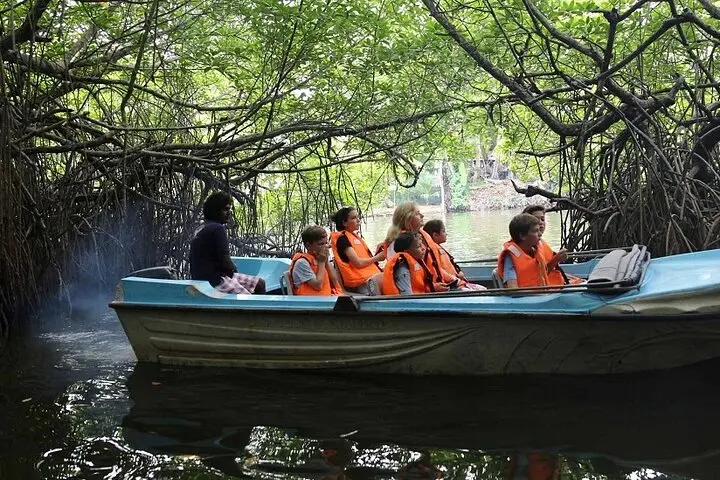
You step out of the air‑conditioned vehicle onto sun-warmed ramparts that edge Galle’s fortified bay—salt air pulls at your shirt while gulls patrol the curve of the harbor. The day unspools as a sequence of compact scenes: cobbled lanes, a low lighthouse, market carts selling papaya with chili, and the slow green maze of the Madu River where mangroves nudge wooden boats.
Verified experiences and guided adventures in the surrounding area.
Operated by Ceylon Traveline · Galle, Southern Province
You step out of the air‑conditioned vehicle onto sun-warmed ramparts that edge Galle’s fortified bay—salt air pulls at your shirt while gulls patrol the curve of the harbor. The day unspools as a sequence of compact scenes: cobbled lanes, a low lighthouse, market carts selling papaya with chili, and the slow green maze of the Madu River where mangroves nudge wooden boats.
Galle Fort’s core was raised by the Portuguese in the late 16th century and reshaped by the Dutch in the 17th, so stones here read like layered notes of colonial history. The southwest coast’s geology is coastal plain and estuarine marsh: tide-carved channels, sandbar beaches and sheltered mangrove islets that host small spice plots and fishing huts. Cultural threads run through the day—Ambalangoda mask carving and stilt-fishing are living crafts that predate modern tourism and remain visible from the shoreline.
After a crisp walking loop along the fort’s ramparts and narrow lanes, the tour moves to conservation-minded stops: a volunteer-run turtle hatchery and a river boat that threads the Madu estuary. The mangrove channels have a personality—water that hesitates then pushes you forward—while doctor fish nibble at tired feet.
Practical edge: plan for a long day (roughly 9–12 hours), wear closed-toe walking shoes, and bring reef-safe sunscreen and a light rain layer during monsoon months. Bottled water is supplied; carry small local cash for market purchases. The itinerary balances heritage streets with low-impact wildlife encounters—arrive prepared to walk, photograph, and support local conservation efforts.
Yes — the tour offers pickup from Bandaranaike International Airport, hotels in Colombo and Negombo; confirm your pickup point when booking.
Entrance fees listed in the itinerary (Galle attractions, turtle hatchery, Madu River boat safari) are included; check your booking confirmation for specifics.
Lunch is not consistently listed among inclusions; plan for a local meal during the day or confirm with the operator before departure.
Hatchery staff typically supervise any interactions; follow their guidance—do not handle eggs or nest material and avoid disturbing animals.
Ceylon Traveline operates guided outdoor trips and adventures with an emphasis on safety, stewardship, and memorable experiences.

You step out of the air‑conditioned vehicle onto sun-warmed ramparts that edge Galle’s fortified bay—salt air pulls at your shirt while gulls patrol the curve of the harbor. The day unspools as a sequence of compact scenes: cobbled lanes, a low lighthouse, market carts selling papaya with chili, and the slow green maze of the Madu River where mangroves nudge wooden boats.
You step out of the air‑conditioned vehicle onto sun-warmed ramparts that edge Galle’s fortified bay—salt air pulls at your shirt while gulls patrol the curve of the harbor. The day unspools as a sequence of compact scenes: cobbled lanes, a low lighthouse, market carts selling papaya with chili, and the slow green maze of the Madu River where mangroves nudge wooden boats.
Galle Fort’s core was raised by the Portuguese in the late 16th century and reshaped by the Dutch in the 17th, so stones here read like layered notes of colonial history. The southwest coast’s geology is coastal plain and estuarine marsh: tide-carved channels, sandbar beaches and sheltered mangrove islets that host small spice plots and fishing huts. Cultural threads run through the day—Ambalangoda mask carving and stilt-fishing are living crafts that predate modern tourism and remain visible from the shoreline.
After a crisp walking loop along the fort’s ramparts and narrow lanes, the tour moves to conservation-minded stops: a volunteer-run turtle hatchery and a river boat that threads the Madu estuary. The mangrove channels have a personality—water that hesitates then pushes you forward—while doctor fish nibble at tired feet.
Practical edge: plan for a long day (roughly 9–12 hours), wear closed-toe walking shoes, and bring reef-safe sunscreen and a light rain layer during monsoon months. Bottled water is supplied; carry small local cash for market purchases. The itinerary balances heritage streets with low-impact wildlife encounters—arrive prepared to walk, photograph, and support local conservation efforts.