THE ADVENTURE COLLECTIVE® · Independent discovery and booking for outdoor travel

Walk Galle Fort with a certified interpreter and discover layered colonial history, hidden courtyards and coastal views in a focused 2–2.5 hour private tour. Ideal for travelers who want context alongside scenery.
Walk Galle Fort with a certified interpreter and discover layered colonial history, hidden courtyards and coastal views in a focused 2–2.5 hour private tour. Ideal for travelers who want context alongside scenery.
You step off a narrow lane and the sun-warmed ramparts of Galle Fort rise like a low, deliberate wall between you and the Indian Ocean. Salt air threads through the cobblestones; a guide’s voice draws the map of centuries in small, exact phrases — traders, colonists, fires, reconstructions. The ramparts dare the tide to erase what humans have built, and the town answers with quiet resilience.
Verified experiences and guided adventures in the surrounding area.
Operated by Galle Fort Heritage Walk by a Certified Heritage Interpreter. · Galle, Southern Province
You step off a narrow lane and the sun-warmed ramparts of Galle Fort rise like a low, deliberate wall between you and the Indian Ocean. Salt air threads through the cobblestones; a guide’s voice draws the map of centuries in small, exact phrases — traders, colonists, fires, reconstructions. The ramparts dare the tide to erase what humans have built, and the town answers with quiet resilience.
This two-hour private walk peels the UNESCO World Heritage site into readable layers: Portuguese foundations, Dutch grid planning, and British civic buildings that repurposed colonial space into shops, churches and courtyards scented by cinnamon. The geology is simple—coastal limestone and reclaimed land—yet the human story is complex: a 17th–18th century trading hub that connected South Asia to Southeast Asian and European markets.
Along the route you’ll see Queen’s House, the place of the old lighthouse’s ruin, a private museum and hidden gunpowder magazine — small sites that reveal bigger trade networks and local craft traditions. Local life still moves through these streets: toddy shops, book alleys and fishermen sorting nets by the walls.
Practical guidance: wear sturdy shoes for uneven cobbles, sun protection and carry water for the 2–2.5 hour loop. Tours run at a conversational pace and are suitable for most fitness levels; light rain is common most of the year so a compact rain layer helps. Bring curiosity and questions — the interpreter’s job is to translate architecture and a patchwork of colonial law into stories that make the fort feel like a lived place rather than a postcard.
The tour lasts about 2–2.5 hours and covers mostly flat cobbled lanes and ramparts with short stairs; it’s suitable for most walkers.
The tour includes entry to a private museum and certain attractions noted by the guide; confirm specific sites at booking.
Guides are typically English-speaking certified heritage interpreters; request other languages at booking and confirm availability.
Full refund if you cancel at least 24 hours before the scheduled start; see booking terms for details.
Galle Fort Heritage Walk by a Certified Heritage Interpreter. operates guided outdoor trips and adventures with an emphasis on safety, stewardship, and memorable experiences.


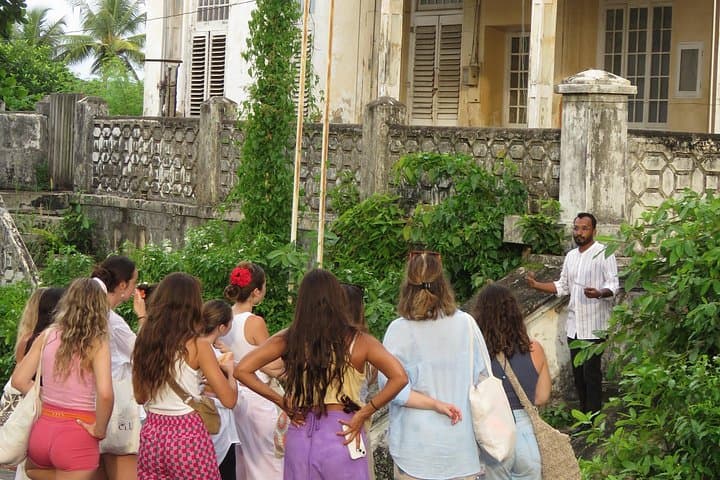
You step off a narrow lane and the sun-warmed ramparts of Galle Fort rise like a low, deliberate wall between you and the Indian Ocean. Salt air threads through the cobblestones; a guide’s voice draws the map of centuries in small, exact phrases — traders, colonists, fires, reconstructions. The ramparts dare the tide to erase what humans have built, and the town answers with quiet resilience.
You step off a narrow lane and the sun-warmed ramparts of Galle Fort rise like a low, deliberate wall between you and the Indian Ocean. Salt air threads through the cobblestones; a guide’s voice draws the map of centuries in small, exact phrases — traders, colonists, fires, reconstructions. The ramparts dare the tide to erase what humans have built, and the town answers with quiet resilience.
This two-hour private walk peels the UNESCO World Heritage site into readable layers: Portuguese foundations, Dutch grid planning, and British civic buildings that repurposed colonial space into shops, churches and courtyards scented by cinnamon. The geology is simple—coastal limestone and reclaimed land—yet the human story is complex: a 17th–18th century trading hub that connected South Asia to Southeast Asian and European markets.
Along the route you’ll see Queen’s House, the place of the old lighthouse’s ruin, a private museum and hidden gunpowder magazine — small sites that reveal bigger trade networks and local craft traditions. Local life still moves through these streets: toddy shops, book alleys and fishermen sorting nets by the walls.
Practical guidance: wear sturdy shoes for uneven cobbles, sun protection and carry water for the 2–2.5 hour loop. Tours run at a conversational pace and are suitable for most fitness levels; light rain is common most of the year so a compact rain layer helps. Bring curiosity and questions — the interpreter’s job is to translate architecture and a patchwork of colonial law into stories that make the fort feel like a lived place rather than a postcard.