THE ADVENTURE COLLECTIVE® · Independent discovery and booking for outdoor travel

Walk The Strand and the island’s historic avenues to see Galveston’s Gilded Age mansions, iron-front stores, and the scars—and repairs—left by a powerful maritime past. This 2-hour tour pairs architectural detail with local history and practical tips for exploring on foot.
Walk The Strand and the island’s historic avenues to see Galveston’s Gilded Age mansions, iron-front stores, and the scars—and repairs—left by a powerful maritime past. This 2-hour tour pairs architectural detail with local history and practical tips for exploring on foot.
You step off the ferry or out of a sunlit street and the city’s late-19th-century ambitions are immediate: brick storefronts, iron balconies, and mansions that still hold their heads high against the Gulf breeze. The Galveston Gilded Age Architecture Tour threads through The Strand and nearby residential avenues, where money, salt air, and disaster shaped the skyline.
Verified experiences and guided adventures in the surrounding area.
You step off the ferry or out of a sunlit street and the city’s late-19th-century ambitions are immediate: brick storefronts, iron balconies, and mansions that still hold their heads high against the Gulf breeze. The Galveston Gilded Age Architecture Tour threads through The Strand and nearby residential avenues, where money, salt air, and disaster shaped the skyline.
Galveston rose in the 1800s as a booming port — once called the “Wall Street of the South” — and those fortunes built in cotton, shipping, and trade left a hard-edged architectural record. Look for Romanesque, Victorian, and Richardsonian details: carved stonework, steep gables, and ornate ironwork that survived the 1900 hurricane and was later restored through community preservation efforts.
The geology is simple: a narrow barrier island of sand and shell, which means streets sit low to the sea and every facade knows the weather. Culture here mixes Creole, Anglo, and maritime traditions; local museums and libraries often add context to plaques and mansion tours.
Practically, expect 1.5–2 miles of walking on mostly flat sidewalks, occasional steps into historic homes, and frequent shade gaps. Morning or late afternoon offers cooler air and softer light for photos. Bring sun protection and a refillable water bottle; wear grippy shoes for cobbles and wet spots.
This is a close-up, human-scale history walk: an exercise in reading buildings as evidence of wealth, disaster, and recovery. It’s accessible, vivid, and ideal for travelers who like their history with fresh salt air.
The tour lasts about two hours and covers roughly 1.5–2 miles on mostly flat sidewalks with a few steps into historic properties.
Yes—families and older visitors can usually manage the route, though mobility-limited guests should check accessibility for specific historic homes beforehand.
Comfortable shoes, sun protection, and a water bottle; a light jacket in cooler months and a rain layer during hurricane season are recommended.
It depends on the operator and ticket; some tours include entry to one or two properties while others focus on exterior commentary—confirm when booking.
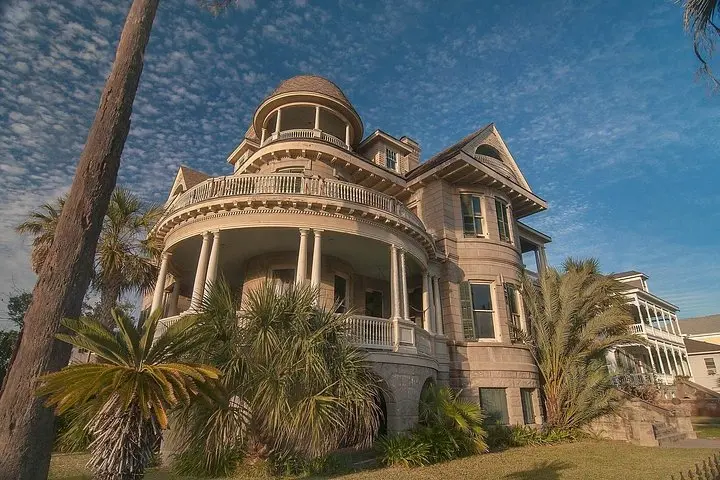
You step off the ferry or out of a sunlit street and the city’s late-19th-century ambitions are immediate: brick storefronts, iron balconies, and mansions that still hold their heads high against the Gulf breeze. The Galveston Gilded Age Architecture Tour threads through The Strand and nearby residential avenues, where money, salt air, and disaster shaped the skyline.
You step off the ferry or out of a sunlit street and the city’s late-19th-century ambitions are immediate: brick storefronts, iron balconies, and mansions that still hold their heads high against the Gulf breeze. The Galveston Gilded Age Architecture Tour threads through The Strand and nearby residential avenues, where money, salt air, and disaster shaped the skyline.
Galveston rose in the 1800s as a booming port — once called the “Wall Street of the South” — and those fortunes built in cotton, shipping, and trade left a hard-edged architectural record. Look for Romanesque, Victorian, and Richardsonian details: carved stonework, steep gables, and ornate ironwork that survived the 1900 hurricane and was later restored through community preservation efforts.
The geology is simple: a narrow barrier island of sand and shell, which means streets sit low to the sea and every facade knows the weather. Culture here mixes Creole, Anglo, and maritime traditions; local museums and libraries often add context to plaques and mansion tours.
Practically, expect 1.5–2 miles of walking on mostly flat sidewalks, occasional steps into historic homes, and frequent shade gaps. Morning or late afternoon offers cooler air and softer light for photos. Bring sun protection and a refillable water bottle; wear grippy shoes for cobbles and wet spots.
This is a close-up, human-scale history walk: an exercise in reading buildings as evidence of wealth, disaster, and recovery. It’s accessible, vivid, and ideal for travelers who like their history with fresh salt air.