THE ADVENTURE COLLECTIVE® · Independent discovery and booking for outdoor travel

Walk the streets where mob money and headline entertainers reshaped Galveston. This 90‑minute guided tour visits speakeasies, historic hotels and homes tied to the island’s red light era.
Walk the streets where mob money and headline entertainers reshaped Galveston. This 90‑minute guided tour visits speakeasies, historic hotels and homes tied to the island’s red light era.
Step off the seawall and the city rearranges itself: salt wind, gull calls, and brick storefronts that still wear the soot of a busier industrial era. On this 90‑minute walking tour you travel street‑level through Galveston’s most notorious chapter — the so-called “Free State” where mob money, bright lights and headline entertainers crossed paths with bootleggers, madams and railroad crowds.
Verified experiences and guided adventures in the surrounding area.
Operated by Historic Galveston Ghost Tours · Galveston, Texas
Step off the seawall and the city rearranges itself: salt wind, gull calls, and brick storefronts that still wear the soot of a busier industrial era. On this 90‑minute walking tour you travel street‑level through Galveston’s most notorious chapter — the so-called “Free State” where mob money, bright lights and headline entertainers crossed paths with bootleggers, madams and railroad crowds.
The story is coastal and municipal as much as criminal. Galveston rose as a Gulf port and barrier‑island hub; its low dunes and porous soils shaped how people built and rebuilt after storms. In the 1910s–40s the island’s casinos and clubs lured acts like Frank Sinatra and Dean Martin; the railroad funneled tens of thousands of visitors a day. The tour stops outside period sites such as the Oleander Hotel (a Green Book safe haven), former barber‑shop speakeasies and the restored homes of infamous local figures.
Cultural threads run deep — African American travel history, migration to port jobs, and how municipal tolerance of vice created a unique economy. Guides unpack those layers with archival anecdotes and visible clues in façades, rail lines and restored interiors.
Practical notes: meet outside Leeland House; the loop is flat, paved and wheelchair accessible but expect city sidewalk gaps. Bring water, sun protection in summer and a light jacket for breezy evenings. Photography is welcome, but properties along the route are often private — observe signage. The tour pairs well with an afternoon on The Strand or a sunset stroll on the seawall.
The tour meets outside Leeland House in downtown Galveston; confirm meeting point on your booking voucher.
Yes — the route is on paved city sidewalks and the tour provider lists wheelchair accessibility, though some adjacent properties have uneven surfaces.
Yes — content is historical and family‑friendly, but parents should consider attention span for a 90‑minute walk.
Tours may be canceled in severe weather; check the cancellation policy and operator notifications for same‑day changes.
Historic Galveston Ghost Tours operates guided outdoor trips and adventures with an emphasis on safety, stewardship, and memorable experiences.
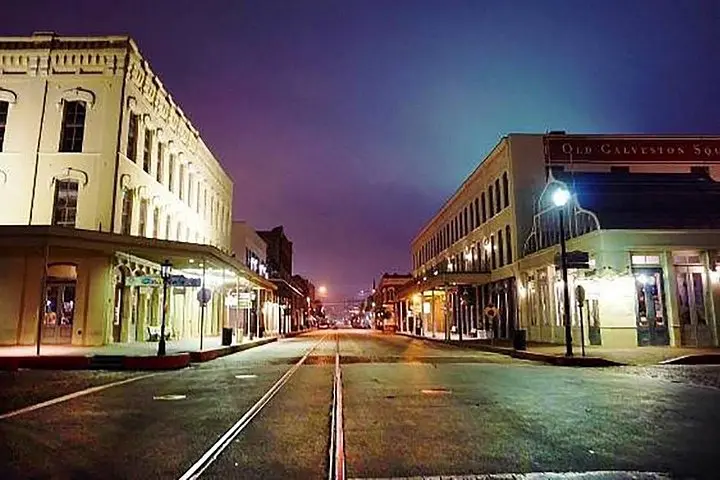



Step off the seawall and the city rearranges itself: salt wind, gull calls, and brick storefronts that still wear the soot of a busier industrial era. On this 90‑minute walking tour you travel street‑level through Galveston’s most notorious chapter — the so-called “Free State” where mob money, bright lights and headline entertainers crossed paths with bootleggers, madams and railroad crowds.
Step off the seawall and the city rearranges itself: salt wind, gull calls, and brick storefronts that still wear the soot of a busier industrial era. On this 90‑minute walking tour you travel street‑level through Galveston’s most notorious chapter — the so-called “Free State” where mob money, bright lights and headline entertainers crossed paths with bootleggers, madams and railroad crowds.
The story is coastal and municipal as much as criminal. Galveston rose as a Gulf port and barrier‑island hub; its low dunes and porous soils shaped how people built and rebuilt after storms. In the 1910s–40s the island’s casinos and clubs lured acts like Frank Sinatra and Dean Martin; the railroad funneled tens of thousands of visitors a day. The tour stops outside period sites such as the Oleander Hotel (a Green Book safe haven), former barber‑shop speakeasies and the restored homes of infamous local figures.
Cultural threads run deep — African American travel history, migration to port jobs, and how municipal tolerance of vice created a unique economy. Guides unpack those layers with archival anecdotes and visible clues in façades, rail lines and restored interiors.
Practical notes: meet outside Leeland House; the loop is flat, paved and wheelchair accessible but expect city sidewalk gaps. Bring water, sun protection in summer and a light jacket for breezy evenings. Photography is welcome, but properties along the route are often private — observe signage. The tour pairs well with an afternoon on The Strand or a sunset stroll on the seawall.