THE ADVENTURE COLLECTIVE® · Independent discovery and booking for outdoor travel

Paddle quiet channels through one of Costa Rica’s coastal mangrove systems, where guides point out spider monkeys, sloths and caimans. This 2–3 hour tour through Gandoca Lagoon is an easy, wildlife-rich introduction to the Caribbean estuary.
Paddle quiet channels through one of Costa Rica’s coastal mangrove systems, where guides point out spider monkeys, sloths and caimans. This 2–3 hour tour through Gandoca Lagoon is an easy, wildlife-rich introduction to the Caribbean estuary.
The paddle begins in a threaded inlet where mangrove roots reach down like hands into black water, and the lagoon opens into a slow, green world. Guides launch single and double kayaks, and you feel the current nudge the bow as birds call from the canopy and the forest watches quietly.
Verified experiences and guided adventures in the surrounding area.
Operated by Caribe Auténtico · Gandoca, Limón
The paddle begins in a threaded inlet where mangrove roots reach down like hands into black water, and the lagoon opens into a slow, green world. Guides launch single and double kayaks, and you feel the current nudge the bow as birds call from the canopy and the forest watches quietly.
Gandoca sits on Costa Rica’s southern Caribbean coast within the Gandoca–Manzanillo Wildlife Refuge, an area protected to preserve coastal wetlands and the reef-fringed shoreline nearby. The lagoon and its mangroves are shaped by Caribbean tides and riverine sediment; over millennia roots trapped soil and built the maze of channels you follow today. Local Afro‑Caribbean and indigenous communities have long lived from these coasts, and modern conservation efforts balance tourism with habitat protection.
On the water you’ll seek out spider monkeys in upper branches, three‑toed sloths snoozing in the mangrove canopy, and caimans slipping into shadowed pools. The guide points out medicinal plants, root systems that filter the estuary, and quiet coves where crabs and kingfishers prosper.
Practically: expect a 2–3 hour excursion on calm water with short, easy paddling stretches and none of the technical difficulty of open‑sea kayaking. Midday sun is strong — start early to avoid heat and afternoon rain. Wear quick‑dry clothes, reef‑safe sunscreen and bring a dry bag for cameras. Follow your guide’s instructions around wildlife (no feeding, keep distance) and be prepared for mosquitoes during the wet season. The trip is low‑impact but high on wildlife sightings and is a practical introduction to Caribbean mangrove ecology for first‑time paddlers.
No — tours are beginner friendly with basic paddling instruction and lifejackets provided; guides lead the group through calm channels.
Yes — the tour allows self‑drive to the launch area; guides will provide meeting instructions when you book.
Common sightings include spider monkeys, three‑toed sloths, caimans, herons and other shorebirds, though wildlife is never guaranteed.
Tours may be cancelled for heavy rain, high winds or unsafe conditions; the operator typically cancels for safety and may not offer refunds if the policy is final-sale.
Caribe Auténtico operates guided outdoor trips and adventures with an emphasis on safety, stewardship, and memorable experiences.
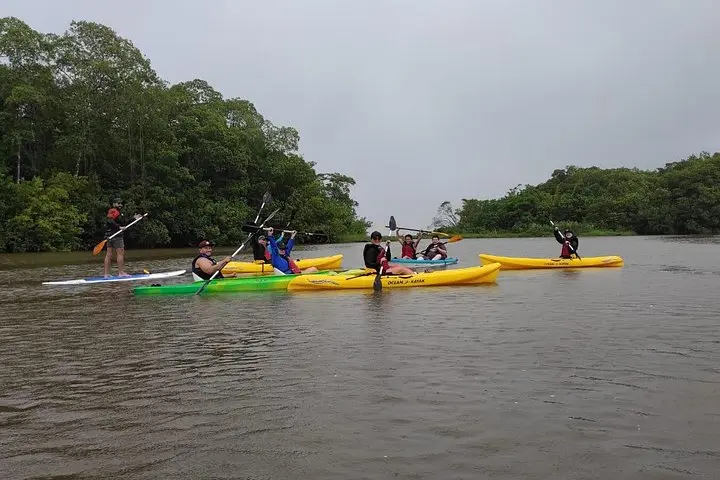
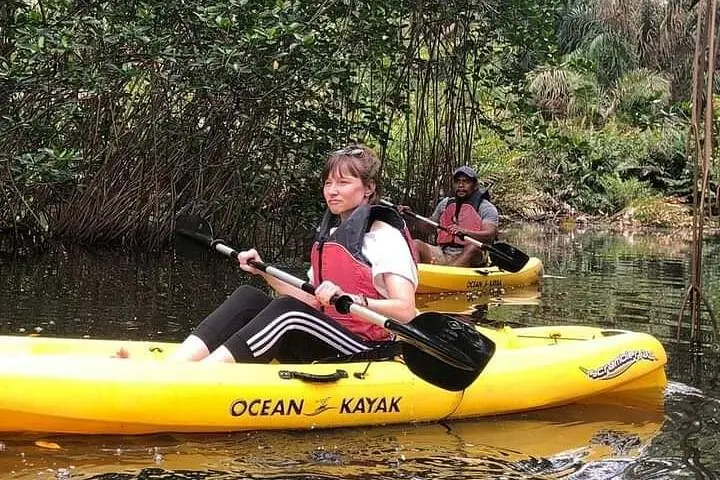
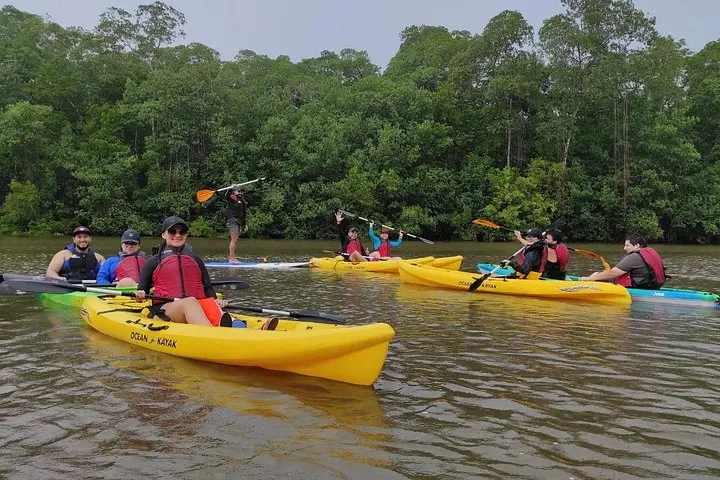
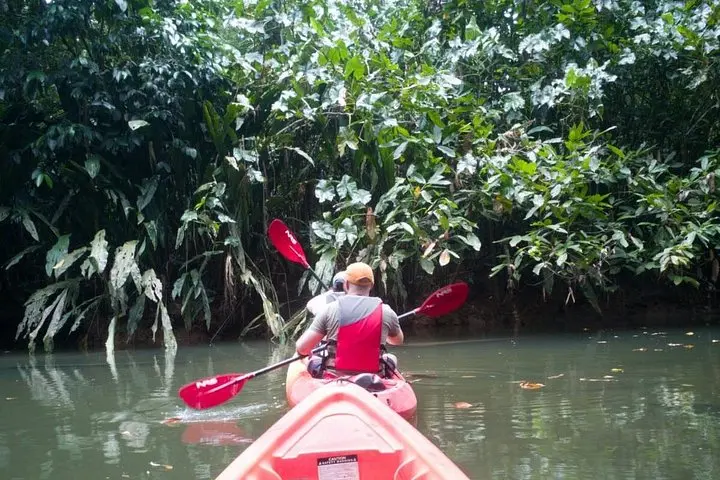
The paddle begins in a threaded inlet where mangrove roots reach down like hands into black water, and the lagoon opens into a slow, green world. Guides launch single and double kayaks, and you feel the current nudge the bow as birds call from the canopy and the forest watches quietly.
The paddle begins in a threaded inlet where mangrove roots reach down like hands into black water, and the lagoon opens into a slow, green world. Guides launch single and double kayaks, and you feel the current nudge the bow as birds call from the canopy and the forest watches quietly.
Gandoca sits on Costa Rica’s southern Caribbean coast within the Gandoca–Manzanillo Wildlife Refuge, an area protected to preserve coastal wetlands and the reef-fringed shoreline nearby. The lagoon and its mangroves are shaped by Caribbean tides and riverine sediment; over millennia roots trapped soil and built the maze of channels you follow today. Local Afro‑Caribbean and indigenous communities have long lived from these coasts, and modern conservation efforts balance tourism with habitat protection.
On the water you’ll seek out spider monkeys in upper branches, three‑toed sloths snoozing in the mangrove canopy, and caimans slipping into shadowed pools. The guide points out medicinal plants, root systems that filter the estuary, and quiet coves where crabs and kingfishers prosper.
Practically: expect a 2–3 hour excursion on calm water with short, easy paddling stretches and none of the technical difficulty of open‑sea kayaking. Midday sun is strong — start early to avoid heat and afternoon rain. Wear quick‑dry clothes, reef‑safe sunscreen and bring a dry bag for cameras. Follow your guide’s instructions around wildlife (no feeding, keep distance) and be prepared for mosquitoes during the wet season. The trip is low‑impact but high on wildlife sightings and is a practical introduction to Caribbean mangrove ecology for first‑time paddlers.