THE ADVENTURE COLLECTIVE® · Independent discovery and booking for outdoor travel

A focused two-hour walking tour of the Garden District that highlights Greek Revival, Italianate and Victorian mansions and includes a short stop at Lafayette Cemetery No. 1. Ideal for history and architecture fans who want an intimate, expert-led look at 19th-century New Orleans.
A focused two-hour walking tour of the Garden District that highlights Greek Revival, Italianate and Victorian mansions and includes a short stop at Lafayette Cemetery No. 1. Ideal for history and architecture fans who want an intimate, expert-led look at 19th-century New Orleans.
They set off from the edge of St. Charles Avenue where the streetcar hums and live oaks lean over wrought-iron fences, and the Garden District quickly reveals itself as a neighborhood that stages history in wood, brick and iron. On this two-hour walk, a small group moves at a measured pace past broad porches, bracketed cornices and Italianate cupolas while a guide points out the architectural choices that marked New Orleans’ 19th-century boom.
Verified experiences and guided adventures in the surrounding area.
Operated by NOLA Tours · New Orleans, Louisiana
They set off from the edge of St. Charles Avenue where the streetcar hums and live oaks lean over wrought-iron fences, and the Garden District quickly reveals itself as a neighborhood that stages history in wood, brick and iron. On this two-hour walk, a small group moves at a measured pace past broad porches, bracketed cornices and Italianate cupolas while a guide points out the architectural choices that marked New Orleans’ 19th-century boom.
The Garden District grew after the city’s original French Quarter filled in; wealthy Americans and Creole elites commissioned homes in Greek Revival, Italianate and Victorian styles. The area’s geology — raised natural ridges above the Mississippi’s floodplain — made it desirable for grand residences, and the cemetery tradition nearby responds to the city’s high water table with above-ground tombs that look like miniature houses.
Cultural notes thread the tour: the social clubs that shaped leisure, the chefs and restaurants linked to landmark buildings, and the cemetery customs visitors find at Lafayette Cemetery No. 1. Guides typically point out lesser-known details — carriageway gates, cast-iron balustrades and adaptive reuse that keeps old facades alive.
Practical guidance: wear comfortable walking shoes and bring water; summer afternoons can be hot and humid, spring and fall are ideal for pace and light. The tour fits most fitness levels but expect 90–120 minutes of standing and walking on paved streets. Photography is welcomed, but be respectful in the cemetery: observe posted closures, stay on paths, and follow your guide’s instructions to protect fragile tombs and private property.
The cemetery is frequently open but may close for services or city events; guides will note closures and the tour includes a short cemetery segment when allowed.
Expect roughly 1.5–2 miles of walking on mostly flat, paved streets with occasional short curbs—no sustained hills.
The tour accommodates strollers in most areas, but some sidewalks and curbs can be narrow; wheelchair accessibility varies block by block—contact the operator to confirm specifics.
This is an exterior walking tour; admission inside private homes is not included, though the guide will point out optional nearby attractions you can visit independently.
NOLA Tours operates guided outdoor trips and adventures with an emphasis on safety, stewardship, and memorable experiences.
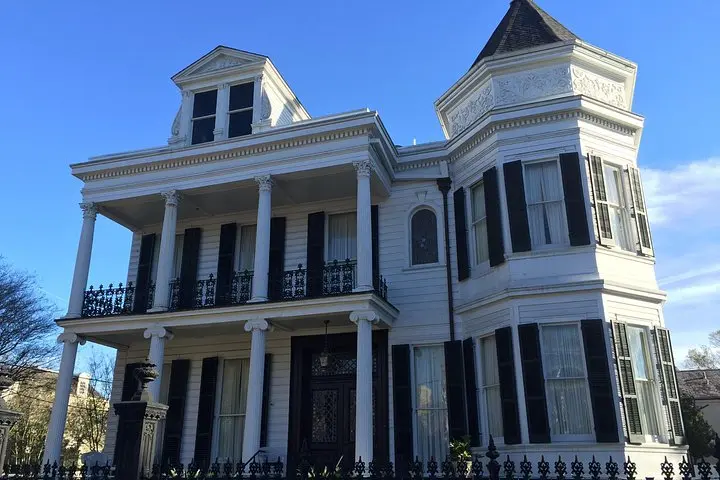
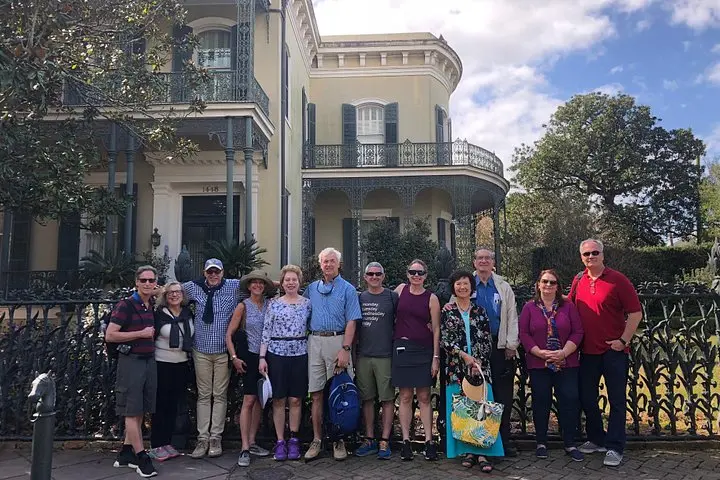


They set off from the edge of St. Charles Avenue where the streetcar hums and live oaks lean over wrought-iron fences, and the Garden District quickly reveals itself as a neighborhood that stages history in wood, brick and iron. On this two-hour walk, a small group moves at a measured pace past broad porches, bracketed cornices and Italianate cupolas while a guide points out the architectural choices that marked New Orleans’ 19th-century boom.
They set off from the edge of St. Charles Avenue where the streetcar hums and live oaks lean over wrought-iron fences, and the Garden District quickly reveals itself as a neighborhood that stages history in wood, brick and iron. On this two-hour walk, a small group moves at a measured pace past broad porches, bracketed cornices and Italianate cupolas while a guide points out the architectural choices that marked New Orleans’ 19th-century boom.
The Garden District grew after the city’s original French Quarter filled in; wealthy Americans and Creole elites commissioned homes in Greek Revival, Italianate and Victorian styles. The area’s geology — raised natural ridges above the Mississippi’s floodplain — made it desirable for grand residences, and the cemetery tradition nearby responds to the city’s high water table with above-ground tombs that look like miniature houses.
Cultural notes thread the tour: the social clubs that shaped leisure, the chefs and restaurants linked to landmark buildings, and the cemetery customs visitors find at Lafayette Cemetery No. 1. Guides typically point out lesser-known details — carriageway gates, cast-iron balustrades and adaptive reuse that keeps old facades alive.
Practical guidance: wear comfortable walking shoes and bring water; summer afternoons can be hot and humid, spring and fall are ideal for pace and light. The tour fits most fitness levels but expect 90–120 minutes of standing and walking on paved streets. Photography is welcomed, but be respectful in the cemetery: observe posted closures, stay on paths, and follow your guide’s instructions to protect fragile tombs and private property.