THE ADVENTURE COLLECTIVE® · Independent discovery and booking for outdoor travel

A compact, scenic day trip from Port Elizabeth along the Garden Route to Tsitsikamma National Park. Hike to the Storms River suspension bridge, see the ancient Big Tree, and stop in Jeffreys Bay en route.
A compact, scenic day trip from Port Elizabeth along the Garden Route to Tsitsikamma National Park. Hike to the Storms River suspension bridge, see the ancient Big Tree, and stop in Jeffreys Bay en route.
The bus eases onto the N2 and the coastline slides into view — wind-thrown pines, exfoliating cliffs, and the steady percussion of the Indian Ocean. By mid-morning you’re in Jeffreys Bay, where surfers carve the line and long beaches offer a cool, salt-scented pause before the inland turn toward Storms River.
Verified experiences and guided adventures in the surrounding area.
Operated by Urban Africa Tours · Storms River Village, Eastern Cape
The bus eases onto the N2 and the coastline slides into view — wind-thrown pines, exfoliating cliffs, and the steady percussion of the Indian Ocean. By mid-morning you’re in Jeffreys Bay, where surfers carve the line and long beaches offer a cool, salt-scented pause before the inland turn toward Storms River.
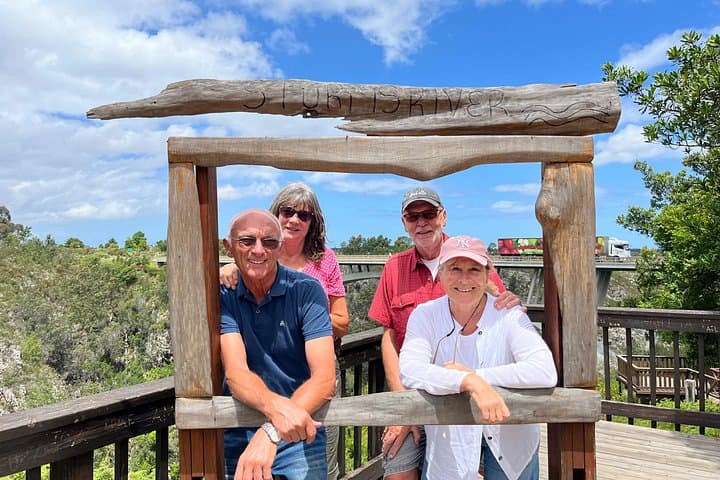
Tsitsikamma Kamma National Park sits where ancient sandstones and coastal fynbos meet an estuary that cuts deep into the shoreline. The name Tsitsikamma comes from Khoekhoegowab, meaning roughly “place of much water,” and the park’s geology—hard quartzitic sandstone over folded Cape supergroup layers—creates the steep gorge that the Paul Sauer (Storms River) Bridge spans.
Culturally, the route ties contemporary surf towns and small Eastern Cape communities with a legacy of maritime trade and timber harvesting; the Big Tree, an ancient Outeniqua yellowwood, is an enduring marker of those forests.
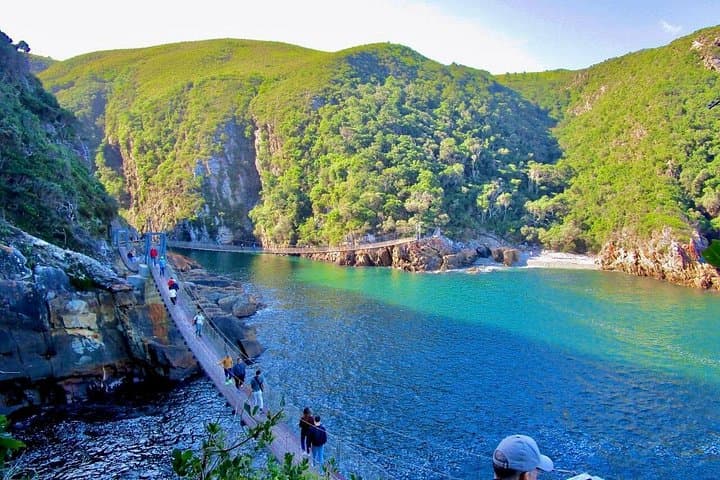
On the ground the tour is straightforward: a 2 km, ~1-hour moderate walk to the suspension bridge at the river mouth, time to photograph the bridge and estuary, lunch inside the park, then a short visit to the Big Tree and Storms River Village before returning to Port Elizabeth. Expect uneven wooden boardwalks, exposed roots, and sections that can be wet or muddy.
Practical tips: wear sturdy footwear with grip, bring a lightweight rain layer (ponchos are usually available), hydrate and carry a small daypack, and set aside your lunch break to enjoy native fynbos and the sound of the river daring you to peer into the gorge. Morning light is best for bridge photos and calmer seas; afternoons can bring wind and showers.
Yes—entrance to Tsitsikamma Kamma National Park and the Big Tree admission are included in the tour price.
The guided walk to the Storms River Mouth suspension bridge is about 2 km and typically takes around one hour at a moderate pace.
Pickup and drop-off at accommodations in Port Elizabeth are included; specific pickup points are confirmed at booking.
Infants and small children can use strollers where boardwalks are accessible, but some sections have steps and uneven surfaces—parents should be prepared to carry young children if needed.
Urban Africa Tours operates guided outdoor trips and adventures with an emphasis on safety, stewardship, and memorable experiences.


The bus eases onto the N2 and the coastline slides into view — wind-thrown pines, exfoliating cliffs, and the steady percussion of the Indian Ocean. By mid-morning you’re in Jeffreys Bay, where surfers carve the line and long beaches offer a cool, salt-scented pause before the inland turn toward Storms River.
The bus eases onto the N2 and the coastline slides into view — wind-thrown pines, exfoliating cliffs, and the steady percussion of the Indian Ocean. By mid-morning you’re in Jeffreys Bay, where surfers carve the line and long beaches offer a cool, salt-scented pause before the inland turn toward Storms River.
Tsitsikamma Kamma National Park sits where ancient sandstones and coastal fynbos meet an estuary that cuts deep into the shoreline. The name Tsitsikamma comes from Khoekhoegowab, meaning roughly “place of much water,” and the park’s geology—hard quartzitic sandstone over folded Cape supergroup layers—creates the steep gorge that the Paul Sauer (Storms River) Bridge spans.
Culturally, the route ties contemporary surf towns and small Eastern Cape communities with a legacy of maritime trade and timber harvesting; the Big Tree, an ancient Outeniqua yellowwood, is an enduring marker of those forests.
On the ground the tour is straightforward: a 2 km, ~1-hour moderate walk to the suspension bridge at the river mouth, time to photograph the bridge and estuary, lunch inside the park, then a short visit to the Big Tree and Storms River Village before returning to Port Elizabeth. Expect uneven wooden boardwalks, exposed roots, and sections that can be wet or muddy.
Practical tips: wear sturdy footwear with grip, bring a lightweight rain layer (ponchos are usually available), hydrate and carry a small daypack, and set aside your lunch break to enjoy native fynbos and the sound of the river daring you to peer into the gorge. Morning light is best for bridge photos and calmer seas; afternoons can bring wind and showers.