THE ADVENTURE COLLECTIVE® · Independent discovery and booking for outdoor travel

Cover Gdańsk’s Old Town, riverfront and shipyards by bike on a three-hour guided loop that pairs moderate exercise with dense cultural history. Perfect for visitors who want an efficient, local-paced introduction to the city.
Cover Gdańsk’s Old Town, riverfront and shipyards by bike on a three-hour guided loop that pairs moderate exercise with dense cultural history. Perfect for visitors who want an efficient, local-paced introduction to the city.
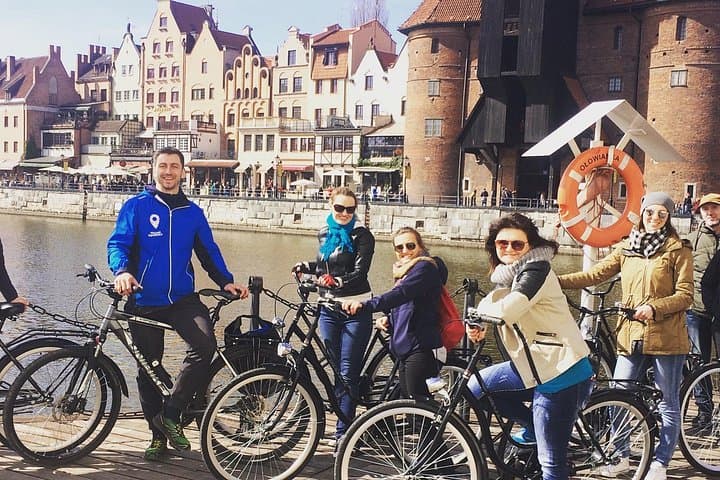
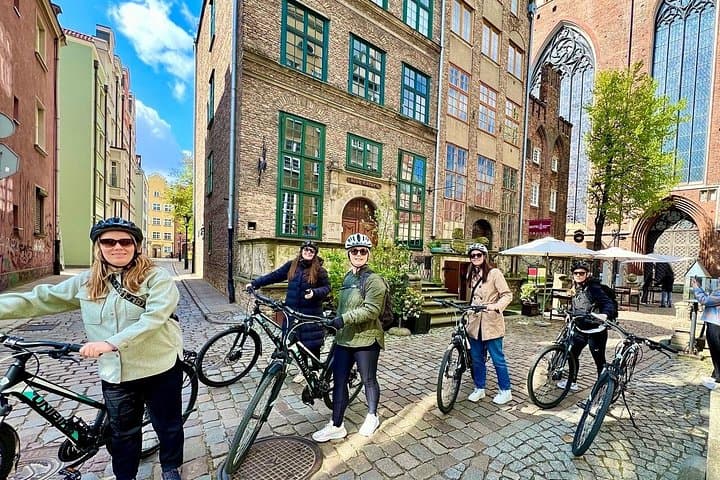
You start on two wheels with the Motława River at your side, the water daring you to slow down as boats drift past quay-side warehouses. Cyclists weave through cobbled lanes where amber-colored façades and restored post-war buildings line the route; the city feels like a living museum you can move through at your own pace.
Verified experiences and guided adventures in the surrounding area.
Operated by Poland By Locals · Gdańsk, Pomeranian Voivodeship
You start on two wheels with the Motława River at your side, the water daring you to slow down as boats drift past quay-side warehouses. Cyclists weave through cobbled lanes where amber-colored façades and restored post-war buildings line the route; the city feels like a living museum you can move through at your own pace.
Gdańsk’s story is written in brick and shipyard steel. This three-hour guided loop threads Old Town, the Old Port and shipyard districts where Solidarność changed modern Poland. You’ll pass the vast St. Mary’s Church—one of the largest brick churches in the world—and traces of the city’s medieval fortifications and twentieth-century rebuilding after WWII.
Geologically the region sits on flat glacial plains; routes are largely level with firm surfaces and protected bike lanes through the center. Culturally, expect conversations about Hanseatic trade, amber craft, and the role of the shipyards in 20th-century labor movements—local guides connect monuments to everyday life.
Practical guidance: the tour covers about 8–12 km over roughly three hours with frequent stops for history and photos. Bikes and bottled water are provided; helmets and basic handling skills are recommended. Wear flexible footwear and a light rain layer—Baltic weather can shift quickly. Aim for morning departures to avoid evening crowds and to catch softer light along the river.
This experience suits visitors who want an active, ground-level primer on Gdańsk—efficient, social, and rooted in the city’s built and political landscape.
Meeting locations are typically in central Old Town near the Motława River quay; exact coordinates are provided on booking confirmation.
Yes—standard bicycles and bottled water are included; helmet use may be optional but strongly recommended.
The tour is described as physically easy and suitable for most ages; infants should sit on laps or use available infant seats—confirm with the operator for specific needs.
Tours may be canceled or rescheduled for heavy rain or unsafe conditions; check the 24-hour cancellation policy for refunds.
Poland By Locals operates guided outdoor trips and adventures with an emphasis on safety, stewardship, and memorable experiences.


You start on two wheels with the Motława River at your side, the water daring you to slow down as boats drift past quay-side warehouses. Cyclists weave through cobbled lanes where amber-colored façades and restored post-war buildings line the route; the city feels like a living museum you can move through at your own pace.
You start on two wheels with the Motława River at your side, the water daring you to slow down as boats drift past quay-side warehouses. Cyclists weave through cobbled lanes where amber-colored façades and restored post-war buildings line the route; the city feels like a living museum you can move through at your own pace.
Gdańsk’s story is written in brick and shipyard steel. This three-hour guided loop threads Old Town, the Old Port and shipyard districts where Solidarność changed modern Poland. You’ll pass the vast St. Mary’s Church—one of the largest brick churches in the world—and traces of the city’s medieval fortifications and twentieth-century rebuilding after WWII.
Geologically the region sits on flat glacial plains; routes are largely level with firm surfaces and protected bike lanes through the center. Culturally, expect conversations about Hanseatic trade, amber craft, and the role of the shipyards in 20th-century labor movements—local guides connect monuments to everyday life.
Practical guidance: the tour covers about 8–12 km over roughly three hours with frequent stops for history and photos. Bikes and bottled water are provided; helmets and basic handling skills are recommended. Wear flexible footwear and a light rain layer—Baltic weather can shift quickly. Aim for morning departures to avoid evening crowds and to catch softer light along the river.
This experience suits visitors who want an active, ground-level primer on Gdańsk—efficient, social, and rooted in the city’s built and political landscape.