THE ADVENTURE COLLECTIVE® · Independent discovery and booking for outdoor travel

A private minibus tour through Geiranger’s most dramatic viewpoints—Eagle Road, high alpine lakes and hidden panoramas—offers flexible stops, local stories and quiet overlooks away from cruise crowds. Read on for what to expect and how to prepare.
A private minibus tour through Geiranger’s most dramatic viewpoints—Eagle Road, high alpine lakes and hidden panoramas—offers flexible stops, local stories and quiet overlooks away from cruise crowds. Read on for what to expect and how to prepare.
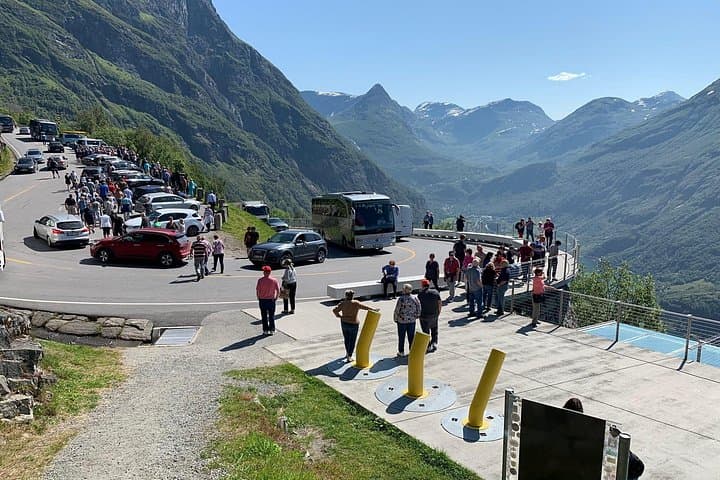
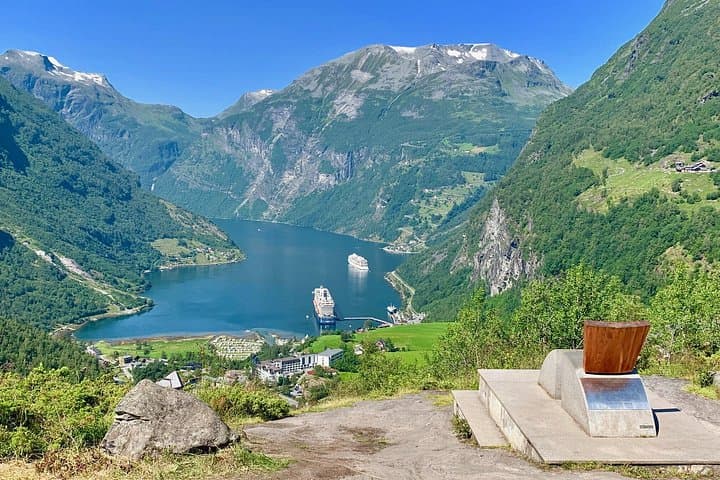
Fog and waterfall spray hang in the valley as the minibus threads the switchbacks above Geiranger; the driver eases the vehicle into a layby and the fjord drops away in a green-blue ribbon. You step out and the air smells of wet rock and alpine grass. For four hours the route reads like a highlight reel of western Norway—Eagle Road’s vertiginous lookout at 620 m, a high alpine lake ringed by farms, a heart-shaped panoramic cut above Storfjord, and quieter terraces where cows graze against a backdrop of plunging waterfalls.
Verified experiences and guided adventures in the surrounding area.
Operated by Uniktur · Geiranger, Møre og Romsdal
Fog and waterfall spray hang in the valley as the minibus threads the switchbacks above Geiranger; the driver eases the vehicle into a layby and the fjord drops away in a green-blue ribbon. You step out and the air smells of wet rock and alpine grass. For four hours the route reads like a highlight reel of western Norway—Eagle Road’s vertiginous lookout at 620 m, a high alpine lake ringed by farms, a heart-shaped panoramic cut above Storfjord, and quieter terraces where cows graze against a backdrop of plunging waterfalls.
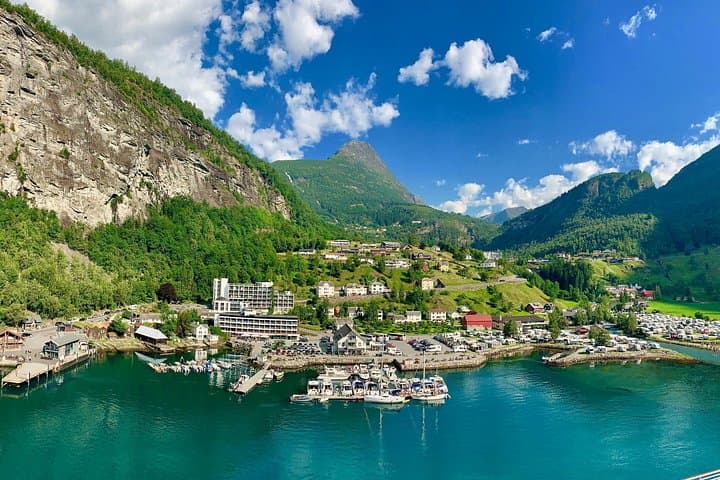
Geiranger sits at the innermost arm of the Sunnmøre fjords, carved by glaciers during the last Ice Age and shaped by successive waves of tourism since the 19th century—Kaiser Wilhelm and later European royalty stopped here, and wooden hotels like Union (opened 1891) speak to that era. The geology is raw: steep, glaciated walls, hanging valleys that feed dramatic falls, and moraine-carved basins that became the fjord.
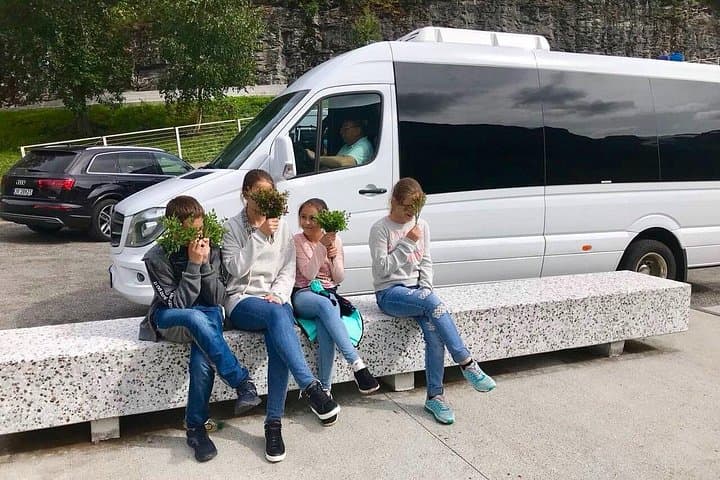
Practically: private transport gives flexibility to avoid the cruise-ship crowds and reach small viewpoints the big buses skip. Expect multiple short stops (10–20 minutes) for photos, restroom breaks and light walks; bottled water, snacks and hot drinks are provided, and infant seats are available. Wear grippy shoes and layered, waterproof clothing—conditions shift quickly between sun and shower. Mobile reception is patchy; bring an offline map or directions and allow extra time for down-to-earth conversations with your guide who can point out local farms, historic hotels and the best angles for light on the falls. If you want quieter photos, ask the guide to linger at lesser-known overlooks—the private format makes that easy.
Most departures are arranged from Geiranger village or nearby pickup points—confirm your pickup location and time when booking.
Yes—this private tour is listed as suitable for all fitness levels and offers infant seats and minimal walking at viewpoints.
The operator may cancel or modify the tour in heavy rain, snow, or hazardous road conditions; full refund is available if canceled 24 hours before departure.
Yes—there are scheduled short stops at viewpoints where restroom facilities or stopovers are available as noted in the itinerary.
Uniktur operates guided outdoor trips and adventures with an emphasis on safety, stewardship, and memorable experiences.
Fog and waterfall spray hang in the valley as the minibus threads the switchbacks above Geiranger; the driver eases the vehicle into a layby and the fjord drops away in a green-blue ribbon. You step out and the air smells of wet rock and alpine grass. For four hours the route reads like a highlight reel of western Norway—Eagle Road’s vertiginous lookout at 620 m, a high alpine lake ringed by farms, a heart-shaped panoramic cut above Storfjord, and quieter terraces where cows graze against a backdrop of plunging waterfalls.
Fog and waterfall spray hang in the valley as the minibus threads the switchbacks above Geiranger; the driver eases the vehicle into a layby and the fjord drops away in a green-blue ribbon. You step out and the air smells of wet rock and alpine grass. For four hours the route reads like a highlight reel of western Norway—Eagle Road’s vertiginous lookout at 620 m, a high alpine lake ringed by farms, a heart-shaped panoramic cut above Storfjord, and quieter terraces where cows graze against a backdrop of plunging waterfalls.
Geiranger sits at the innermost arm of the Sunnmøre fjords, carved by glaciers during the last Ice Age and shaped by successive waves of tourism since the 19th century—Kaiser Wilhelm and later European royalty stopped here, and wooden hotels like Union (opened 1891) speak to that era. The geology is raw: steep, glaciated walls, hanging valleys that feed dramatic falls, and moraine-carved basins that became the fjord.
Practically: private transport gives flexibility to avoid the cruise-ship crowds and reach small viewpoints the big buses skip. Expect multiple short stops (10–20 minutes) for photos, restroom breaks and light walks; bottled water, snacks and hot drinks are provided, and infant seats are available. Wear grippy shoes and layered, waterproof clothing—conditions shift quickly between sun and shower. Mobile reception is patchy; bring an offline map or directions and allow extra time for down-to-earth conversations with your guide who can point out local farms, historic hotels and the best angles for light on the falls. If you want quieter photos, ask the guide to linger at lesser-known overlooks—the private format makes that easy.