THE ADVENTURE COLLECTIVE® · Independent discovery and booking for outdoor travel

Move from hanok alleys to bamboo forests and twin-peaked mountains on a private two-day tour through Jeonju, Damyang, Maisan and Seonamsa Temple. Expect cultural immersion, short hikes, historic temples and curated local food stops.
Move from hanok alleys to bamboo forests and twin-peaked mountains on a private two-day tour through Jeonju, Damyang, Maisan and Seonamsa Temple. Expect cultural immersion, short hikes, historic temples and curated local food stops.
Morning light catches the tiled roofs of Jeonju Hanok Village as you step from narrow alleys into courtyards framed by paper windows and low wooden eaves. The tour moves from city lanes to bamboo groves and temple stones—each day a clear chapter of southwestern Korea’s landscape and culture.
Verified experiences and guided adventures in the surrounding area.
Operated by Tour with BH · Jeonju, Jeollabuk-do
Morning light catches the tiled roofs of Jeonju Hanok Village as you step from narrow alleys into courtyards framed by paper windows and low wooden eaves. The tour moves from city lanes to bamboo groves and temple stones—each day a clear chapter of southwestern Korea’s landscape and culture.
Jeonju’s hanok quarter preserves Joseon-era urban design and culinary craft; expect flat, cobbled walking routes and food stalls dishing up the city’s famed bibimbap. In Damyang, Soswaewon and Juknokwon offer measured, quiet walks—garden paths and flat boardwalks through bamboo stands—ideal for low-impact exploration. Maisan’s twin peaks present short, rocky trails with sections of granite steps and modest gains (most side trails under 300–400 m elevation); the Tapsa pagodas cluster at the mountain’s base, a curiosity of stacked stones attributed to sustained solitary practice.
Seonamsa Temple sits under old camellias and maple canopy; crossing its stone bridge is a slow, sensory moment: water pulling at the banks, temple bells marking time. The geology shifts from river plains around Jeonju to the volcanic and metamorphic outcrops that shape Maisan’s unusual knobs.
Practical note: this private two-day itinerary runs about 48 hours with roughly 6–8 hours of active touring per day. Wear grippy shoes for short uneven sections, carry water and small cash for market snacks, and aim for morning starts to avoid midday crowds and heat. The pace balances cultural immersion with easy to moderate walking—bring layers and a compact rain shell for sudden showers.
Yes—this private tour includes air-conditioned minivan transport for the group, covering transfers between Jeonju, Damyang, Maisan and Seonamsa.
Admission fees listed in the itinerary are included; an English-speaking local guide is provided for interpretation and navigation.
Expect multiple walking periods totaling 6–8 hours of active touring per day, mostly on flat paths and short loop trails with occasional steps and uneven rock surfaces.
As a private small-group experience, timing and some stops can often be adjusted—confirm details with the operator at booking.
Tour with BH operates guided outdoor trips and adventures with an emphasis on safety, stewardship, and memorable experiences.
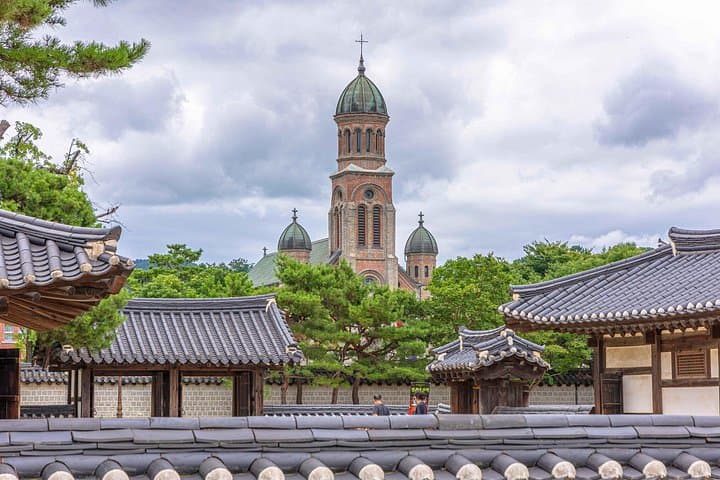


Morning light catches the tiled roofs of Jeonju Hanok Village as you step from narrow alleys into courtyards framed by paper windows and low wooden eaves. The tour moves from city lanes to bamboo groves and temple stones—each day a clear chapter of southwestern Korea’s landscape and culture.
Morning light catches the tiled roofs of Jeonju Hanok Village as you step from narrow alleys into courtyards framed by paper windows and low wooden eaves. The tour moves from city lanes to bamboo groves and temple stones—each day a clear chapter of southwestern Korea’s landscape and culture.
Jeonju’s hanok quarter preserves Joseon-era urban design and culinary craft; expect flat, cobbled walking routes and food stalls dishing up the city’s famed bibimbap. In Damyang, Soswaewon and Juknokwon offer measured, quiet walks—garden paths and flat boardwalks through bamboo stands—ideal for low-impact exploration. Maisan’s twin peaks present short, rocky trails with sections of granite steps and modest gains (most side trails under 300–400 m elevation); the Tapsa pagodas cluster at the mountain’s base, a curiosity of stacked stones attributed to sustained solitary practice.
Seonamsa Temple sits under old camellias and maple canopy; crossing its stone bridge is a slow, sensory moment: water pulling at the banks, temple bells marking time. The geology shifts from river plains around Jeonju to the volcanic and metamorphic outcrops that shape Maisan’s unusual knobs.
Practical note: this private two-day itinerary runs about 48 hours with roughly 6–8 hours of active touring per day. Wear grippy shoes for short uneven sections, carry water and small cash for market snacks, and aim for morning starts to avoid midday crowds and heat. The pace balances cultural immersion with easy to moderate walking—bring layers and a compact rain shell for sudden showers.