THE ADVENTURE COLLECTIVE® · Independent discovery and booking for outdoor travel

Explore Getsemaní’s street art on a two-hour guided walk that moves from Parque del Centenario through Calle de la Sierpe, Calle San Juan and the umbrella-lined alleyways. Learn the neighborhood’s history, see landmark murals, and pick up practical tips for photographing and navigating narrow Cartagena streets.
Explore Getsemaní’s street art on a two-hour guided walk that moves from Parque del Centenario through Calle de la Sierpe, Calle San Juan and the umbrella-lined alleyways. Learn the neighborhood’s history, see landmark murals, and pick up practical tips for photographing and navigating narrow Cartagena streets.
The tour begins under a yellow umbrella in Parque del Centenario, where the obelisk marks the meeting point and the air already hums with color. You walk out onto streets that refuse to be gray: shutters, doors and blank facades become canvases, and the rhythm of Cartagena—music, motorbikes, the sea at a distance—sets the tempo.
Verified experiences and guided adventures in the surrounding area.
Operated by AV COL · Cartagena, Bolívar
The tour begins under a yellow umbrella in Parque del Centenario, where the obelisk marks the meeting point and the air already hums with color. You walk out onto streets that refuse to be gray: shutters, doors and blank facades become canvases, and the rhythm of Cartagena—music, motorbikes, the sea at a distance—sets the tempo.
Getsemaní was once an outlying working-class quarter — an arrabal — and that history shows in its layered walls. The murals blend colonial-era narratives, Afro-Caribbean motifs and contemporary political statements; the textures are as much plaster and peeling paint as they are spray paint and wheatpaste. Geologically, the limestone core of Cartagena’s old town gives the alleys their hard edges and sun-baked tones, while the proximity to the Caribbean shapes the light that artists use.
Cafés and small bars cluster along Calle San Juan and Callejón Ancho; vendors and residents remain part of the gallery experience. Guides contextualize pieces as you move from Calle de la Sierpe’s playful murals to the umbrella-lit Calle de las Sombrillas and the story-rich street of flip-flops.
Practical note: this is a two-hour, low-elevation urban walk on mostly paved surfaces with short, narrow alleys. Wear broken-in walking shoes, carry water and a light rain layer in the wet season, and plan for strong sun between 10:00–15:00. Photography is encouraged, but ask before shooting portraits. By the end you’ll understand why locals declare “I love Getsemaní” — the neighborhood speaks in color, history and the bold voice of its streets.
The guided tour lasts about two hours and covers roughly 1.5–2 kilometers of mostly paved streets and alleys at a leisurely pace.
The route is listed as wheelchair accessible with mainly flat surfaces, but some narrow alleys and crowds can make navigation slower—contact the operator to discuss specific needs.
Yes—guides provide historical and cultural context for the pieces, including the neighborhood’s Afro-Caribbean and colonial past and contemporary urban art movements.
Stops pass several cafés and vendors on Calle San Juan and Callejón Ancho; you can buy refreshments before or after stops but the itinerary keeps moving to cover highlights in two hours.
AV COL operates guided outdoor trips and adventures with an emphasis on safety, stewardship, and memorable experiences.
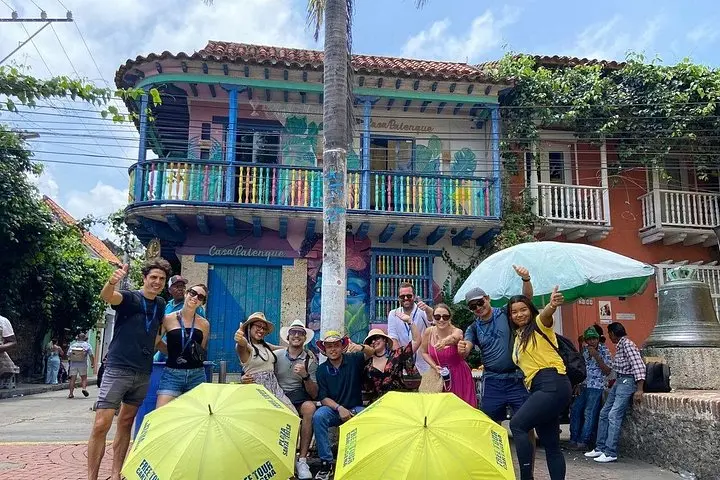
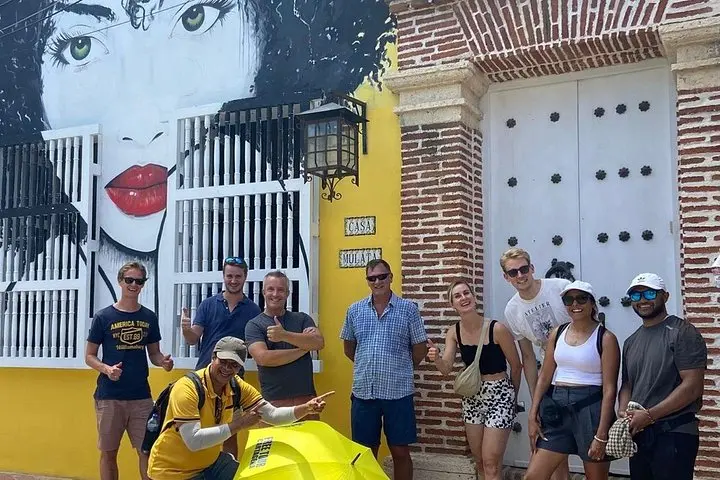
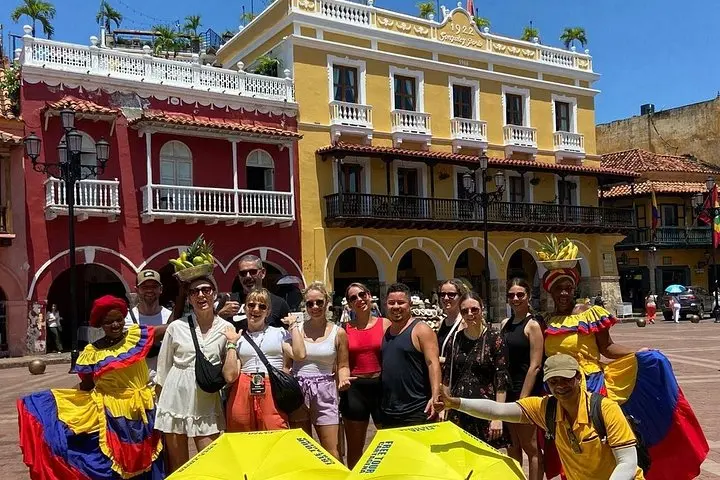
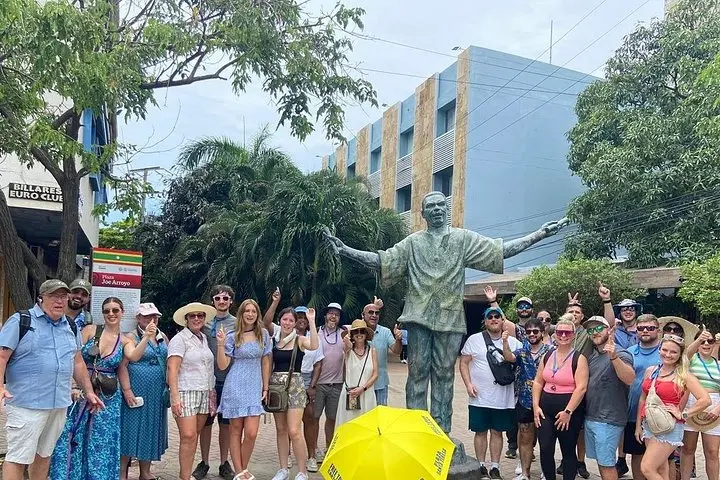
The tour begins under a yellow umbrella in Parque del Centenario, where the obelisk marks the meeting point and the air already hums with color. You walk out onto streets that refuse to be gray: shutters, doors and blank facades become canvases, and the rhythm of Cartagena—music, motorbikes, the sea at a distance—sets the tempo.
The tour begins under a yellow umbrella in Parque del Centenario, where the obelisk marks the meeting point and the air already hums with color. You walk out onto streets that refuse to be gray: shutters, doors and blank facades become canvases, and the rhythm of Cartagena—music, motorbikes, the sea at a distance—sets the tempo.
Getsemaní was once an outlying working-class quarter — an arrabal — and that history shows in its layered walls. The murals blend colonial-era narratives, Afro-Caribbean motifs and contemporary political statements; the textures are as much plaster and peeling paint as they are spray paint and wheatpaste. Geologically, the limestone core of Cartagena’s old town gives the alleys their hard edges and sun-baked tones, while the proximity to the Caribbean shapes the light that artists use.
Cafés and small bars cluster along Calle San Juan and Callejón Ancho; vendors and residents remain part of the gallery experience. Guides contextualize pieces as you move from Calle de la Sierpe’s playful murals to the umbrella-lit Calle de las Sombrillas and the story-rich street of flip-flops.
Practical note: this is a two-hour, low-elevation urban walk on mostly paved surfaces with short, narrow alleys. Wear broken-in walking shoes, carry water and a light rain layer in the wet season, and plan for strong sun between 10:00–15:00. Photography is encouraged, but ask before shooting portraits. By the end you’ll understand why locals declare “I love Getsemaní” — the neighborhood speaks in color, history and the bold voice of its streets.