THE ADVENTURE COLLECTIVE® · Independent discovery and booking for outdoor travel

A classic 9–11 day Annapurna circuit from Pokhara, the Ghorepani–Ghandruk trek combines Poon Hill sunrise panoramas with rhododendron forests, Gurung villages, and teahouse nights. Expect long stair climbs, steady ascents, and spectacular morning light on Annapurna and Dhaulagiri.
A classic 9–11 day Annapurna circuit from Pokhara, the Ghorepani–Ghandruk trek combines Poon Hill sunrise panoramas with rhododendron forests, Gurung villages, and teahouse nights. Expect long stair climbs, steady ascents, and spectacular morning light on Annapurna and Dhaulagiri.
Morning light slices the ridgeline and the stone steps underfoot hum with the soft rhythm of boots. On the Ghorepani–Ghandruk circuit, trekkers climb through red-blooming rhododendron stands and oak forests, arriving at Poon Hill in time to watch Annapurna and Dhaulagiri ignite in cold gold.
Verified experiences and guided adventures in the surrounding area.
Operated by Nepal Trekking Routes Pvt. Ltd · Pokhara, Gandaki Province
Morning light slices the ridgeline and the stone steps underfoot hum with the soft rhythm of boots. On the Ghorepani–Ghandruk circuit, trekkers climb through red-blooming rhododendron stands and oak forests, arriving at Poon Hill in time to watch Annapurna and Dhaulagiri ignite in cold gold.
This route runs between Pokhara and the high Himalaya inside the Annapurna Conservation Area, passing Gurung and Magar villages whose men have long served as Gurkhas. Geologically, the trail skirts the lower flanks of the Annapurna Massif, moving along river-carved valleys and terraced slopes formed by centuries of monsoon-fed agriculture.
Culturally the trek offers homestay-style teahouses, local handicrafts in Ghandruk, and the chance to hear oral histories of military service and hillside farming. Fauna is present but subtle—birds and occasional muntjac or pheasant slip through the understory rather than posing for photos.
Practically: expect 4–7 hours of walking on most days, many stone stair sections, and a highest viewpoint at Poon Hill (~3,210 m). The route rewards early starts: sunrise views are the highlight, while mid-day can bring clouds and warmer valley conditions. Carry layers for temperature swings, water and purification, and break long climbs into steady steps to manage breathing at higher elevations.
Teahouses provide basic food and lodging; tipping and small purchases support local economies. Respect ACAP rules—stick to trails, pack out waste, and use refillable bottles. With moderate fitness and sensible pacing, this circuit delivers big Himalayan views without technical climbing.
Yes—trekkers must carry an Annapurna Conservation Area Permit (ACAP) and a TIMS card; these are typically arranged in Pokhara or en route.
Poon Hill is a steep 40–60 minute climb from Ghorepani on stone steps; physically challenging but non-technical and manageable with a steady pace.
Teahouses are basic mountain lodgings offering simple meals and dorm/private rooms; expect shared bathrooms and limited hot-water availability at higher elevations.
Fall (Sept–Nov) and spring (Mar–May) offer the best combination of stable weather and mountain visibility; winter is colder and summer brings monsoon rain.
Nepal Trekking Routes Pvt. Ltd operates guided outdoor trips and adventures with an emphasis on safety, stewardship, and memorable experiences.


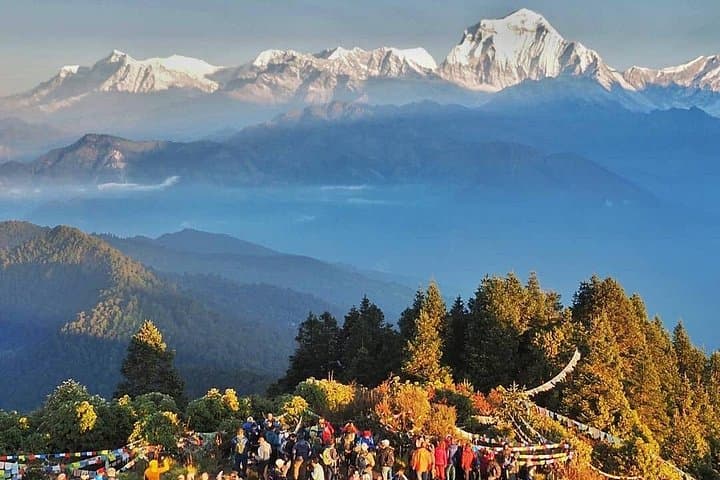
Morning light slices the ridgeline and the stone steps underfoot hum with the soft rhythm of boots. On the Ghorepani–Ghandruk circuit, trekkers climb through red-blooming rhododendron stands and oak forests, arriving at Poon Hill in time to watch Annapurna and Dhaulagiri ignite in cold gold.
Morning light slices the ridgeline and the stone steps underfoot hum with the soft rhythm of boots. On the Ghorepani–Ghandruk circuit, trekkers climb through red-blooming rhododendron stands and oak forests, arriving at Poon Hill in time to watch Annapurna and Dhaulagiri ignite in cold gold.
This route runs between Pokhara and the high Himalaya inside the Annapurna Conservation Area, passing Gurung and Magar villages whose men have long served as Gurkhas. Geologically, the trail skirts the lower flanks of the Annapurna Massif, moving along river-carved valleys and terraced slopes formed by centuries of monsoon-fed agriculture.
Culturally the trek offers homestay-style teahouses, local handicrafts in Ghandruk, and the chance to hear oral histories of military service and hillside farming. Fauna is present but subtle—birds and occasional muntjac or pheasant slip through the understory rather than posing for photos.
Practically: expect 4–7 hours of walking on most days, many stone stair sections, and a highest viewpoint at Poon Hill (~3,210 m). The route rewards early starts: sunrise views are the highlight, while mid-day can bring clouds and warmer valley conditions. Carry layers for temperature swings, water and purification, and break long climbs into steady steps to manage breathing at higher elevations.
Teahouses provide basic food and lodging; tipping and small purchases support local economies. Respect ACAP rules—stick to trails, pack out waste, and use refillable bottles. With moderate fitness and sensible pacing, this circuit delivers big Himalayan views without technical climbing.