THE ADVENTURE COLLECTIVE® · Independent discovery and booking for outdoor travel

A 10-day circuit that pairs the sunrise at Poon Hill with the high-saddle drama of Annapurna Base Camp. Expect steep stone paths, tea-house nights, and close-up views of Machhapuchhre’s fluted face.
A 10-day circuit that pairs the sunrise at Poon Hill with the high-saddle drama of Annapurna Base Camp. Expect steep stone paths, tea-house nights, and close-up views of Machhapuchhre’s fluted face.
Morning in Pokhara stills the city; the van eases onto the mountain road and the valley opens like a map you’re invited to walk. The trail climbs through terraced farms and rhododendron forest, the air thinning, and by Poon Hill you’ll stand as the sun pushes light over the jagged faces of Annapurna and Dhaulagiri. The circuit continues higher—through Ghorepani, Tadapani, Chhomrong and past Machhapuchhre Base Camp—until the high plateau of Annapurna Base Camp (ABC) pulls you into a bowl of wind and stone.
Verified experiences and guided adventures in the surrounding area.
Operated by Nepal Mountain Club Pvt Ltd · Pokhara, Gandaki Province
Morning in Pokhara stills the city; the van eases onto the mountain road and the valley opens like a map you’re invited to walk. The trail climbs through terraced farms and rhododendron forest, the air thinning, and by Poon Hill you’ll stand as the sun pushes light over the jagged faces of Annapurna and Dhaulagiri. The circuit continues higher—through Ghorepani, Tadapani, Chhomrong and past Machhapuchhre Base Camp—until the high plateau of Annapurna Base Camp (ABC) pulls you into a bowl of wind and stone.
This route threads culture and geology: ancient Gurung villages tucked on terraces, prayer flags stitched to ridgelines, and a complex geology of metamorphic rock lifted by the collision of the Indian and Eurasian plates. The Annapurna Conservation Area, established to protect local ecology and livelihoods, governs permits and trekking standards here. Tea houses provide nightly shelter—simple meals and communal warmth—and local communities along the route maintain a steady hospitality economy.
Practically, expect 6–7 hours of hiking on longer days, steep stone staircases through Ulleri and switchbacks higher on the circuit, and altitude gain peaking at 4,130 m. Acclimatize on Poon Hill and take time at Machhapuchhre Base Camp before pushing to ABC. Hydrate, layer for rapidly changing mountain weather, and carry cash—tea houses accept little else.
The trail rewards early starts for sunrises and quieter camps, and patience at teahouse tables for fresh dal bhat and local stories. Respect local rules and pack out non-biodegradable waste—these mountains remain fragile despite their grandeur.
Yes—TIMS and Annapurna Conservation Area permits are required; guides commonly arrange them before you start.
Spring (March–May) and autumn (September–November) offer the most stable weather and clear mountain views.
Tea houses are basic but warm: shared rooms, simple meals (dal bhat), and hot showers for a fee in larger stops.
ABC sits around 4,130 m; altitude sickness is a real risk—ascend slowly, stay hydrated, and descend if serious symptoms develop.
Nepal Mountain Club Pvt Ltd operates guided outdoor trips and adventures with an emphasis on safety, stewardship, and memorable experiences.
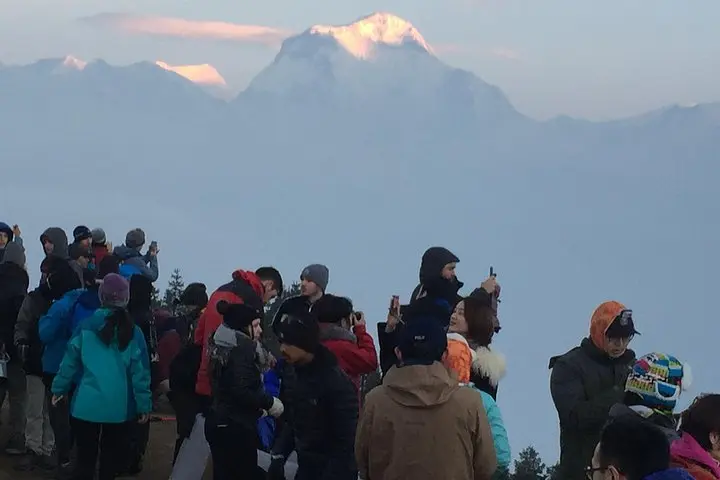
Morning in Pokhara stills the city; the van eases onto the mountain road and the valley opens like a map you’re invited to walk. The trail climbs through terraced farms and rhododendron forest, the air thinning, and by Poon Hill you’ll stand as the sun pushes light over the jagged faces of Annapurna and Dhaulagiri. The circuit continues higher—through Ghorepani, Tadapani, Chhomrong and past Machhapuchhre Base Camp—until the high plateau of Annapurna Base Camp (ABC) pulls you into a bowl of wind and stone.
Morning in Pokhara stills the city; the van eases onto the mountain road and the valley opens like a map you’re invited to walk. The trail climbs through terraced farms and rhododendron forest, the air thinning, and by Poon Hill you’ll stand as the sun pushes light over the jagged faces of Annapurna and Dhaulagiri. The circuit continues higher—through Ghorepani, Tadapani, Chhomrong and past Machhapuchhre Base Camp—until the high plateau of Annapurna Base Camp (ABC) pulls you into a bowl of wind and stone.
This route threads culture and geology: ancient Gurung villages tucked on terraces, prayer flags stitched to ridgelines, and a complex geology of metamorphic rock lifted by the collision of the Indian and Eurasian plates. The Annapurna Conservation Area, established to protect local ecology and livelihoods, governs permits and trekking standards here. Tea houses provide nightly shelter—simple meals and communal warmth—and local communities along the route maintain a steady hospitality economy.
Practically, expect 6–7 hours of hiking on longer days, steep stone staircases through Ulleri and switchbacks higher on the circuit, and altitude gain peaking at 4,130 m. Acclimatize on Poon Hill and take time at Machhapuchhre Base Camp before pushing to ABC. Hydrate, layer for rapidly changing mountain weather, and carry cash—tea houses accept little else.
The trail rewards early starts for sunrises and quieter camps, and patience at teahouse tables for fresh dal bhat and local stories. Respect local rules and pack out non-biodegradable waste—these mountains remain fragile despite their grandeur.