THE ADVENTURE COLLECTIVE® · Independent discovery and booking for outdoor travel

Ascend stone staircases through rhododendron forests to Poon Hill for a sunrise that lights up Annapurna and Dhaulagiri. This 4–5 day trek balances village culture, manageable altitude gain, and sweeping Himalayan panoramas.
Ascend stone staircases through rhododendron forests to Poon Hill for a sunrise that lights up Annapurna and Dhaulagiri. This 4–5 day trek balances village culture, manageable altitude gain, and sweeping Himalayan panoramas.
Before dawn the ridge at Poon Hill fills with cold, thin light and clusters of trekkers hold thermoses while the eastern sky sharpens into pale gold. The sun lifts first on ridgelines, and then, minute by minute, it paints Dhaulagiri and Annapurna in a bright, brittle contrast that makes the whole valley feel dangerously close and impossibly vast.
Verified experiences and guided adventures in the surrounding area.
Operated by Alpine Club of Himalaya · Ghorepani, Gandaki Province
Before dawn the ridge at Poon Hill fills with cold, thin light and clusters of trekkers hold thermoses while the eastern sky sharpens into pale gold. The sun lifts first on ridgelines, and then, minute by minute, it paints Dhaulagiri and Annapurna in a bright, brittle contrast that makes the whole valley feel dangerously close and impossibly vast.
This 4–5 day route threads through Gurung and Magar villages, centuries-old footpaths and broad rhododendron canopies. The trail climbs from the Modi Khola valley, using long stone staircases—some sections of more than 3,000 steps—to reach Ghorepani (2,750 m) and the 3,210 m viewpoint at Poon Hill. Geologically the area is a meeting of young Himalayan thrusts and deeply incised glacial valleys, where Machhapuchhre (Fishtail) punctuates the skyline and river gorges push the forest line lower.
Culturally, tea houses in Ghorepani and Ulleri offer local dal bhat and stories about seasonal yak corridors and transhumance. The trek runs inside the Annapurna Conservation Area—permits are required and guides or porters are common for comfort and safety.
Practical guidance: schedule the Poon Hill sunrise early (pre-5 a.m.) to avoid crowds and cold; allow gradual uphill sections for acclimatization between 1,000–2,000 m gains; pack layered insulation and a headlamp; drink 3 liters a day and carry cash for teahouse meals and tips. Expect uneven stone steps, short steep pitches, and basic shared bathrooms in tea houses. With a steady pace this trek is rewarding for hikers who want big Himalayan views without high technical difficulty.
Yes—Annapurna Conservation Area Permit (ACAP) and TIMS are required; they’re usually arranged in Pokhara or provided by operators.
It’s moderate—no technical climbing, but expect steep sections, long stair climbs and daily walking up to 6–7 hours on some days.
Autumn (Sept–Nov) and spring (Mar–May) offer the most reliable views and comfortable conditions; monsoon and winter are less predictable.
Poon Hill reaches ~3,210 m; mild altitude effects can occur—ascend conservatively, stay hydrated and report symptoms to your guide.
Alpine Club of Himalaya operates guided outdoor trips and adventures with an emphasis on safety, stewardship, and memorable experiences.

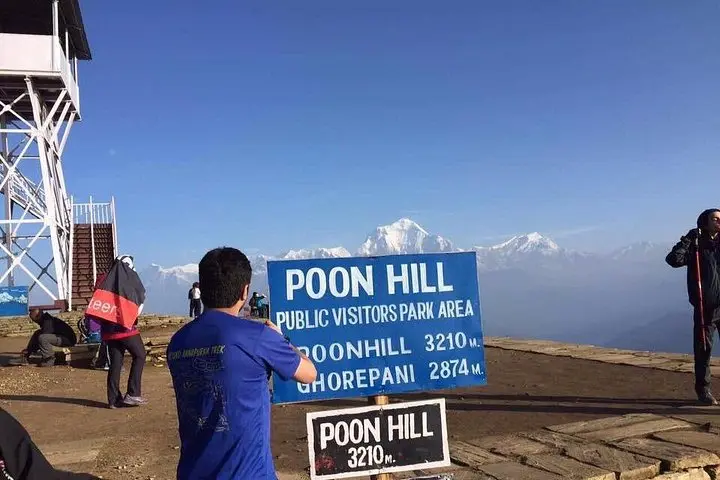
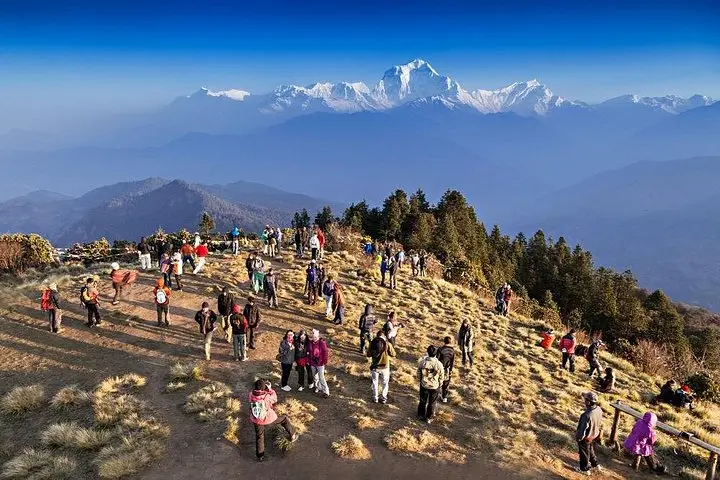

Before dawn the ridge at Poon Hill fills with cold, thin light and clusters of trekkers hold thermoses while the eastern sky sharpens into pale gold. The sun lifts first on ridgelines, and then, minute by minute, it paints Dhaulagiri and Annapurna in a bright, brittle contrast that makes the whole valley feel dangerously close and impossibly vast.
Before dawn the ridge at Poon Hill fills with cold, thin light and clusters of trekkers hold thermoses while the eastern sky sharpens into pale gold. The sun lifts first on ridgelines, and then, minute by minute, it paints Dhaulagiri and Annapurna in a bright, brittle contrast that makes the whole valley feel dangerously close and impossibly vast.
This 4–5 day route threads through Gurung and Magar villages, centuries-old footpaths and broad rhododendron canopies. The trail climbs from the Modi Khola valley, using long stone staircases—some sections of more than 3,000 steps—to reach Ghorepani (2,750 m) and the 3,210 m viewpoint at Poon Hill. Geologically the area is a meeting of young Himalayan thrusts and deeply incised glacial valleys, where Machhapuchhre (Fishtail) punctuates the skyline and river gorges push the forest line lower.
Culturally, tea houses in Ghorepani and Ulleri offer local dal bhat and stories about seasonal yak corridors and transhumance. The trek runs inside the Annapurna Conservation Area—permits are required and guides or porters are common for comfort and safety.
Practical guidance: schedule the Poon Hill sunrise early (pre-5 a.m.) to avoid crowds and cold; allow gradual uphill sections for acclimatization between 1,000–2,000 m gains; pack layered insulation and a headlamp; drink 3 liters a day and carry cash for teahouse meals and tips. Expect uneven stone steps, short steep pitches, and basic shared bathrooms in tea houses. With a steady pace this trek is rewarding for hikers who want big Himalayan views without high technical difficulty.