THE ADVENTURE COLLECTIVE® · Independent discovery and booking for outdoor travel

A classic Annapurna-region trek that culminates in Poon Hill’s unforgettable sunrise panorama. Expect village trails, rhododendron forests, simple tea-house nights and stellar mountain views.
A classic Annapurna-region trek that culminates in Poon Hill’s unforgettable sunrise panorama. Expect village trails, rhododendron forests, simple tea-house nights and stellar mountain views.
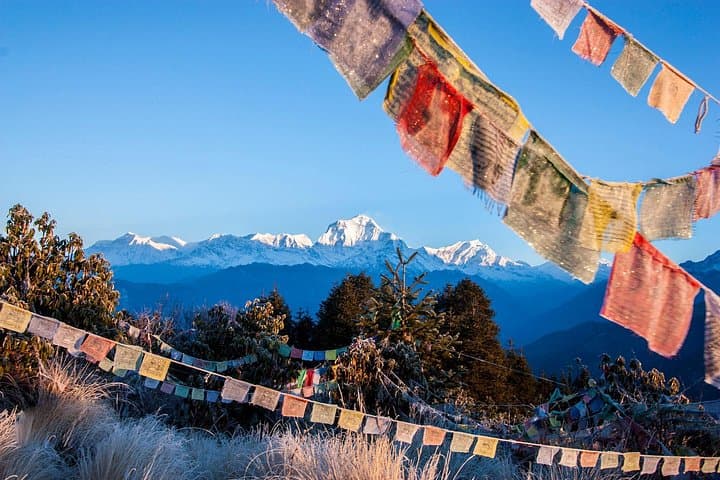
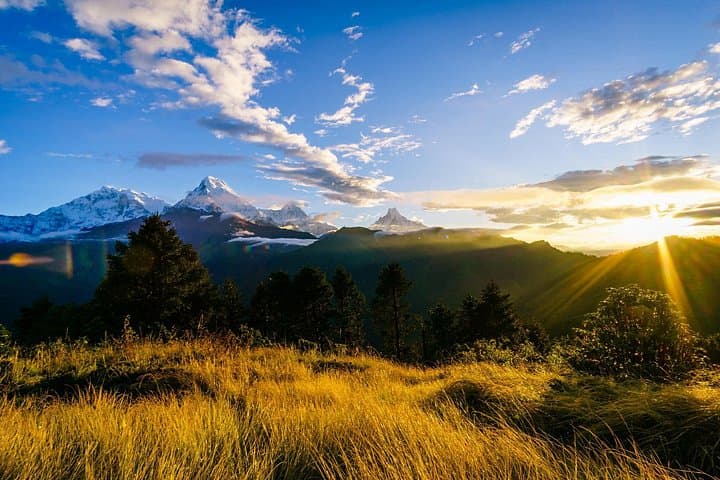
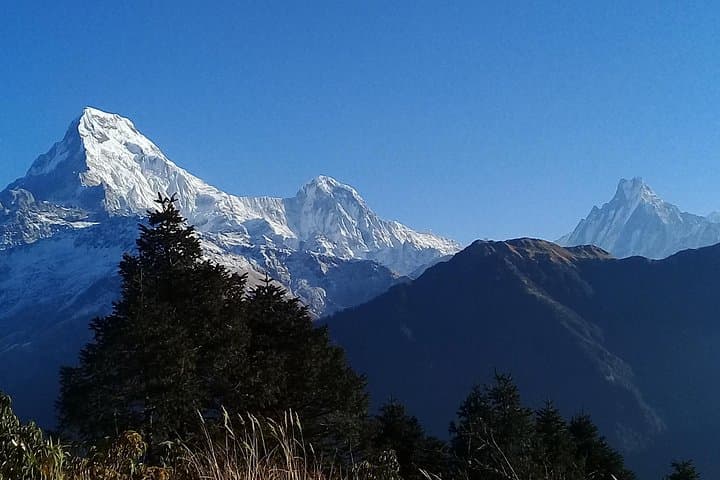
Dawn arrives on a line of silhouetted peaks and the cold air tastes like altitude and hot tea. On Poon Hill you stand with other early-risers as the first light stains the eastern faces of Dhaulagiri and Annapurna — a sudden, razor-edged panorama that defines this trek.
Verified experiences and guided adventures in the surrounding area.
Operated by Oriental Journeys · Ghorepani, Gandaki Province
Dawn arrives on a line of silhouetted peaks and the cold air tastes like altitude and hot tea. On Poon Hill you stand with other early-risers as the first light stains the eastern faces of Dhaulagiri and Annapurna — a sudden, razor-edged panorama that defines this trek.
The route threads traditional Gurung villages, terraced rice fields and broad rhododendron forests. Historically a trade corridor between Pokhara’s lowlands and higher settlements, these trails now guide trekkers through the Annapurna Conservation Area, created to protect both landscape and local livelihoods. Geologically, the walk offers a close view of Himalayan uplift: steep, folded ridgelines and moraine-fed valleys that hint at recent tectonic activity and glaciation.
Culture is immediate — stone houses, prayer flags, and the Gurung communities who keep music and cuisine alive in small tea houses. Less obvious are the seasonal shifts: spring’s rhododendrons explode in color, monsoon green gives way to dusty trails in summer, and clear, cold autumn air delivers the best visibility.
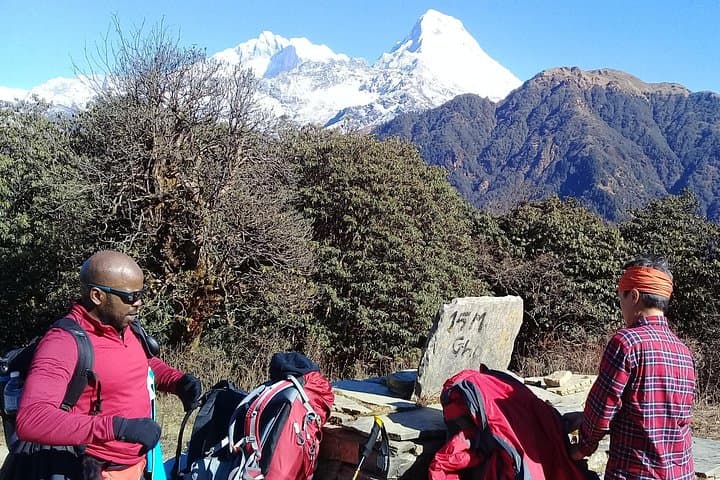
Practical guidance: expect 5–7 days of walking within a 7–9 day itinerary, with daily ascents and multiple stone stair sections; total maximum elevation gain to Poon Hill is about 3,210 m. Pack layered insulation, waterproofs, and sturdy trekking boots; carry water treatment, sunscreen and a headlamp for pre-dawn starts. Accommodations are basic lodges (tea houses) where hot meals are included; bring small bills for tips and local purchases. Allow extra days on either end in Pokhara for acclimatization and weather windows — sunrise from Poon Hill rewards the early alarm and cautious planning.
Poon Hill sits at about 3,210 m (10,531 ft). Altitude is moderate—allow gradual ascent, stay hydrated and monitor for mild symptoms; the itinerary includes acclimatization days.
Accommodation is in family-run tea houses offering basic rooms and shared bathrooms; three meals a day (local Nepali options and simple western dishes) are typically included on trekking days.
Autumn (Sept–Nov) and spring (Mar–May) give the best visibility and trail conditions; winter is colder with clearer skies; monsoon months bring rain and reduced views.
Yes—Annapurna Conservation Area permits are required; hiring a guide/porter is common and often included by operators for navigation, local support and permit handling.
Oriental Journeys operates guided outdoor trips and adventures with an emphasis on safety, stewardship, and memorable experiences.
Dawn arrives on a line of silhouetted peaks and the cold air tastes like altitude and hot tea. On Poon Hill you stand with other early-risers as the first light stains the eastern faces of Dhaulagiri and Annapurna — a sudden, razor-edged panorama that defines this trek.
Dawn arrives on a line of silhouetted peaks and the cold air tastes like altitude and hot tea. On Poon Hill you stand with other early-risers as the first light stains the eastern faces of Dhaulagiri and Annapurna — a sudden, razor-edged panorama that defines this trek.
The route threads traditional Gurung villages, terraced rice fields and broad rhododendron forests. Historically a trade corridor between Pokhara’s lowlands and higher settlements, these trails now guide trekkers through the Annapurna Conservation Area, created to protect both landscape and local livelihoods. Geologically, the walk offers a close view of Himalayan uplift: steep, folded ridgelines and moraine-fed valleys that hint at recent tectonic activity and glaciation.
Culture is immediate — stone houses, prayer flags, and the Gurung communities who keep music and cuisine alive in small tea houses. Less obvious are the seasonal shifts: spring’s rhododendrons explode in color, monsoon green gives way to dusty trails in summer, and clear, cold autumn air delivers the best visibility.
Practical guidance: expect 5–7 days of walking within a 7–9 day itinerary, with daily ascents and multiple stone stair sections; total maximum elevation gain to Poon Hill is about 3,210 m. Pack layered insulation, waterproofs, and sturdy trekking boots; carry water treatment, sunscreen and a headlamp for pre-dawn starts. Accommodations are basic lodges (tea houses) where hot meals are included; bring small bills for tips and local purchases. Allow extra days on either end in Pokhara for acclimatization and weather windows — sunrise from Poon Hill rewards the early alarm and cautious planning.