THE ADVENTURE COLLECTIVE® · Independent discovery and booking for outdoor travel

A compact, accessible 6-day trek that delivers a Himalayan sunrise from Poon Hill, traditional Gurung villages, and a return to lakeside Pokhara. Expect steep stone stairways, tea-house nights, and clear mountain views on good weather days.
A compact, accessible 6-day trek that delivers a Himalayan sunrise from Poon Hill, traditional Gurung villages, and a return to lakeside Pokhara. Expect steep stone stairways, tea-house nights, and clear mountain views on good weather days.
Dawn on Poon Hill comes sharp and bright: a line of shoulders and headlamps climbs the last stone steps as the first rays paint Annapurna and Dhaulagiri in hard, cold gold. Below, terraced fields and small tea houses sit like human stitches across steep hillsides; above, the ridgelines hold the sky.
Verified experiences and guided adventures in the surrounding area.
Operated by Nepal Guide Sujan · Ghorepani, Gandaki Province
Dawn on Poon Hill comes sharp and bright: a line of shoulders and headlamps climbs the last stone steps as the first rays paint Annapurna and Dhaulagiri in hard, cold gold. Below, terraced fields and small tea houses sit like human stitches across steep hillsides; above, the ridgelines hold the sky.
This short, classic Annapurna circuit links Nayapul, Ulleri, Ghorepani and Ghandruk—routes shaped by centuries of hill agriculture and the seasonal movements of Gurung and Magar villages. Geologically the trail traces old uplifted river terraces and metamorphic schists; the steep stone staircases are carved from the same rock that feeds the larger Annapurna massif.
Culturally the route moves through farmsteads and tea houses where local hospitality is practical and direct: shared dal bhat, wooden bunks, and early-morning staggered departures to catch the view. The trek also crosses the Annapurna Conservation Area, where permits help fund basic trail maintenance and wildlife protection.
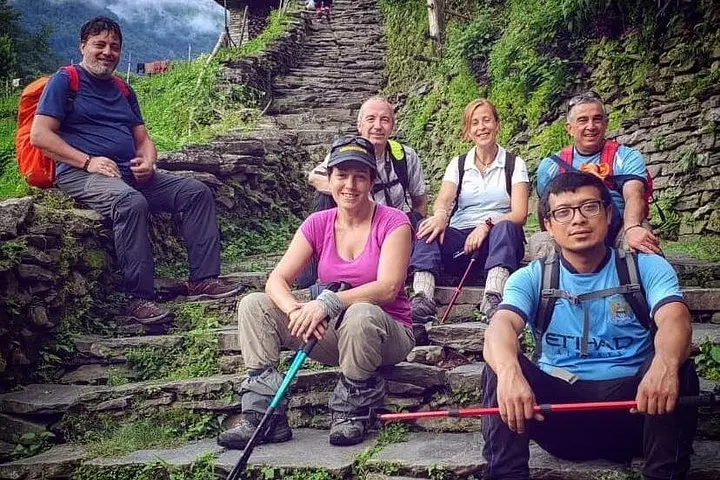
Practical guidance: plan for steep ascents—Ulleri’s stone stairway and the climb to Poon Hill are sustained efforts—expect 4–7 hours hiking on main days, tea-house accommodation, and basic hot meals. Altitude tops out near 3,200 m at Poon Hill—take it slow, hydrate, and carry warm layers for pre-dawn watches. The walk is largely on packed dirt and stone steps; good boots and trekking poles shorten the strain. Return options include a boat on Phewa Lake and a tourist bus back to Kathmandu, so factor in travel time when scheduling flights.
The Ghorepani–Poon Hill trek is short, scenic, and accessible—an efficient way to meet the Himalaya with practical comforts and memorable sunrise panoramas.
Yes — the route passes through the Annapurna Conservation Area; permits are normally arranged by the operator and the fee supports local conservation.
The immediate early-morning climb is steep but short (about 45–75 minutes from Ghorepani); it is strenuous when cold and pre-dawn, so wear warm layers and use poles if needed.
Basic tea-house lodging with shared bunk rooms and communal bathrooms; meals are simple Nepali-style (dal bhat, soups, noodles) with options for hot drinks and occasional Western items.
Poon Hill is around 3,200 m—mild altitude effects are possible; symptoms are reduced by pacing, hydration, and communicating discomfort to guides.
Nepal Guide Sujan operates guided outdoor trips and adventures with an emphasis on safety, stewardship, and memorable experiences.
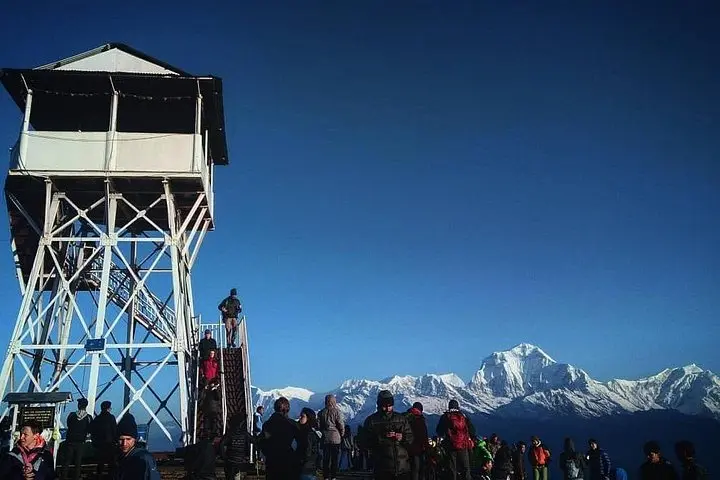

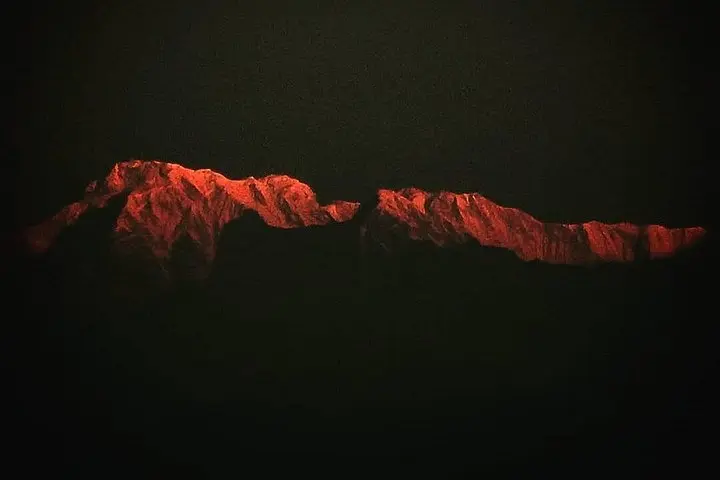
Dawn on Poon Hill comes sharp and bright: a line of shoulders and headlamps climbs the last stone steps as the first rays paint Annapurna and Dhaulagiri in hard, cold gold. Below, terraced fields and small tea houses sit like human stitches across steep hillsides; above, the ridgelines hold the sky.
Dawn on Poon Hill comes sharp and bright: a line of shoulders and headlamps climbs the last stone steps as the first rays paint Annapurna and Dhaulagiri in hard, cold gold. Below, terraced fields and small tea houses sit like human stitches across steep hillsides; above, the ridgelines hold the sky.
This short, classic Annapurna circuit links Nayapul, Ulleri, Ghorepani and Ghandruk—routes shaped by centuries of hill agriculture and the seasonal movements of Gurung and Magar villages. Geologically the trail traces old uplifted river terraces and metamorphic schists; the steep stone staircases are carved from the same rock that feeds the larger Annapurna massif.
Culturally the route moves through farmsteads and tea houses where local hospitality is practical and direct: shared dal bhat, wooden bunks, and early-morning staggered departures to catch the view. The trek also crosses the Annapurna Conservation Area, where permits help fund basic trail maintenance and wildlife protection.
Practical guidance: plan for steep ascents—Ulleri’s stone stairway and the climb to Poon Hill are sustained efforts—expect 4–7 hours hiking on main days, tea-house accommodation, and basic hot meals. Altitude tops out near 3,200 m at Poon Hill—take it slow, hydrate, and carry warm layers for pre-dawn watches. The walk is largely on packed dirt and stone steps; good boots and trekking poles shorten the strain. Return options include a boat on Phewa Lake and a tourist bus back to Kathmandu, so factor in travel time when scheduling flights.
The Ghorepani–Poon Hill trek is short, scenic, and accessible—an efficient way to meet the Himalaya with practical comforts and memorable sunrise panoramas.