THE ADVENTURE COLLECTIVE® · Independent discovery and booking for outdoor travel

Walk Nashville’s night-time streets with a guide who pairs archival fact with spine-tingling lore. This 90-minute route moves from the Tennessee State Capitol past haunted churches, the Ryman, and a former Union Station baggage claim turned pub.
Walk Nashville’s night-time streets with a guide who pairs archival fact with spine-tingling lore. This 90-minute route moves from the Tennessee State Capitol past haunted churches, the Ryman, and a former Union Station baggage claim turned pub.
The lamp-lit circle around the Alvin York statue narrows as the city exhales into night. Streetlamps throw long shadows across the Tennessee State Capitol’s stone steps, and the guide’s voice slices through the hum of idling traffic: a measured cadence of fact and folklore. The Ghosts of Nashville Night-Time Walking Tour moves like a slow, deliberate pulse through downtown—past churches that have watched generations pass, a repurposed baggage claim turned pub, and the stoic facade of the Ryman Auditorium—each stop a page of the city’s darker margins.
Verified experiences and guided adventures in the surrounding area.
Operated by Ghost City Tours · Nashville, Tennessee
The lamp-lit circle around the Alvin York statue narrows as the city exhales into night. Streetlamps throw long shadows across the Tennessee State Capitol’s stone steps, and the guide’s voice slices through the hum of idling traffic: a measured cadence of fact and folklore. The Ghosts of Nashville Night-Time Walking Tour moves like a slow, deliberate pulse through downtown—past churches that have watched generations pass, a repurposed baggage claim turned pub, and the stoic facade of the Ryman Auditorium—each stop a page of the city’s darker margins.
Nashville’s ghost stories are rooted in real history. The tour traces a thread from Civil War occupation and Reconstruction grief to late-19th-century boomtown conflicts and the tragedies that attended rail travel. Thomas Ryman’s story—an earnest riverboat era entrepreneur whose name clings to the famed Ryman Auditorium—is told alongside local legends like Bishop Miles, whose presence lingers in old church records and whispered accounts.
Geology and place matter here too: the Cumberland River has always shaped Nashville’s fortunes and misfortunes, pushing commerce and occasionally flooding memory into the streets where these tales now live. The city’s limestone and sandstone buildings, quarried nearby in the 1800s, hold the wear of soot and time; their grooves and lintels are as much a record as any archive.
Culturally, the route threads music-city grit with civic gravitas. You’ll stand where evangelists once preached and where the railroads funneled people and stories into a rapidly changing town. Guides blend archival facts—dates, court cases, names—with eyewitness accounts, treating mythology as a civic artifact worth interrogating.
Practical guidance: plan for a 90-minute, roughly 1–1.5 mile walk on mostly paved city sidewalks and some cobblestones. The pace is deliberate but requires standing during storytelling stops; a moderate fitness level is recommended. Tours run in all weather—dress in layers, wear sturdy shoes, and bring a small flashlight for darker stretches. The meeting point is the Alvin York statue at 553 Charlotte Ave; arrive 15 minutes early to check in. Groups over 10 should contact group sales for private arrangements. The tour is family-friendly but not recommended for those with serious spinal issues due to street conditions.
Accessibility and etiquette: the route offers wheelchair-accessible options and is stroller-friendly, but notify organizers in advance for accommodations. Respect private properties and the solemn nature of certain sites—many of these locations are active places of worship or businesses.
In short, the Ghosts of Nashville tour is equal parts history lesson and atmospheric walk—an evening option for travelers who want context with their chills. Come prepared, listen closely, and let the city’s past press against the night like a hand at the back of your neck.
The tour lasts about 90 minutes and covers roughly 1–1.5 miles on paved sidewalks with some cobblestones.
Meet at the Alvin York statue at 553 Charlotte Ave (Tennessee State Capitol) at least 15 minutes before departure.
Yes—routes and access points are wheelchair accessible; notify the operator when booking for any specific accommodations.
Yes, the tour is family-friendly, but content can be spooky and it's not recommended for children who are easily frightened.
Full refunds are available if canceled at least 24 hours before the scheduled departure; tours may cancel for severe weather or insufficient participants.
Yes—groups of 10 or more should contact the private & group sales coordinator to arrange a private tour.
Ghost City Tours operates guided outdoor trips and adventures with an emphasis on safety, stewardship, and memorable experiences.


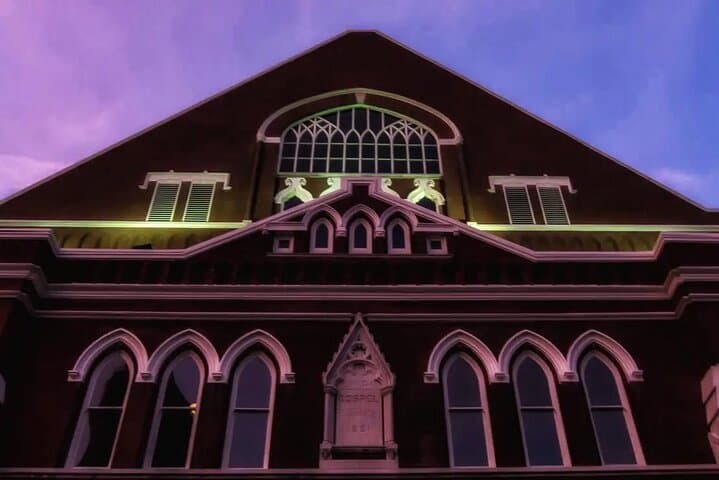
The lamp-lit circle around the Alvin York statue narrows as the city exhales into night. Streetlamps throw long shadows across the Tennessee State Capitol’s stone steps, and the guide’s voice slices through the hum of idling traffic: a measured cadence of fact and folklore. The Ghosts of Nashville Night-Time Walking Tour moves like a slow, deliberate pulse through downtown—past churches that have watched generations pass, a repurposed baggage claim turned pub, and the stoic facade of the Ryman Auditorium—each stop a page of the city’s darker margins.
The lamp-lit circle around the Alvin York statue narrows as the city exhales into night. Streetlamps throw long shadows across the Tennessee State Capitol’s stone steps, and the guide’s voice slices through the hum of idling traffic: a measured cadence of fact and folklore. The Ghosts of Nashville Night-Time Walking Tour moves like a slow, deliberate pulse through downtown—past churches that have watched generations pass, a repurposed baggage claim turned pub, and the stoic facade of the Ryman Auditorium—each stop a page of the city’s darker margins.
Nashville’s ghost stories are rooted in real history. The tour traces a thread from Civil War occupation and Reconstruction grief to late-19th-century boomtown conflicts and the tragedies that attended rail travel. Thomas Ryman’s story—an earnest riverboat era entrepreneur whose name clings to the famed Ryman Auditorium—is told alongside local legends like Bishop Miles, whose presence lingers in old church records and whispered accounts.
Geology and place matter here too: the Cumberland River has always shaped Nashville’s fortunes and misfortunes, pushing commerce and occasionally flooding memory into the streets where these tales now live. The city’s limestone and sandstone buildings, quarried nearby in the 1800s, hold the wear of soot and time; their grooves and lintels are as much a record as any archive.
Culturally, the route threads music-city grit with civic gravitas. You’ll stand where evangelists once preached and where the railroads funneled people and stories into a rapidly changing town. Guides blend archival facts—dates, court cases, names—with eyewitness accounts, treating mythology as a civic artifact worth interrogating.
Practical guidance: plan for a 90-minute, roughly 1–1.5 mile walk on mostly paved city sidewalks and some cobblestones. The pace is deliberate but requires standing during storytelling stops; a moderate fitness level is recommended. Tours run in all weather—dress in layers, wear sturdy shoes, and bring a small flashlight for darker stretches. The meeting point is the Alvin York statue at 553 Charlotte Ave; arrive 15 minutes early to check in. Groups over 10 should contact group sales for private arrangements. The tour is family-friendly but not recommended for those with serious spinal issues due to street conditions.
Accessibility and etiquette: the route offers wheelchair-accessible options and is stroller-friendly, but notify organizers in advance for accommodations. Respect private properties and the solemn nature of certain sites—many of these locations are active places of worship or businesses.
In short, the Ghosts of Nashville tour is equal parts history lesson and atmospheric walk—an evening option for travelers who want context with their chills. Come prepared, listen closely, and let the city’s past press against the night like a hand at the back of your neck.